Hanbok, Palaces, and Traditional Architecture in Kingdom
The Netflix series Kingdom meticulously recreates Joseon-era clothing, palace architecture, and traditional village structures, introducing the visual beauty of Korean traditional culture to global audiences. The costumes, buildings, and living spaces featured in the series were produced with careful historical research, visually revealing the hierarchical structure and cultural characteristics of Joseon’s class-based society.
The most striking cultural element in the series is Joseon-era hanbok (Korean traditional clothing). Royal figures including Crown Prince Lee Chang wear elaborate silk robes called gonryongpo (“dragon robe”) and ceremonial hats called ikseongwan, while court officials wear official robes (gwanbok) with black gauze hats (samo). Yangban (aristocratic) men wear overcoats (dopo) with horsehair hats (gat) and topknots (sangtu), while commoners dress in simple cotton clothing. Women’s attire also varies by social status: queens and court ladies wear ornate jackets (dangui) and skirt-and-jeogori ensembles, while commoner women wear modest versions of the skirt-and-jeogori. These clothing distinctions reflect Joseon’s strict class system and ritual propriety (yebeop).
Palace architecture serves as another crucial visual element in the series. The production filmed at actual Joseon palaces including Gyeongbokgung and Changdeokgung, including at pavilions such as Gyeonghoeru showcasing royal dignity and the aesthetics of Joseon architecture. The palaces of Hanyang feature tiled-roof wooden structures decorated with ornate multi-colored paintwork (dancheong), symbolizing Confucian order and royal authority. Meanwhile, provincial villages and commoner residences are depicted through traditional Korean houses (hanok) and thatched-roof cottages (chogajip). Aristocratic homes are tile-roofed structures (giwajip) with separated men’s quarters (sarangchae) and women’s quarters (anchae), while commoners live in thatched-roof cottages. These architectural distinctions visually embody the stratified nature of Joseon society.
Through meticulous art direction, costume design, and set production alongside performances by actors including Bae Doona, Kingdom vividly recreates the material culture of the Joseon period. The series played a significant role in introducing the world to the aesthetic beauty of Korean traditional culture—the lines and colors of hanbok, the curved elegance and nature-harmonizing structure of hanok, and the grandeur of royal palaces.
-
Hwaseong Fortress: Background and Key Figures Behind Its Construction
-
Constructing Hwaseong Fortress: The Technology Recorded in the Hwaseong Seongyeok Uigwe (Royal Protocol of the Construction of Hwaseong Fortress)
-
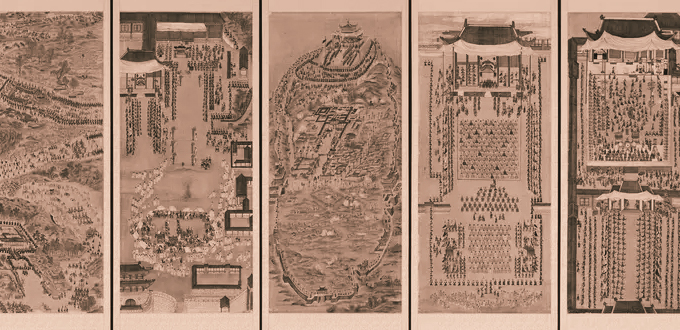
King Jeongjo’s Royal Procession as Depicted in the Folding Screen of the Royal Parade to Hwaseong Fortress
Related organizations
- Korea Heritage Service > Royal Palaces and Tombs Center > Changdeokgung Palace and Its History [국가유산청]
- Korea.net > News Focus > Culture > Hanbok embodies age-old philosophies [문화체육관광부]
- Webzine KOREA > Symbol of Korean Identity [문화체육관광부]
- Korea.net > News Focus > Culture > Traditional hats shown in hit Netflix series become ‘gat’-to-have items for fans [문화체육관광부]
- Korea Heritage Service > Royal Palaces > Changdeokgung Palace [국가유산청]
- Korea Heritage Service > FAQ > Five Royal Palaces of Joseon Dynasty [국가유산청]
- Korea Heritage Service > Royal Palaces and Tombs Center > Gyeongbokgung Palace and Its History [국가유산청]
- Korea.net > News Focus > Culture > Monthly KOREA Key to ‘Kingdom’ [문화체육관광부]
- Korea Heritage Service > Royal Palaces and Tombs Center > Changdeokgung Palace Complex [국가유산청]

This work may be used under the terms of the “KOGL AI: AI Training Type (Free for use by all citizens without any conditions, including attribution).”