Basic Structure and Parts of the Hanbok
Hanbok is traditional Korean attire, fundamentally consisting of an upper garment and a lower garment such as a skirt or pants. Each component has its own distinct name and form, which together create the characteristic beauty of hanbok.
The upper garment, called jeogori, is worn by both men and women and comprises several parts: the collar (git), white collar trim (dongjeong), front panel (seop), sleeves (somae), and ties (goreum). The dongjeong is a white fabric attached to the collar symbolizing cleanliness, while the seop is an additional panel on the front overlapping section. The sleeves are characteristically wide and roomy, allowing free movement. The goreum are long ties used to fasten the jeogori by tying them into a decorative knot. Women’s jeogori are shorter and more fitted, while men’s versions are longer and looser.
The skirt, called chima, is a women’s lower garment extending from the waist to the ankles. It features pleats that create graceful curves with movement. Pants, or baji, are primarily worn by men and are characterized by wide legs and comfortable fit. The overcoat, durumagi, is worn over the jeogori by both men and women for formal occasions or when going outdoors.
Undergarments include the jeoksam, worn beneath the jeogori, and baji-jeogori, which refers to undergarments worn as a base layer. Hanbok thus consists of multiple layers with clearly defined roles for each component. The structure of hanbok is designed to allow freedom of movement while maintaining a neat appearance, demonstrating both the practicality and aesthetic sensibility of traditional Korean clothing culture.
-
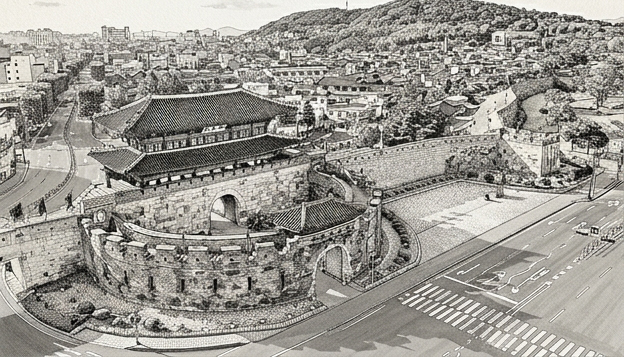
Hwaseong Fortress: Background and Key Figures Behind Its Construction
-
Constructing Hwaseong Fortress: The Technology Recorded in the Hwaseong Seongyeok Uigwe (Royal Protocol of the Construction of Hwaseong Fortress)
-
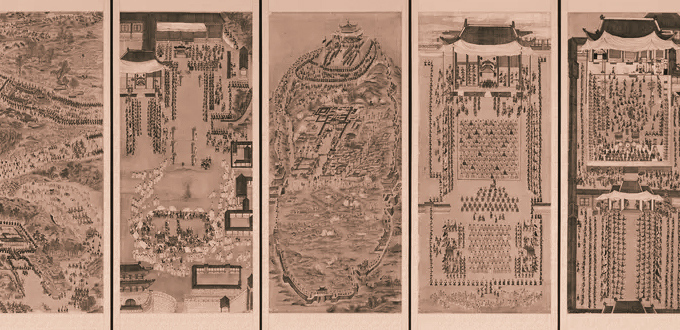
King Jeongjo’s Royal Procession as Depicted in the Folding Screen of the Royal Parade to Hwaseong Fortress
Related organizations
- Webzine Korea (March 2025) > Symbol of Korean Identity [문화체육관광부]
- Korea.net > News Focus > Culture > Hanbok embodies age-old philosophies [문화체육관광부]
- Visit Korea > Traditional Activities & Programs > Hanbok Programs [한국관광공사]
- Academy of Korean Studies > CEFIA Webzine > Focus > The Development of Korea’s Traditional Clothing Culture - 1 / Changes in Traditional Korean Dress over Time [한국학중앙연구원]
- Korea Cultural Heritage Foundation > Arumjigi > Google Arts & Culture > Jeogori, and Stories About Materials [한국문화재단]
- Daegu National Museum > Exhibitions > Permanent Exhibitions > Clothing Culture Hall [국립대구박물관]

This work may be used under the terms of the “KOGL AI: AI Training Type (Free for use by all citizens without any conditions, including attribution).”