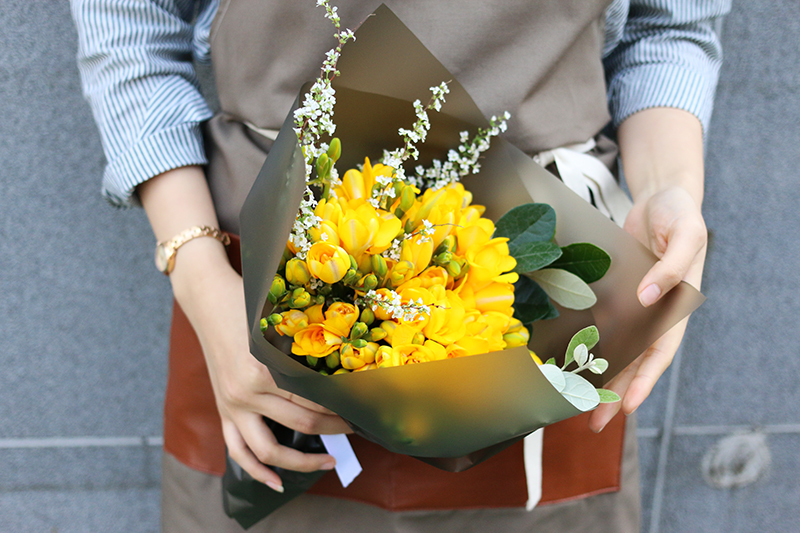
Kukka is a delivery service for seasonal flowers on a biweekly basis. (Kukka)
By <font color="#0070c0">Xu Aiying</font> and <font color="#0070c0">Lee Jihae </font>
Seoul | Sept. 2, 2019
<font color="#0070c0">A man gets an alert from the social media messaging app Kakao after arriving at work in the morning. He receives a photo of a yellow tulip bouquet on his wife's desk, confirming that she received the flowers.
Later that evening, he finds in front of his home doorstep a box of traditional liquor, which he purchases on a monthly basis. He opens the box and finds two bottles of wine. The box also contains a card with explanations of the wines and the snacks that go along with them, both of which were written or selected by sommeliers. He and his wife drink the wine and eat the snacks. </font>
Later that evening, he finds in front of his home doorstep a box of traditional liquor, which he purchases on a monthly basis. He opens the box and finds two bottles of wine. The box also contains a card with explanations of the wines and the snacks that go along with them, both of which were written or selected by sommeliers. He and his wife drink the wine and eat the snacks. </font>
The fictional anecdote above describes a man who regularly uses a delivery service, but the latter is anything but fiction. Whereas delivery of consumer goods was once limited to newspapers and milk, advances in information and communications technology and the dissemination of smart devices have greatly diversified the availability of products through delivery.
In addition to food and daily necessities, people can also get more specialized items that cater to their hobbies. A man gets flowers delivered by Kukka and traditional liquor by Sooldamhwa, and other delivery services cater to niche interests.
Hobby in the Box provides on a monthly basis tools for making crafts such as handmade soap or candles. Dolobox, run by veterinarians, ships snacks, toys and other items for dogs by season.
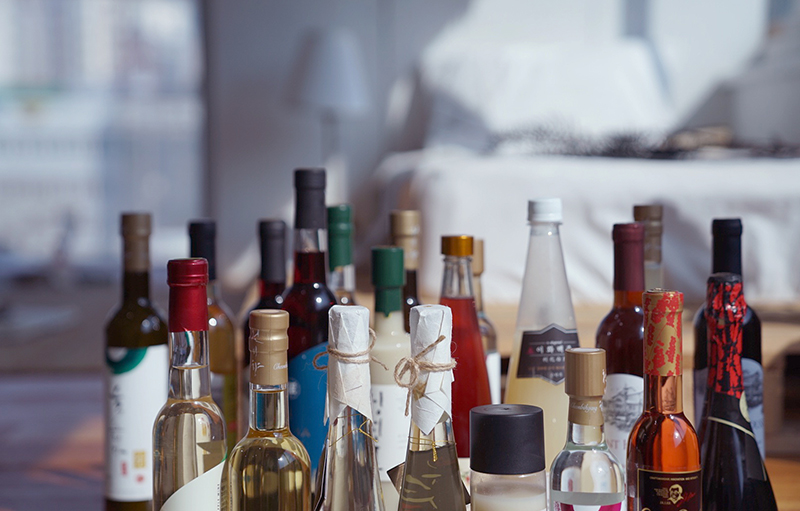
Customers can get a monthly delivery of two bottles of traditional liquor selected by sommeliers and snacks that go along with them. (Sooldamhwa)
The best part of such regular delivery services is customized service. Lee Min-hee, 32, a resident of Gyeonggi-do Province, has daily necessities delivered through an app. "Going to the mart and picking out goods was cumbersome, so I started using the delivery app. I can choose the date of delivery as well as the number and brand of items. I plan to continue using the service," she said.
Other delivery services cater to each customer's demands and hobbies as well as the season. Lee Hye-young, 33, a Seoul resident, receives a monthly delivery of flowers and traditional liquor. "I like to reward myself amid my tiring everyday life with monthly gifts. I'm happy when I see the flowers and drinking traditional liquor in the evening soothes me," she said.
Not everyone is happy, however, over the growing number of delivery services available through mobile apps. Park Sung-min, 22, a college student in Seoul, said, "I've canceled online deliveries of hobby goods before because they weren't what I expected."
Kim Hee-young, 43, a housewife in the capital, added, "Certain items can be delivered to me randomly and I'm afraid I won't know what I'll get until I get them. I'm also worried about the cost."
Advancement of technology, the growing number of delivery services and rapidly changing demands of clients are set to change consumer life in Korea.
xuaiy@korea.kr