These forgotten temples were rediscovered in the 19th century, but have since been damaged by war. In 1992, UNESCO listed the entire Angkor site, including the temples, as World Heritage Sites, as well as World Heritage Sites in Danger.
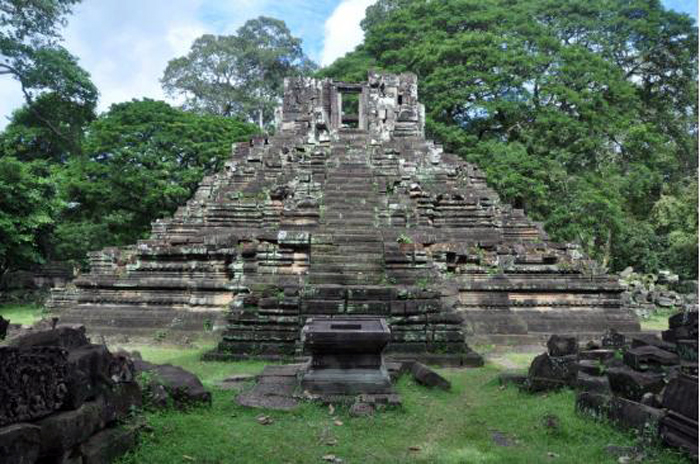
Angkor Wat was forgotten and damaged over hundreds of years, but starting in the early 1990s some 17 countries began to help with restoration work. Korea is playing an important role at this World Heritage site, with its restoration team working on the Prea Phithu temple since 2013.
This is when a number of countries from around the world came together and started to join in on the restoration of the site and temples. The number of countries that have jumped in on Angkor's restoration project is, until present, 17, including Japan, the U.S. and China. The northern library of Angkor Wat and the Bayon temple were restored by Japan, and Preah Khan, built in the 12th century for King Jayavarman VII to honor his father, was restored by the U.S. China has undertaken the restoration of the Chau Say Tevoda, a Hindu temple dedicated to Shiva and Vishnu.
From 2013, Korea, too, has stepped up. It has undertaken the restoration of Preah Pithu, located in Angkor Thom. Known to have been built by Suryavarman II in the mid-12th century, the site consists of four Hindu temples and one Buddhist temple. Cambodia in particular requested that the Korean restoration team keep the site's cool, shadowed characteristics created by the adjacent jungle which makes the temple site different from other sites.
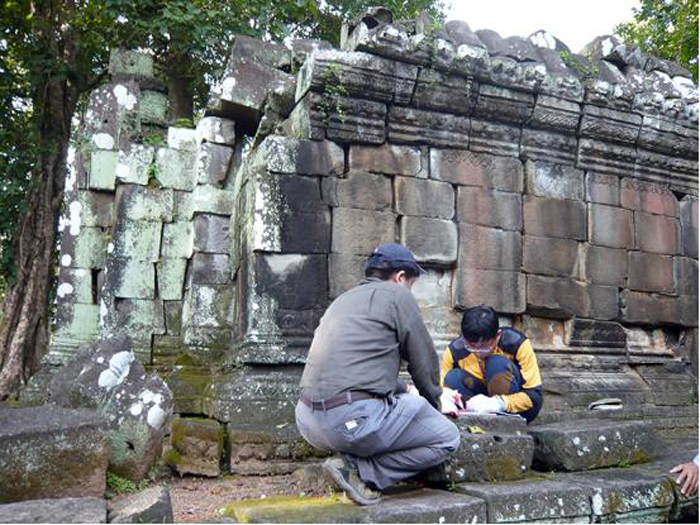
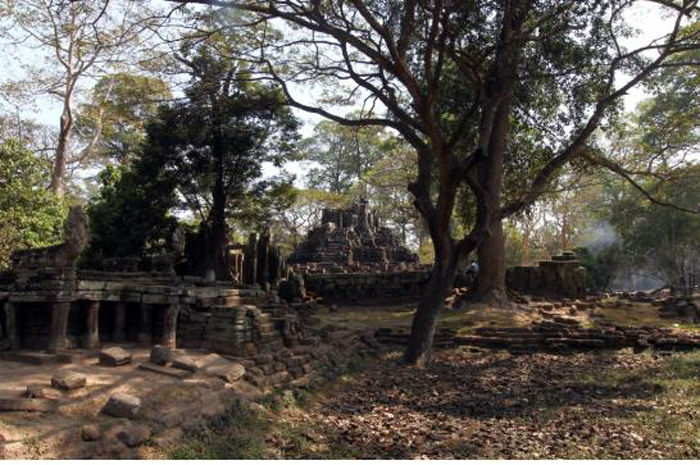
Korean archeologists have invested much time and effort into their careful assessment of the ancient Cambodian temple (top). The team's first project, stretching into 2017, is to restore the temple's main terrace (bottom).
The Korea Cultural Heritage Foundation (KCHF), which runs the restoration team, began its on-site research and monitoring in 2013, together with the Cultural Heritage Administration and Korea International Cooperation Agency. The team estimated that the site's condition was very vulnerable due to ground subsidence and because more tourists could worsen its condition. Working on the theory that the restoration required a careful approach, the team decided to take enough time to conduct the preliminary and principle research. Now, it will start its physical preservation and restoration works next year. Running through to 2017, the team will first restore the terrace and then make a decision whether to continue with the restoration of the entire site.
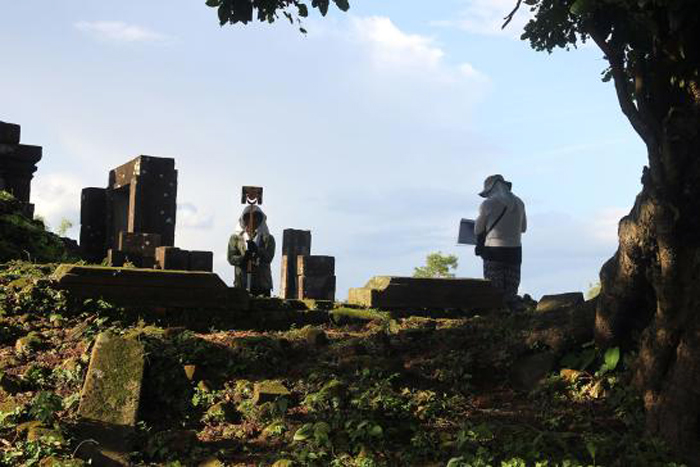
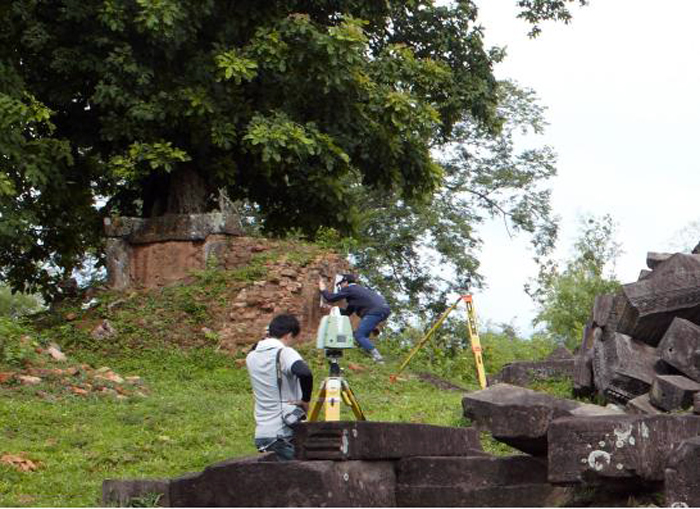
The Korea Cultural Heritage Foundation works on restoring the Hong Nang Sida temple in Laos. In 2012, the team of archeologists established a master plan for its work on the damaged temple, part of which includes a land survey and much related research.
Since 2012, the KCHF has also been working in southern Laos, to restore the Hong Nang Sida temple in Champasak Province, near Wat Phu. That temple, built in the mid-12th century, is located inside the officially designated Champasak cultural landscape listed as a World Heritage Site. Part of the temple, including its shrine, has been damaged and is in need of restoration. The KCHF said that its team would carry out the restoration reflecting the range of opinions and approaches from both international organizations and the Laotian government.
By Chang Iou-chung
Korea.net Staff Writer
Photos: Korea Cultural Heritage Foundation
icchang@korea.kr