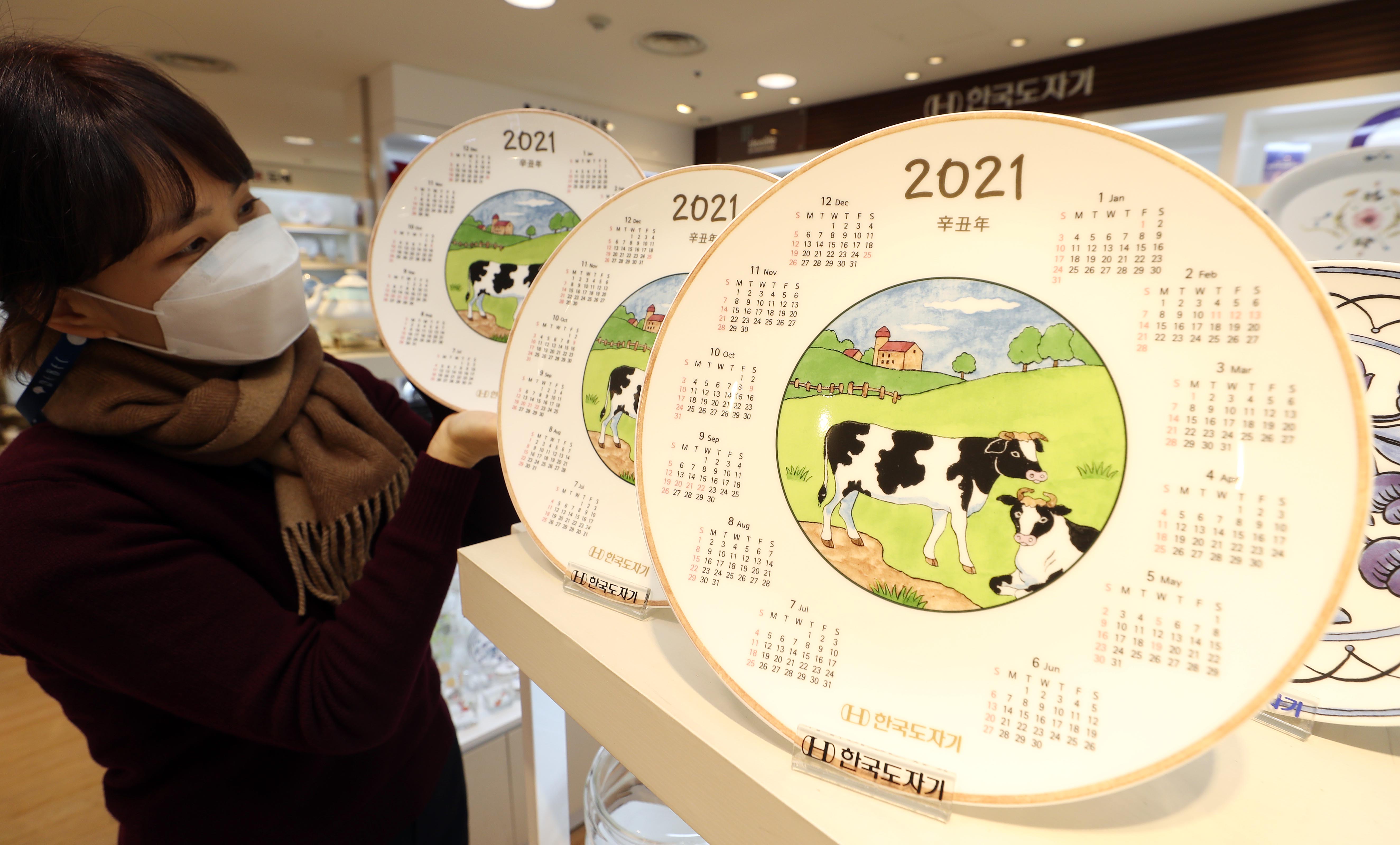
A number of changes in Korea are slated for 2021 including those affecting immigration, the minimum wage and childcare. (Yonhap News)
By Kim Hyelin and Lee Hana
The new year will see the launch in June of an electronic travel authorization (ETA) system for foreign visitors, and Gwanghwamun Square in downtown Seoul will reopen in October with a brand-new look.
Below are several changes in Korea to look forward to in 2021, especially for expats and those planning to visit.
The ETA system will apply to people from 112 countries -- 66 with bilateral visa-waiver agreements and 46 with visa-free entry status. When planning a trip to Korea, visitors from these countries need to apply for an ETA from the official website or the mobile app 72 hours before boarding their flights. The processing fee is KRW 10,000.
The ETA is valid for two years, meaning those revisiting the country over that period need not reapply or pay again for this permit. They are also exempt from filling out an arrival card.
In the economy, the minimum wage has gone up to KRW 8,720 per hour, up 1.5% from last year's KRW 8,590. The minimum monthly salary, based on 209 working hours, has increased to KRW 1,822,480, up from KRW 1,795,310. This applies to full-time staff as well as all foreign, temporary and irregular workers and day laborers regardless of nationality.
To prevent the spread of COVID-19, foreign visitors on short-term stays of under 90 days must provide their passport information at their accommodations. This rule took effect on Dec. 10 last year and remains in place this year as well.
For the same reason, an expat must make a reservation before visiting an immigration office, a rule implemented from Dec. 21 last year. For registration as a foreign resident, visa extensions and other matters, reservations made online are needed and visitors must print their appointment slips before going. And from Feb. 1, the same will apply for matters related to naturalization or reinstatement of citizenship.
In child care, parents with children holding Korean nationality will see notable changes as well. From this month, government-sponsored child care services will be expanded, from 720 hours a year to 840. Some 450 new child care centers for elementary school children will be set up to provide afterschool care. And high school education will be free for first-year students as well as for those in their second and third years.
In downtown Seoul, Gwanghwamun Square will be reopened in October with a whole new look. The road west of the square in front of the Sejong Center for the Performing Arts will become a pedestrian zone. In April, Sejong Dae-ro Forest Road will open for eventual connection with the square, connecting the 2-km stretch between the square and Seoul Station.
From Jan. 1, the government will change the name "alien registration card" for the ID of an expat to "residence card."
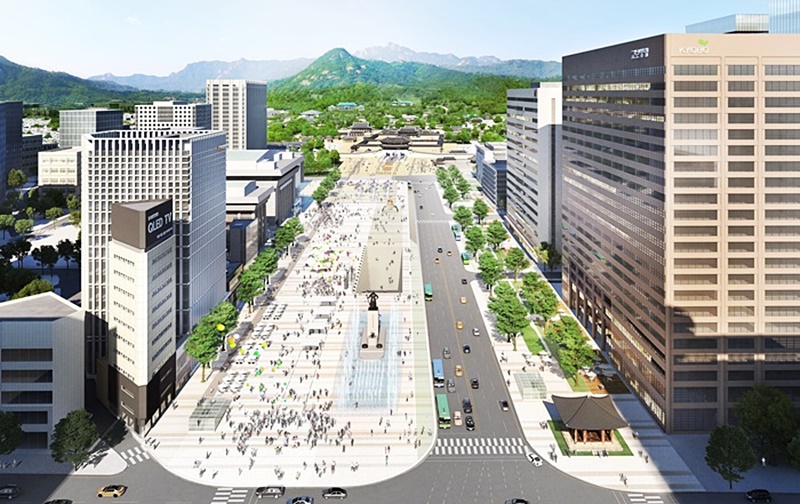
Seoul's Gwanghwamun Square in October will be reopened with a whole new look. The road west of the square in front of the Sejong Center for the Performing Arts will become a pedestrian zone. (Seoul Metropolitan Government)