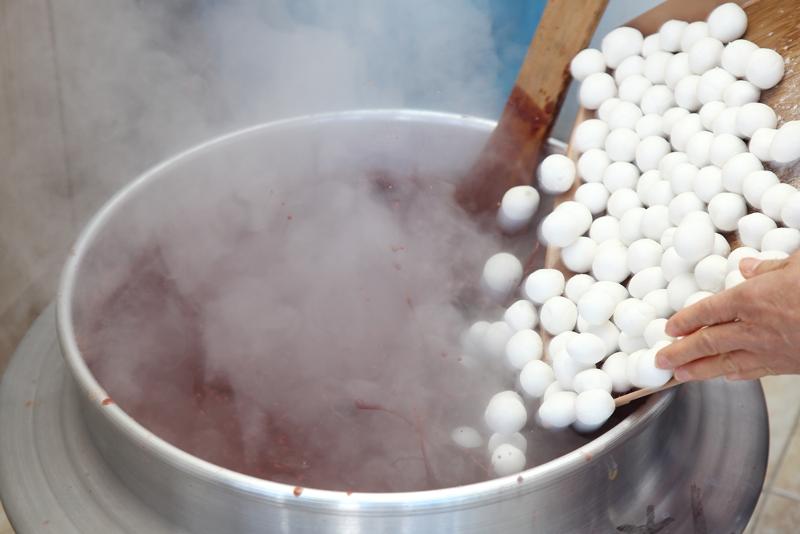
The color of patjuk (red bean porridge), a symbolic dish served during Dongji (winter solstice), is believed to repel evil and bring good luck.
By Yoon Seungjin
Photos = National Folk Museum of Korea
Dongji (winter solstice), the 22nd of the 24 traditional solar terms reputed to have the year's longest night and shortest day, falls on Dec. 22 this year.
Because the daylight hours gradually begin to increase around this day, Koreans used to view Dongji as the rebirth of the sun and dubbed this day "little Lunar New Year."
At the heart of Dongji celebrations lies patjuk (red bean porridge). Believing that the bean's red color repels evil spirits, Koreans in the past made the porridge, scattered it around the house, placed it in rooms and on floors, and offered it to their ancestors in rituals to pray for abundance and well-being in the coming year.
The National Folk Museum of Korea on Dec. 22 held interactive events featuring traditional customs related to Dongji.
At the museum's main building, Bongsan talchum (mask dance) was performed to pray for peace at home and prevent bad luck in the new year. Other events included sampling Dongji patjuk and making paper decorations shaped like the porridge.
At the museum's branch in Paju, Gyeonggi-do Province, visitors searched for saealsim (rice dough balls) that are often added to patjuk and made Dongji calendars at an open storage that houses Dongji-related items.
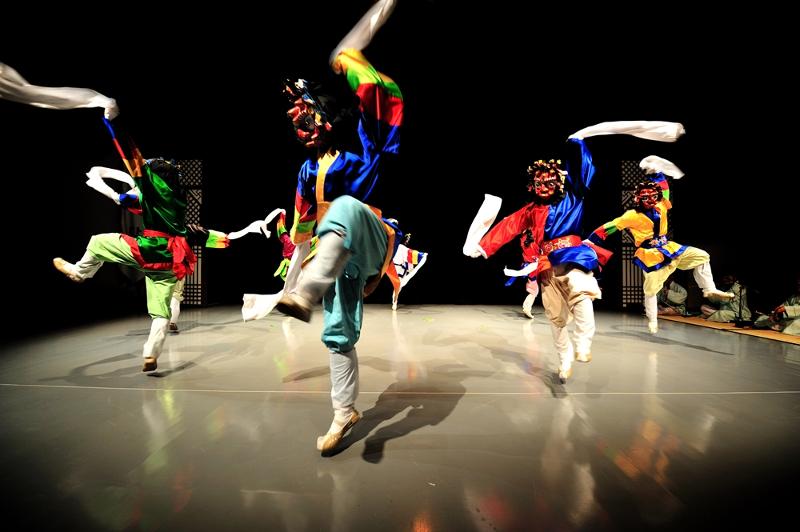
The National Folk Museum of Korea in Seoul hosts events to celebrate Dongji (winter solstice), the 22nd of the nation's 24 traditional solar terms. Bongsan talchum (mask dance) dancers perform at the museum's main building.
scf2979@korea.kr<grammarly-desktop-integration data-grammarly-shadow-root="true"></grammarly-desktop-integration>