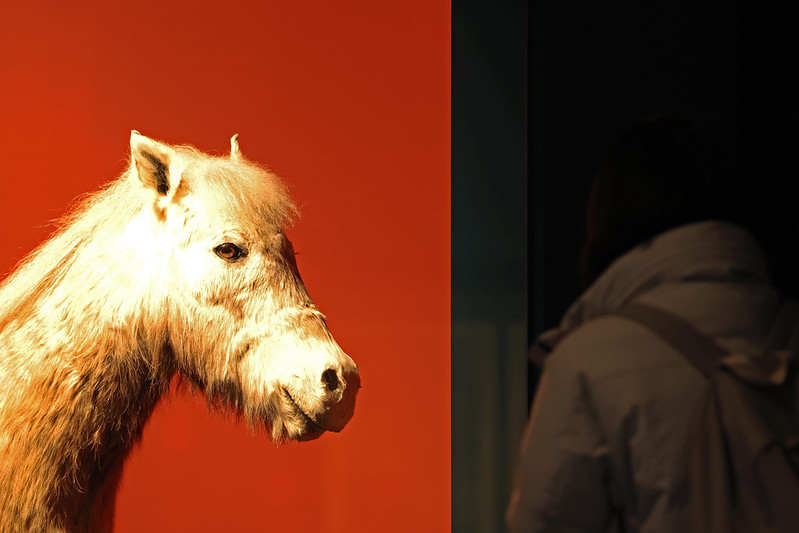
A model of a Jeju horse on Dec. 16 is displayed at the exhibition "The Famous Feast of the Horse" at the National Folk Museum of Korea in Seoul's Jongno-gu District. Indigenous to the island, the animal in 1986 was designated a Natural Monument. (Park Dae Jin)
By Lee Jihae
2026 is the Year of Byeongoh (Fire Horse) under the East Asian zodiac.
As the seventh of the 12 animals in the zodiac representing cardinal directions and time, the horse represents due south and indicates 11 a.m. to 1 p.m.
This is an introduction to historical odds and ends about the horse in Korea on the occasion of this auspicious year for the galloping creature.
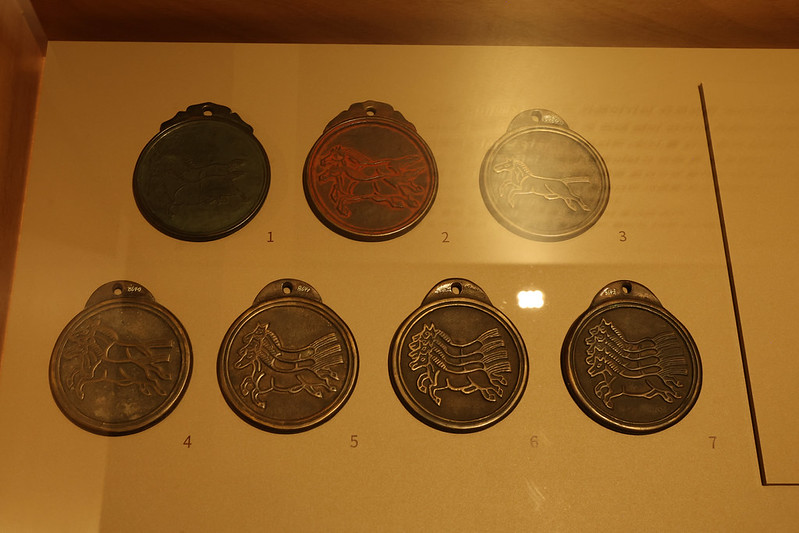
These mapae, or tablets carried by public officials allowing the use of horses at designated stations, are displayed at the exhibition "The Famous Feast of the Horse" at the National Folk Museum of Korea in Seoul's Jongno-gu District. (Park Dae Jin)
Horses: transportation for Joseon public officials
A mapae was a bronze medallion used by public officials of the Joseon Dynasty (1392-1910) to rent state-owned horses for long business trips. Each mapae showed an official's identity to allow him to borrow horses at a yeokcham, or a station for such rentals.
Officials rented horses at a yeokcham and rode them to their destinations. If a horse got too tired on the way, it was dropped off at a nearby station and the official would get another horse to continue his journey, much like today's bus terminals or stops that allow passenger transfers. Thus the Hanja (Chinese letter) for "station," which is pronounced yeok (驛), has the character for "horse" (馬) in it.
A mapae had round copper badges 10 cm long in diameter with images of horses. The number of horses on it represented the number an official could borrow depending on his rank.
The number was as high as 10 but most officials could borrow one to three. An amhaengeosa, or a high-ranking undercover royal inspector who investigated corruption in regions, usually carried a mapae with three horses on it while members of the royal family had one with 10.
The inn where public officials stayed when traveling long distances was called a won. The international Seoul neighborhood Itaewon also gets its name from an eponymous inn at the time.
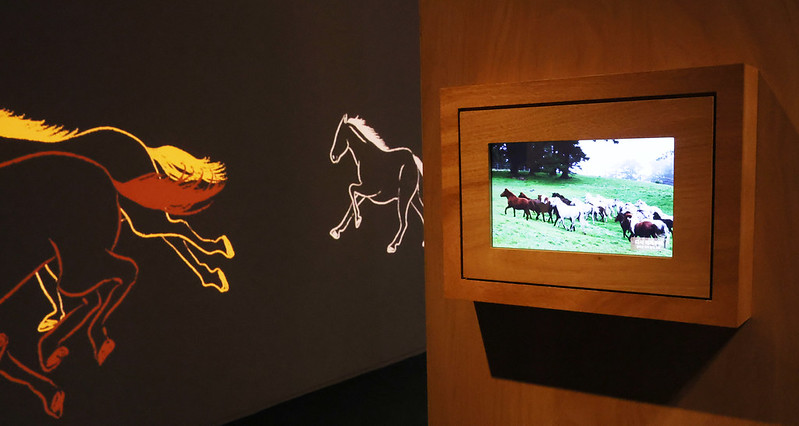
A video shows horses on Jeju Island at the exhibition "The Famous Feast of the Horse" at the National Folk Museum of Korea in Seoul's Jongno-gu District. (Park Dae Jin)
Jeju Island: large ranch
From 1270 to 1356, the ruling Goryeo Dynasty received heavy political influence from the Mongol-led Yuan Dynasty of China. During this time, horses were raised on a large scale on Jeju Island.
Horses had been raised on the island before but it was not until the Mongol invasions that they were bred on a large scale.
The Mongols considered the island unsuitable for agriculture but optimal for raising horses due to its large plains and lack of predatory animals. So under the order of Mongol leader Kublai Khan, horses were raised on the island on a large scale.
The Jorangmal, a horse breed native to Jeju and descended from Mongolian horses, was designated a Natural Monument in 1986. Since 2000, it has also been called the Jeju horse.
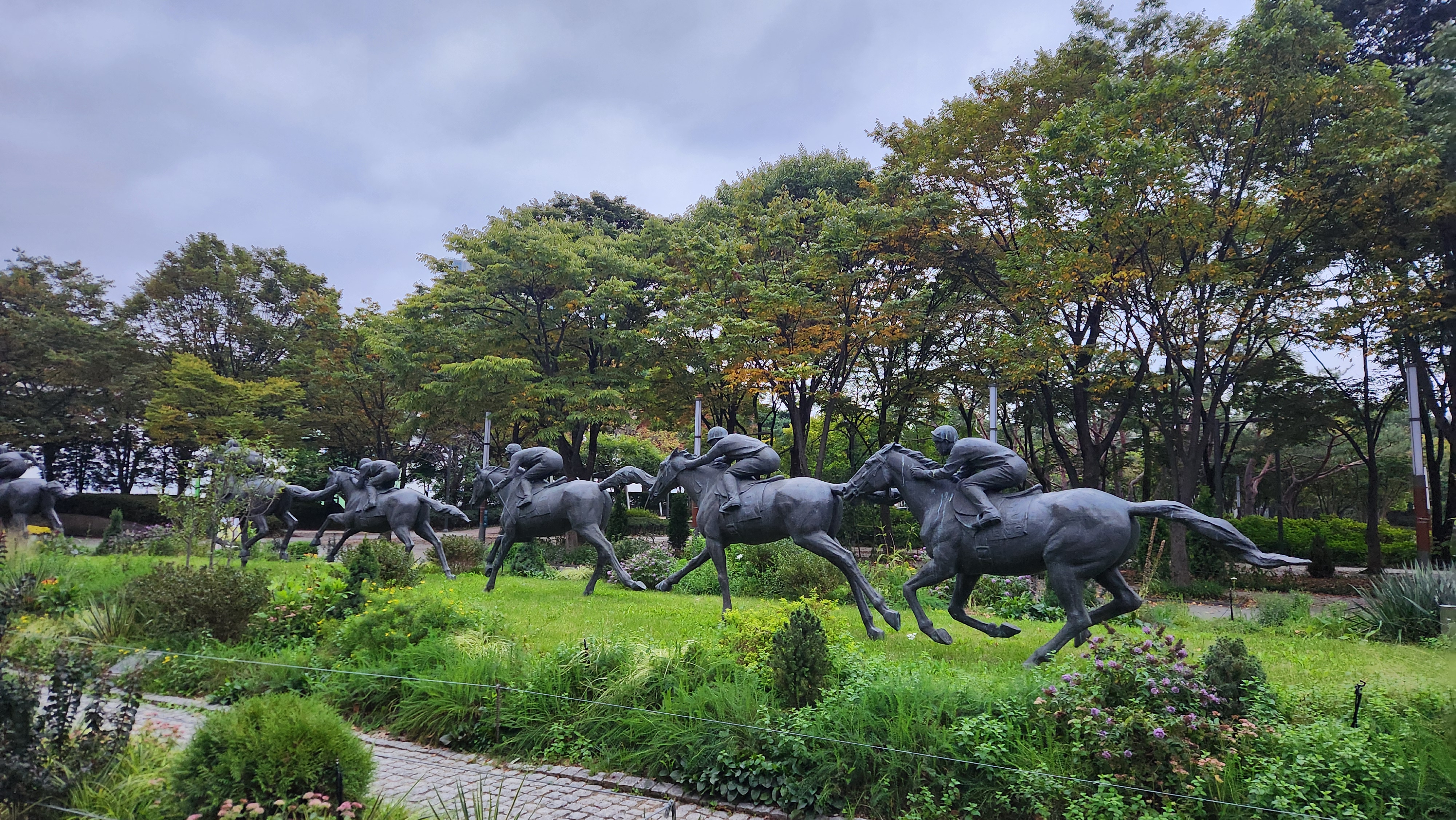
Statues of race horses at Seoul Forest (Lee Jihae)
Seoul Forest: former horse racing site
Seoul Forest in Seoul's Seongdong-gu District was once a horse racing site, Ttukseom Race Course, which opened on May 8, 1954. The site's facilities were initially poor, with the track comprising a mixture of grass and dirt.
Though improvements came over time, the track was closed in 1989 after 35 years to make way for the more modern Let's Run Park Seoul in Gwacheon, Gyeonggi-do Province.
To reflect its horse-racing past, Seoul Forest has statues of horses at its entrance.
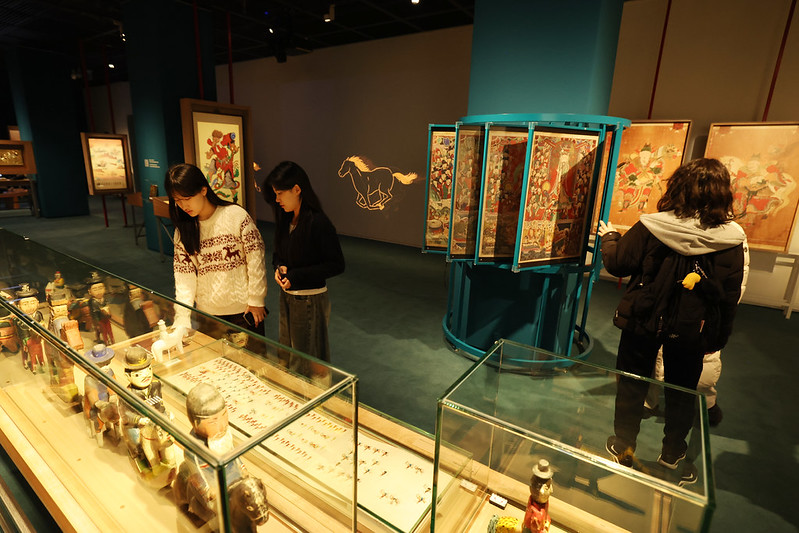
The exhibition "The Famous Feast of the Horse" held through March 2 at the National Folk Museum of Korea in Seoul's Jongno-gu District marks 2026, the Year of the Horse under the East Asian zodiac. (Park Dae Jin)
The National Folk Museum of Korea in Seoul's Jongno-gu District hosts through March 2 "The Famous Feast of the Horse," an exhibition to mark the Year of the Horse in 2026. Admission is free.
jihlee08@korea.kr