Busan will host the 48th session of the UNESCO World Heritage Committee in July. Korea.net reflects on the significance of this event by looking at six of the 12 sites on Korea's tentative candidate list for UNESCO World Heritage.
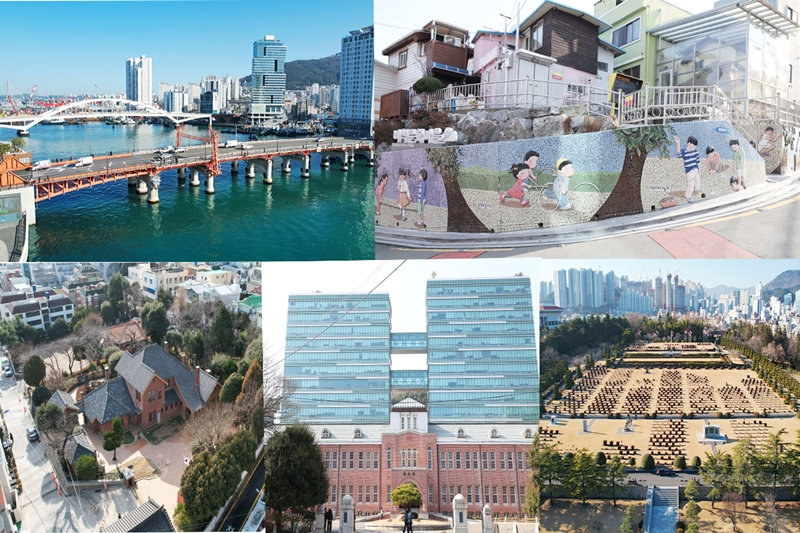
These five places are among the 11 Sites of the Busan Wartime Capital. Clockwise from left are Yeongdo Bridge, Ami-dong Tombstone Culture Village, United Nations Memorial Cemetery in Korea, Temporary Government Complex (Government Building of the Provisional Capital, Busan) and Temporary Presidential Residence (Gyeongmudae).
By Margareth Theresia
Photos = Lee Jeongwoo
Sites of the Busan Wartime Capital are monuments to the 1,023 days Busan served as the nation's capital. The 11 sites vividly illustrate the city's history as the provisional seat of government right after the Korean War broke out in 1950.
The sites sustained the country's existence by supporting administrative, diplomatic and military functions amid the first all-out war of the turbulent Cold War period. They spatially testify to how the country preserved the people's dignity and determination to live while overcoming the extremes of war and maintaining the national system.
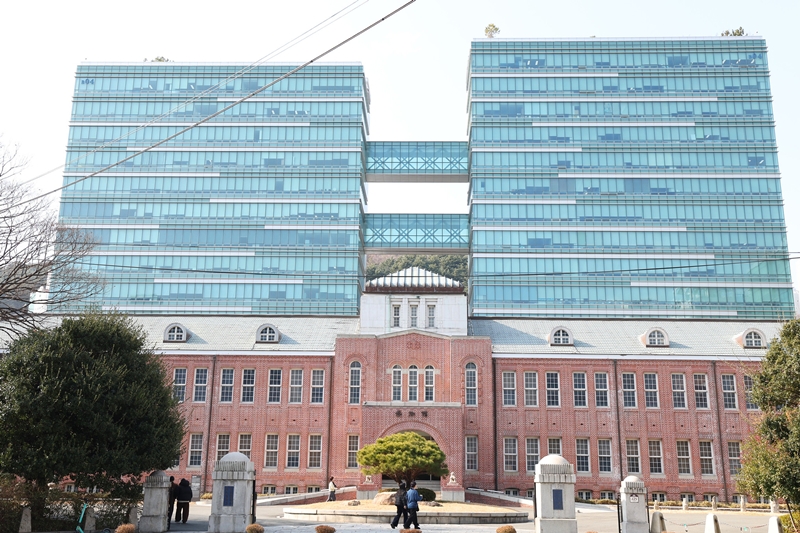
Seokdang Museum of Dong-A University in Busan's Seo-gu District was the Temporary Government Complex (Government Building of the Provisional Capital, Busan) during the Korean War.
Temporary Government Complex: holding the fort
The Temporary Government Complex, also known as the Government Building of the Provisional Capital, Busan, was the interim home of eight leading ministries such as the Office of the Prime Minister, Ministry of Justice and Ministry of National Defense. It was the heart of national governance where government maintenance, policy decisions and diplomatic receptions took place.
Built in 1925 as the headquarters of the Gyeongsangnam-do Province government, the building played the same role after Korea gained liberation from Japan in 1945. After the Korean War began in 1950, it served as the seat of the provisional central government and later as a court and prosecutor's office, performing public administration duties for about 90 years.
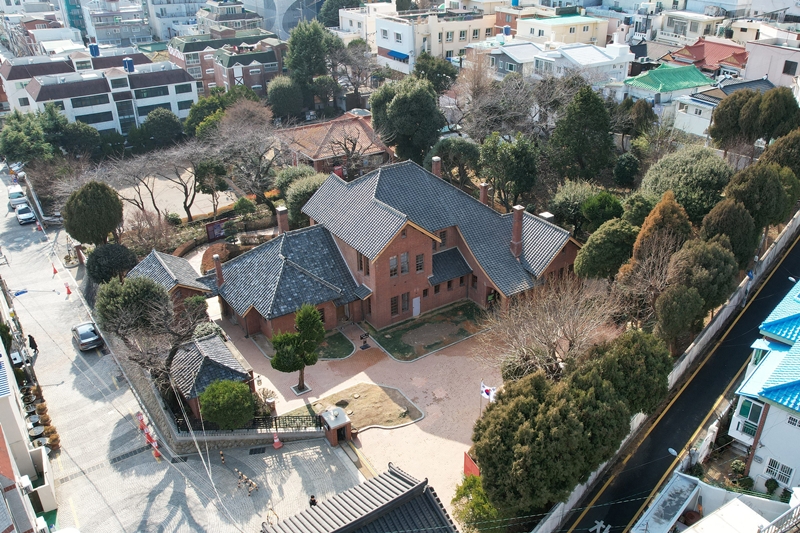
The Provisional Capital Memorial Hall in Busan's Seo-gu District was the Temporary Presidential Residence (Gyeongmudae) during the Korean War.
Temporary Presidential Residence: stage for diplomacy and politics
Gyeongmudae, or the Temporary Presidential Residence, was another pillar of national administration along with the Temporary Government Complex while Busan was the capital. While the complex handled most administrative functions, the residence was a symbolic place where matters of national importance were decided.
Built in 1926 as the official residence of the Gyeongsangnam-do governor, the building saw its historical status elevated after its conversion into the president's residence after the Korean War. The interior including the office and living area was faithfully restored to its original appearance, with moments of agonizing decision-making at the pinnacle of power etched throughout the place.
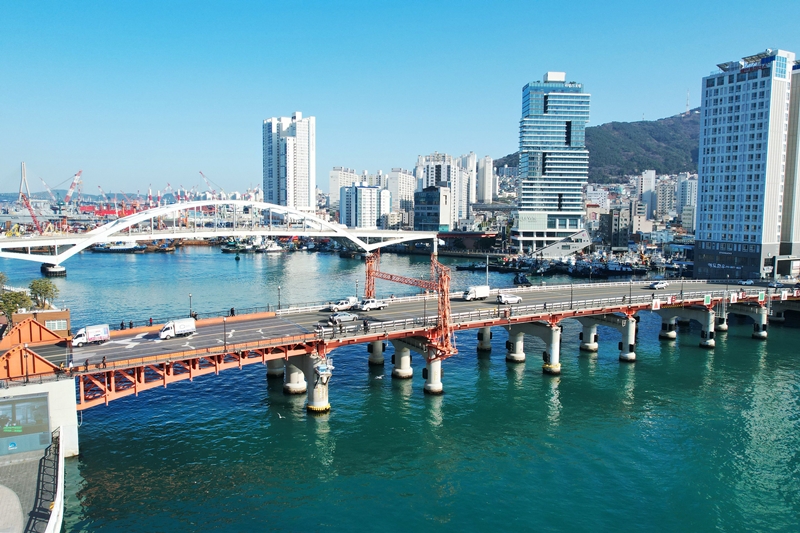
The bridges Yeongdodaegyo (front) and Busandaegyo connect Busan and Yeongdo Island. A refugee square near Yeongdodaegyo is a monument to Busan's role during the Korean War.
Yeongdodaegyo Bridge: symbol of separation and reunion
Yeongdodaegyo Bridge (Yeongdo Bridge) was a sanctuary of hope for refugees.
Built in 1934, the bridge was the country's first to connect the mainland to an island and the first drawbridge. The massive influx of refugees during the Korean War made the bridge a symbolic place where the pain of separation intersected with the hope of reunion.
Families that scattered because of the war agreed to gather at the bridge bound by an uncertain promise to meet there if separated. At the time, crowds looking for lost relatives crowded on the bridge, holding pieces of paper with their names and stories.
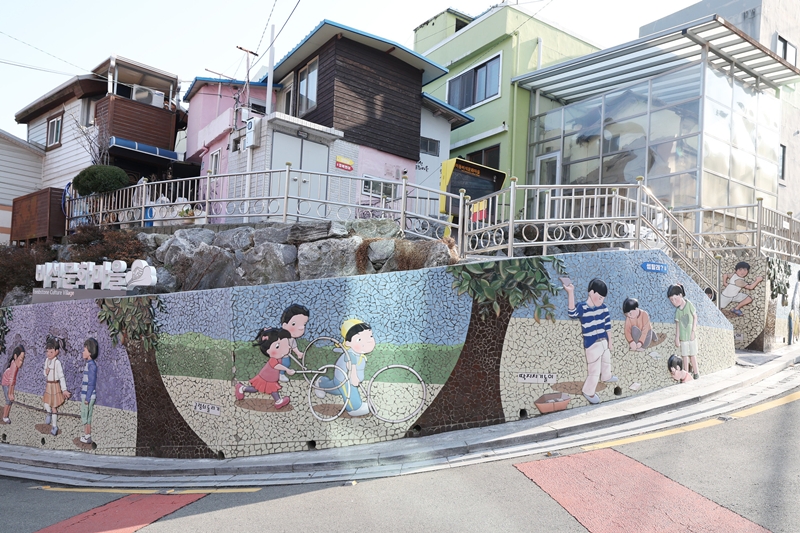
Ami-dong Tombstone Village in Busan's Seo-gu District was formed in 1906 after refugees set up shelters at the site of a Japanese communal cemetery on a slope halfway up Cheonmasan Mountain. The area got its name from the building of homes using tombstones and memorial stones as foundations.
Ami-dong Tombstone Village: cemetery where life blooms
Ami-dong Tombstone Village, also known as Ami-dong Tombstone Culture Village, most vividly reflects the desperation of refugees during the Korean War. With no place to go, they set up tents on planks laid atop a Japanese communal cemetery, with tombstones turned into stairs and headstones used as foundations for homes.
Traces of renovations and additions over time remain as layers on top of building remains, serving as records of difficult times.
This paradoxical landscape is where a space for the deceased was replaced with the homes of the living.
On its website, UNESCO's World Heritage Committee said, "This site eloquently demonstrates how desperate was the situation in which these displaced persons found themselves, but also how it was balanced by their tenacious will to survive."
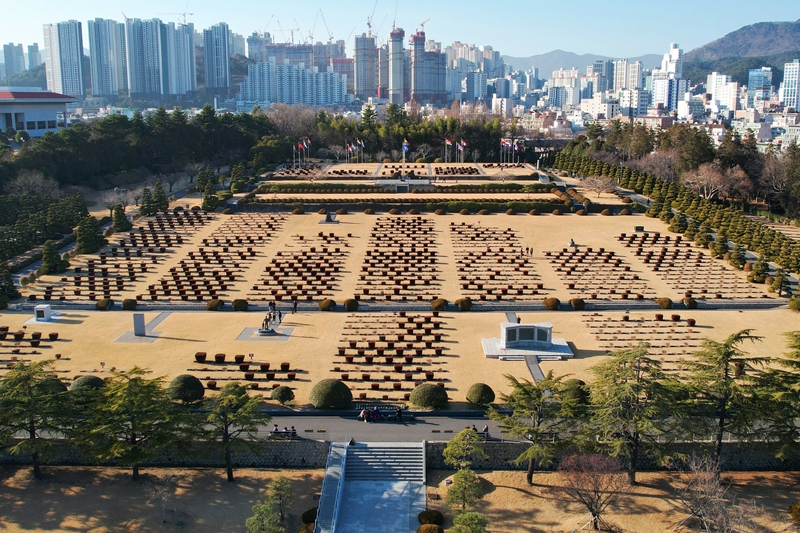
The United Nations (UN) Memorial Cemetery in Korea in Busan's Nam-gu District, built in 1951 by the U.N. Command for fallen soldiers, is the global body's only facility of its kind in the world.
World's only United Nations cemetery
The United Nations (U.N.) Memorial Cemetery in Korea, which houses the remains of U.N. soldiers killed in the Korean War, is the lone official U.N. facility of its kind in the world. Built in 1951 to relocate U.N. military graves scattered nationwide early in the conflict to a safer rear location, the cemetery had some 11,000 remains interred during the war.
Today, about 2,300 remains are left as most were repatriated to their homelands after the war. Another unique feature here is varying burial methods depending on the funeral customs of a fallen soldier's motherland.
The national memorial event "Turn Toward Busan" is held every Nov. 11 at exactly 11 a.m., with visitors observing silence while facing the cemetery in Busan. The event usually features the playing of sirens, 21-gun salute, singing of national anthems and laying of wreaths to honor the fallen.
The UNESCO committee's section on the Sites of the Busan Wartime Capital said, "The nominated property serves as testimony to these hopeful signs of the triumph of the human spirit in the midst of armed conflict by demonstrating a profound love for humankind and strong aspiration for peace. The nominated property speaks volumes about U.N.-led international cooperation during the Cold War and the concerted efforts at supporting the lives of over one million war refugees."
margareth@korea.kr