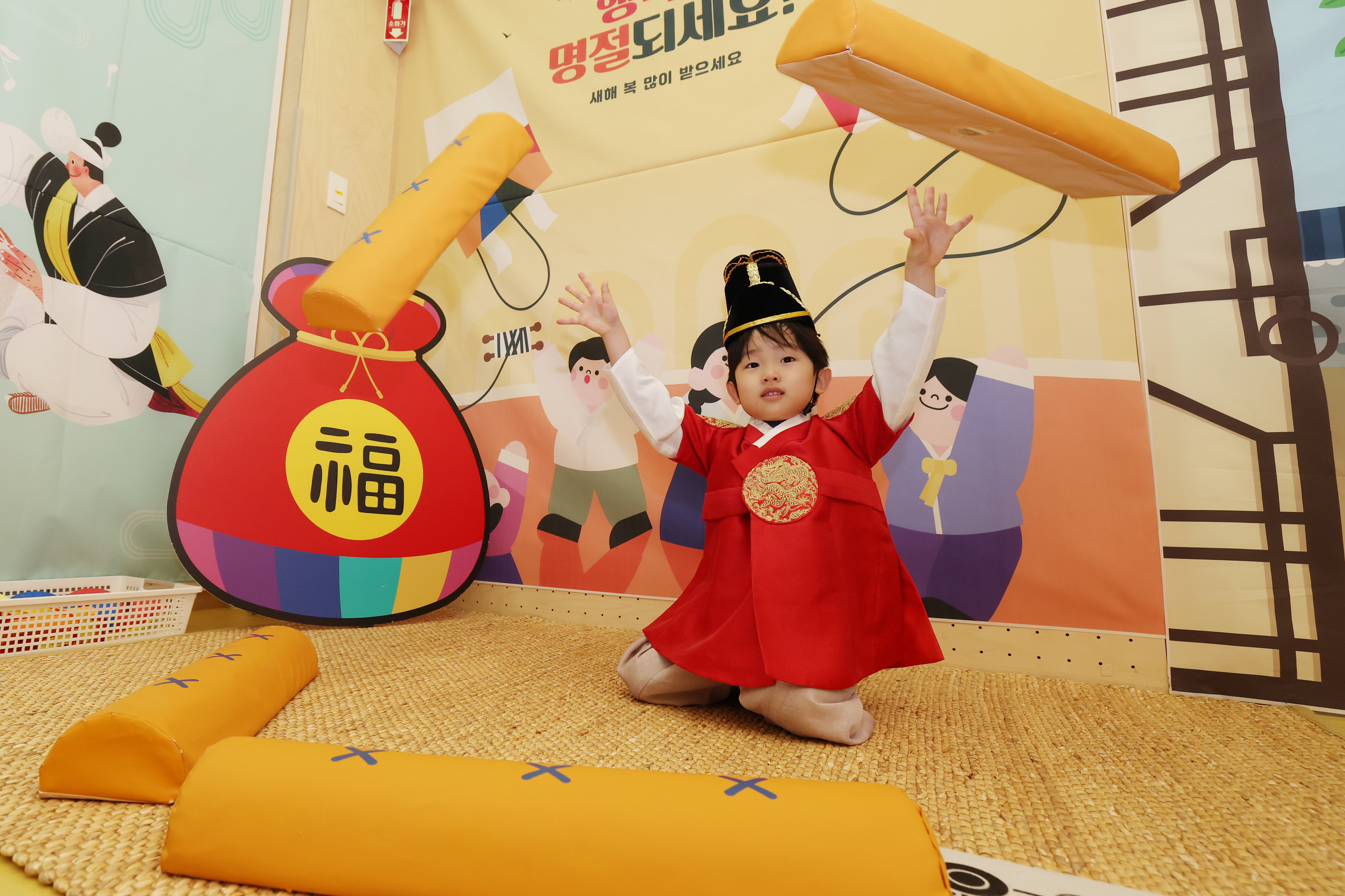
A child on Feb. 12 throws a large stick of the traditional board game yunnori at an interactive center for traditional games within a kids cafe in Seoul's Gangdong-gu District.
By Hong Angie
Photos = Lee Jeongwoo
"You go first, grandma!"
The clear voice of a child clad in beautiful Hanbok (traditional clothing) echoed on the afternoon of Feb. 12 ahead of the Seollal (Lunar New Year) holidays at the courtyard of I-Mom Gangdong, a branch of a kids cafe, in Seoul's Gangdong-gu District. People smiled at the words spoken by the child who offered someone else a turn.
Held to mark Seollal, the event was designed to have children experience the country's distinctive culture and share familial affection. Children burst into laughter in throwing up large sticks while playing the traditional board game yunnori, while those playing jegichagi (kicking a shuttlecock) twitched and twirled with excitement.
Other children's eyes were filled with seriousness and energy as they carefully tossed toy arrows into the pot tuho (pitch-pot).
Seollal is a time when families traditionally gather and wish good health and happiness. Events like this in which families play traditional games allow children, who are now used to smartphones and online games, to learn consideration for others and social rules.
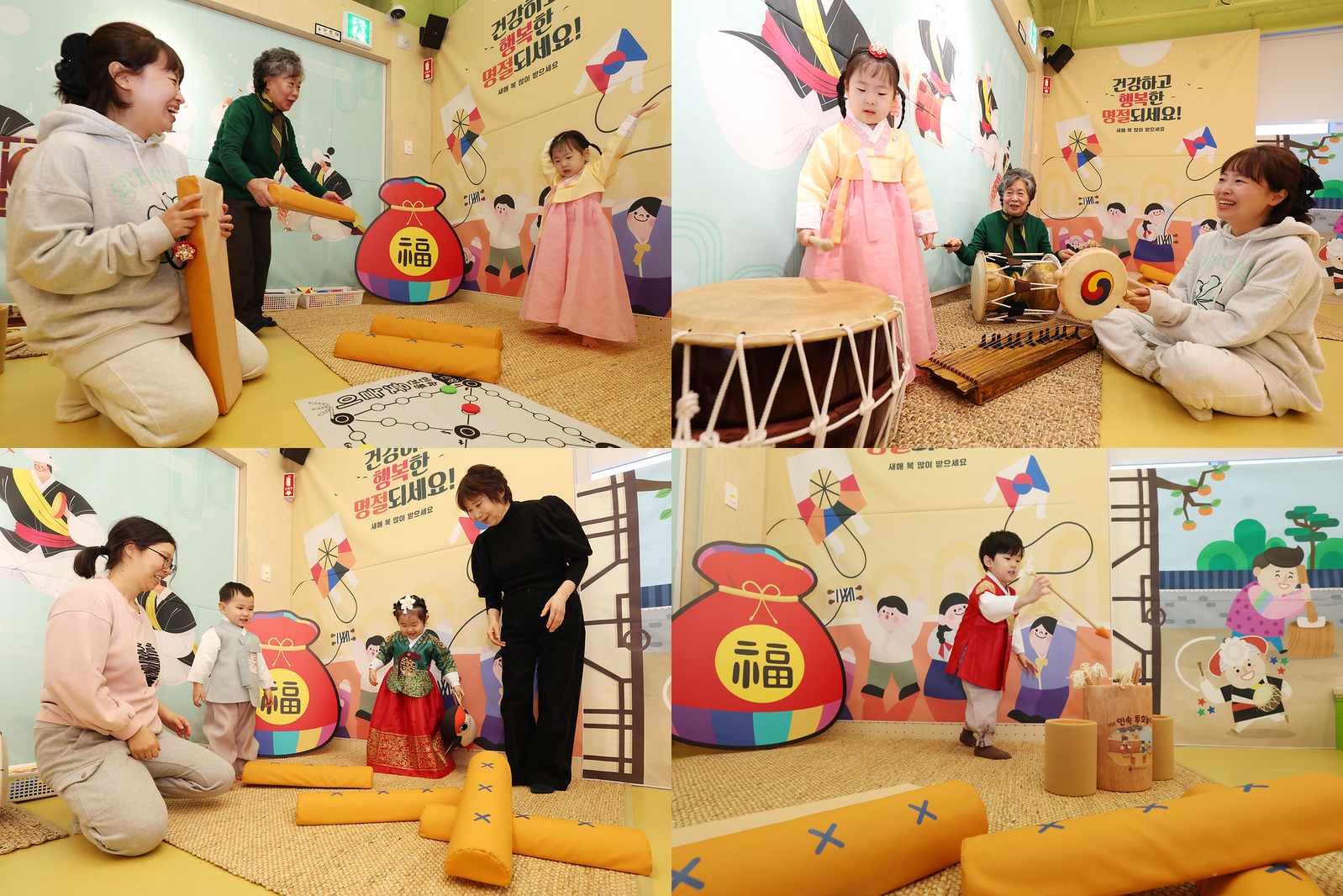
Children on Feb. 12 play the traditional game yunnori (top left and lower right), try traditional instruments (top right) and throw arrows in the traditional game tuho (pitch pot) at an experiential center for traditional games within a kids cafe in Seoul's Gangdong-gu District ahead of Seollal (Lunar New Year).
Warm heart blossoms with gaze of eye contact
Parents at the event said the biggest strength of traditional games is a "warm connection" enabling emotional communication with their children. Such youth can get a more vivid sense of human warmth through in-person interactions rather than smartphone screens.
Children make eye contact with their families while playing yunnori, a traditional board game with four sticks, listen to each other's voices and learn to share feelings. The process of empathizing with every expression from others and laughing together itself becomes a living conversation.
The playground is also a learning space for children to foster resilience. Even if they fail, they learn to smile and try again, filling themselves with positive energy as they look toward the next opportunity.
Children also foster critical thinking skills when devising strategies and brainstorming with their families on moving their group's pieces. A bonus is the health effects of energetically moving their bodies as well as their fingers.
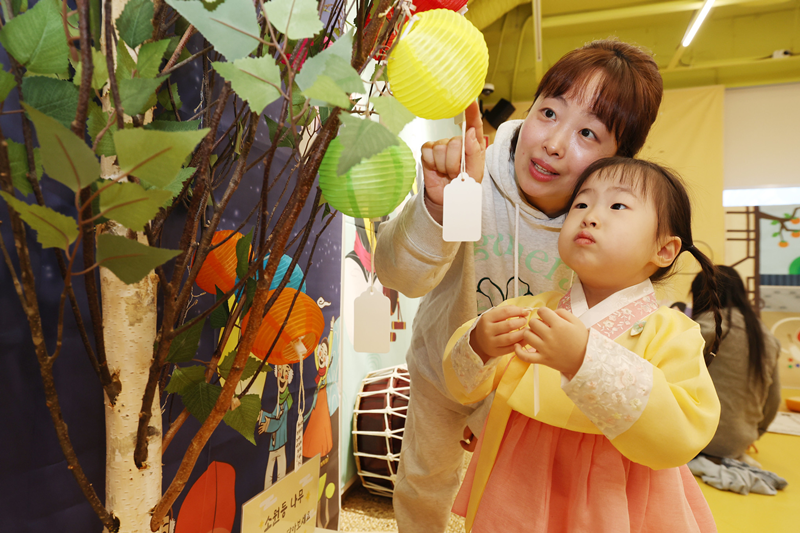
A mother and her daughter on Feb. 12 before Seollal (Lunar New Year) make a wish in front of a lantern tree at a kids cafe in Seoul's Gangdong-gu District.
Time playing together is the world's greatest gift
The most memorable Seollal lesson for children this year could be having fun with family. Rather than forcing something on them, adults can take the initiative and play yunnori to interact with their children, allowing consideration and love to naturally flow.
The experience of patiently waiting for one's turn, the spirit of collaboration in genuinely cheering for one's team and the example of keeping promises make the children's characters shine.
shong9412@korea.kr