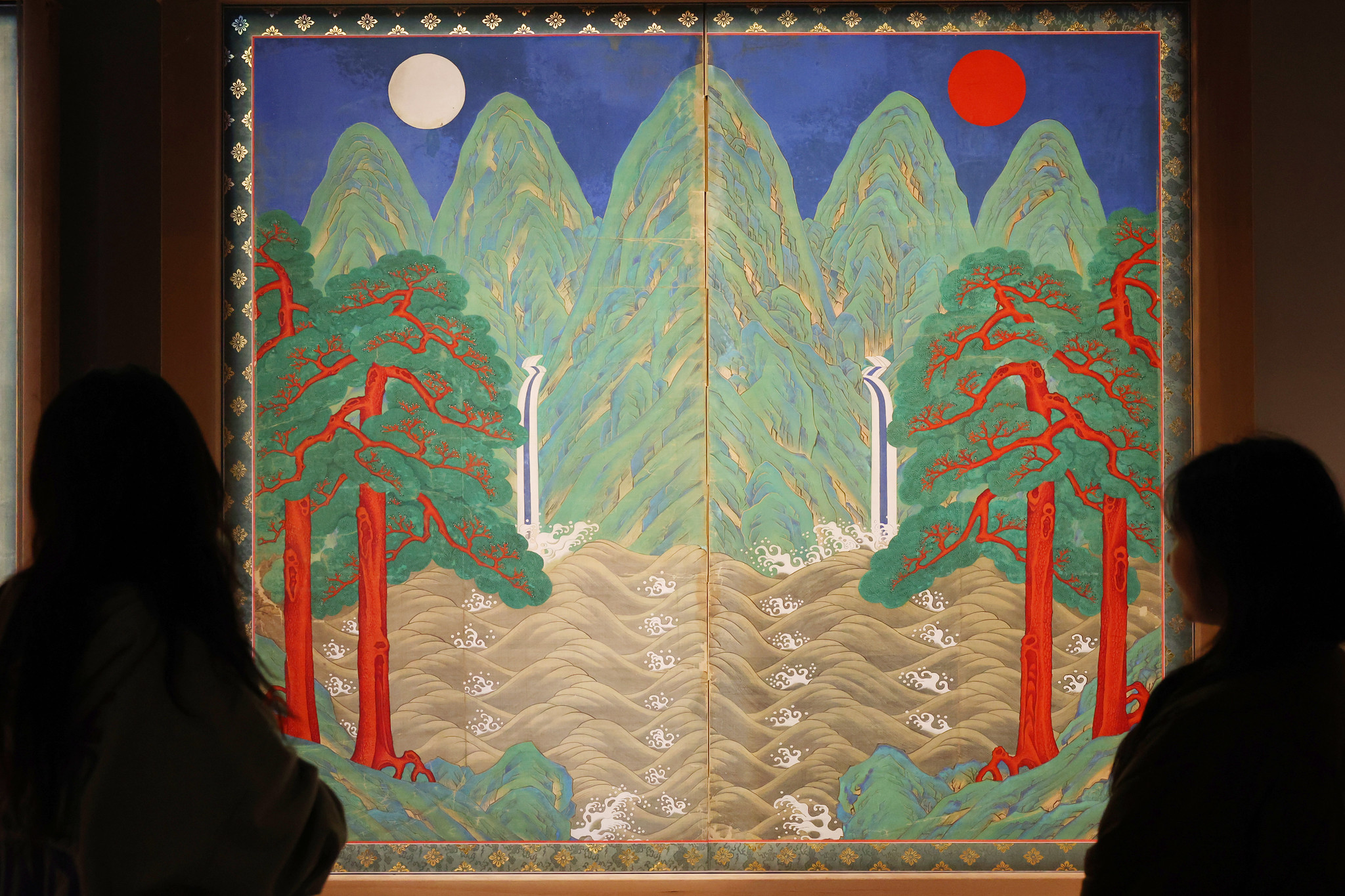
An irworobongdo, a traditional folding screen showing the sun, moon and five mountain peaks representing the king of the Joseon Dynasty (1392-1910), is shown on Feb. 25 at the reopened Calligraphy and Painting Gallery of the National Museum of Korea in Seoul's Yongsan-gu District. (Lee Jeongwoo)
By Charles Audouin
The National Museum of Korea has reopened its Calligraphy and Painting Gallery after a hiatus of six months.
Calligraphy and painting both use brush, ink and paper. In East Asia, the perception is that both arts share a common origin.
The reopened gallery has a revamped exhibition structure and spatial design. To ensure their proper preservation, the exhibits displayed will be rotated every two to three months and themed exhibitions will highlight masterpieces by the country's renowned calligraphers and painters.
This space showcases a diversity of calligraphy and paintings including traditional calligraphy, ancient poetry and prose, and portraits from the Joseon Dynasty (1392-1910). Alongside works from the museum's collection, it also displays works from private collections rarely shown to the public.
At a media event on Feb. 25 for the reopening, the museum's director You Hong June said, "After the paintings are put on display, they will be removed after three months and kept out of exhibition for six months to a year for preservation."
"We've run the exhibition by frequently rotating the works but visitors didn't know what kinds of works were on display," he added. "Our plan now is to decide a distinctive theme and focus on a single point every three months to set a clear direction for the exhibition."
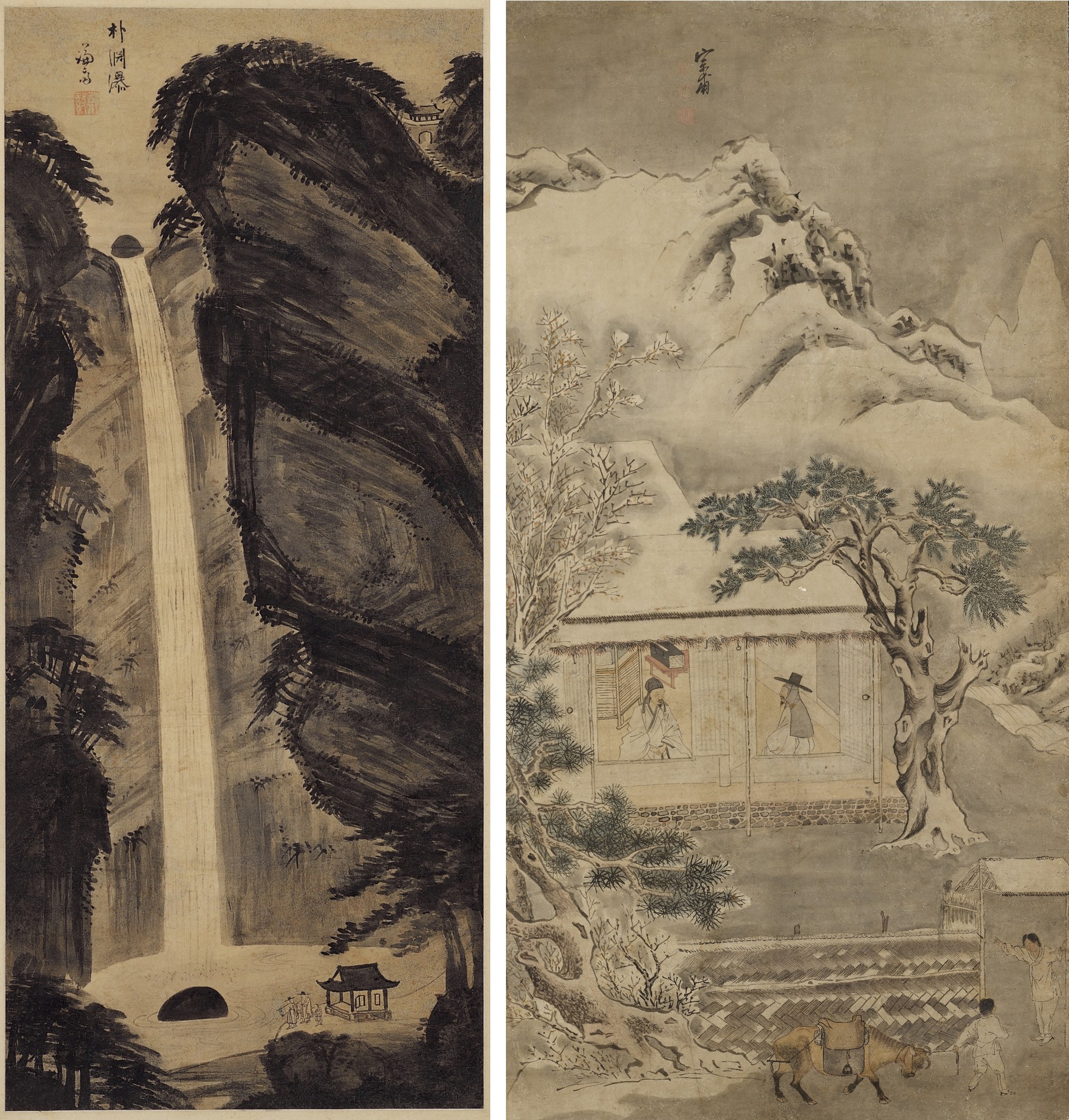
Jeong Seon's "Bakyeon Falls" (left) and Jo Yeong-seok's "Visiting a Friend in the Snow" (National Museum of Korea)
The first exhibition runs through April 26 and features 70 carefully selected works including those by Joseon painters Jeong Seon (1676-1759), who led the golden age of painting in the late Joseon period, and Jo Yeong-seok (1687-1761), who combined realism with moral themes.
In 1711, Jeong, then 36, traveled to Geumgangsan Mountain with friends and expressed the scenery there through painting. The compilation of 13 works he produced at the time comprise "Album of Geumgangsan Mountain."
His masterpiece "Bakyeon Falls," which came in his later years, will be shown for the first time in 20 years. This painting reflects his signature brushwork through the overwhelming grandeur of the falls.
Also on display is "Visiting a Friend in the Snow" by Jo, Jeong's longtime friend. It depicts a conversation between a scholar and a friend who braves his way through heavy snow to visit, reflecting the lofty mindset and aura of the Joseon literati.
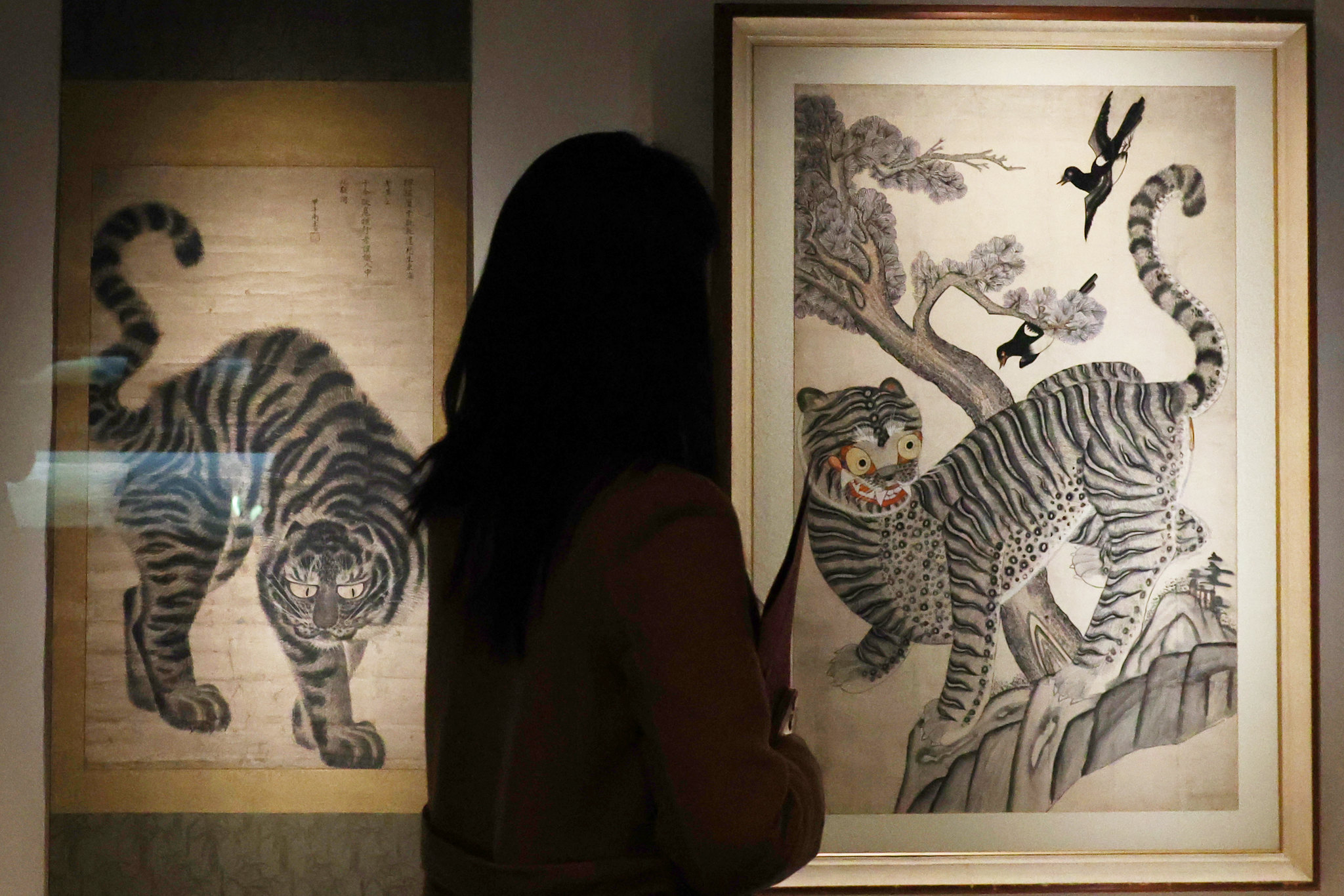
This photo of a hojakdo, a traditional genre of painting featuring a magpie and a tiger, was taken on Feb. 25 at the Calligraphy and Painting Gallery of the National Museum of Korea in Seoul's Yongsan-gu District. (Lee Jeongwoo)
Technical innovation also went into the renovation of the gallery. Reproductions of inscriptions on ancient tombstones were made by 3D layered printing techniques, showing how modern technology can promote the aesthetic appeal of traditional calligraphy.
The museum's Immersive Digital Gallery 3 will host four themed exhibitions this year featuring leading artists and eras. The exhibition of the works of Jeong and Jo will be followed by those highlighting Kim Hong-do (May 4 to Aug. 2), Kim Jeong-hui (Aug. 10 to Nov. 29) and paintings from the late Joseon period (Dec. 7 to Feb. 28, 2027).
"Paintings are the crown jewels of any museum," Director You said. "I hope for visitors to come to our newly reopened Calligraphy and Painting Gallery at any time and experience the value and beauty of our calligraphy and paintings."
caudouin@korea.kr