- 한국어
- English
- 日本語
- 中文
- العربية
- Español
- Français
- Deutsch
- Pусский
- Tiếng Việt
- Indonesian
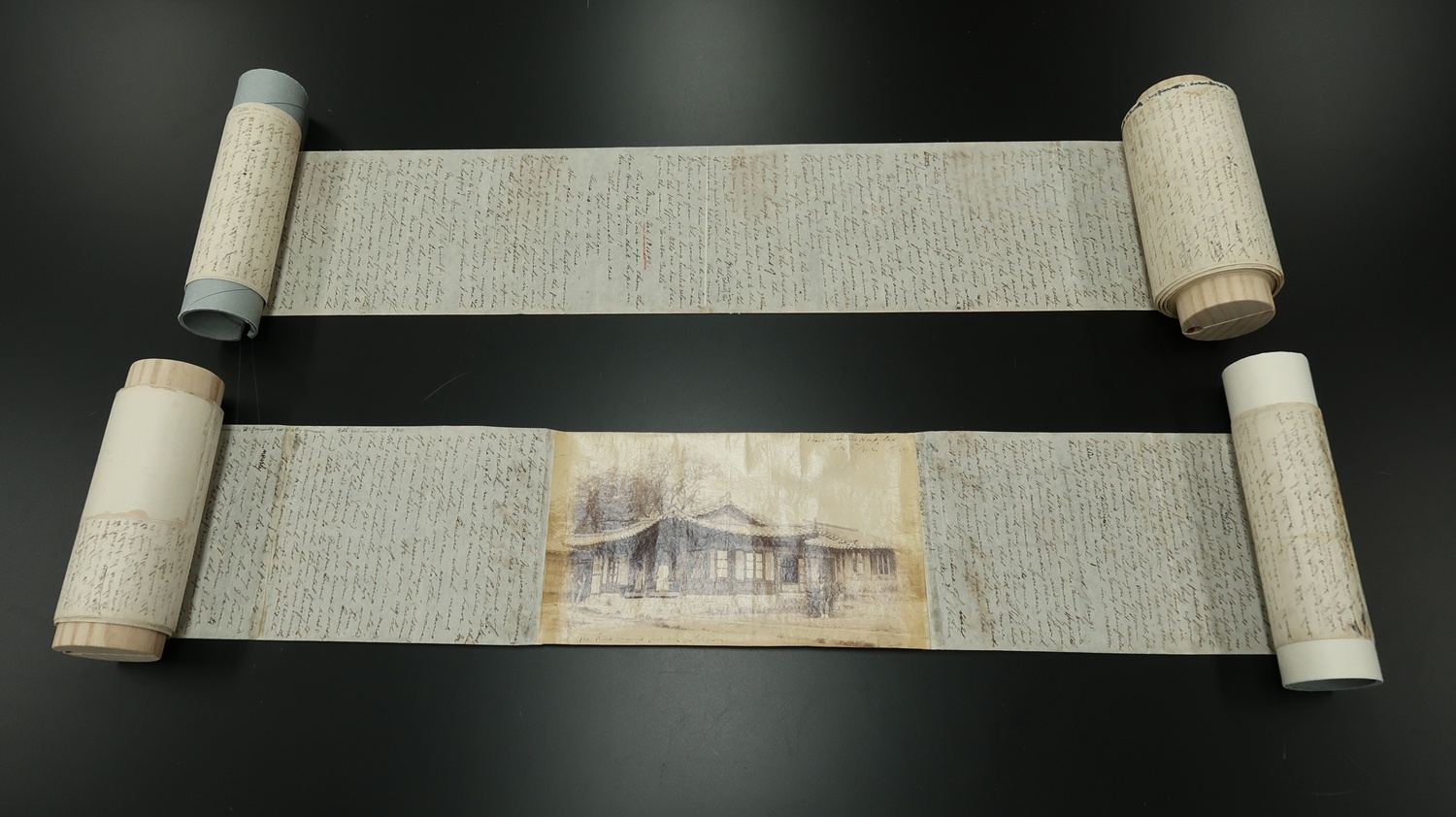
Scrolls of travel letters by American missionary Rosetta Sherwood Hall (Yanghwajin Archives)
By Kang Gahui
Firsthand accounts of 19th-century Korea written by an American missionary 136 years ago have been unveiled.
To mark National Health Day, the National Archives of Korea (NAK) on April 7 put on public display for the first time the restored scrolls of travel letters by Rosetta Sherwood Hall housed at the Yanghwajin Archives.
This travelogue meticulously recounts her life from the time she left the U.S. in 1890 for medical missionary work until her early days in Joseon, the name of Korea at the time. The records were written on a 31.8 m-long scroll made by connecting 94 letters.
The letters vividly depict through Hall's eyes the poor medical conditions and daily life in 19th-century Joseon.
They include 59 rare photographs that she took showing Bogunyeogwan, a medical clinic for women built in the Hanok (traditional architecture) style, palanquins, traditional weddings and processions led by King Gojong to greet envoys from the Qing Dynasty of China.
NAK said the letters hold high historical value in showing the start of modern medicine in Korea and life at the time.
Working in Seoul and Pyeongyang for 43 years in the 19th century, Hall helped launch the country's first hospital for women and training for female doctors of Western medicine.
kgh89@korea.kr