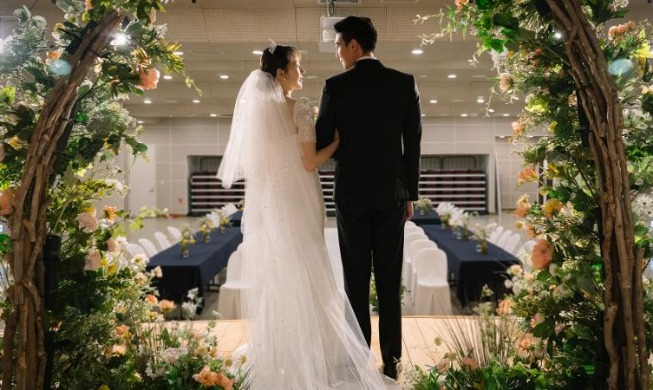
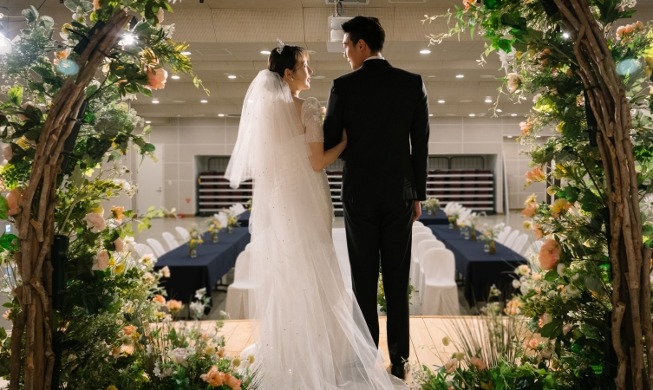
Amid changing social attitudes toward matrimony, the number of marriages in Korea is increasing. The figure hit about 240,000 last year, the highest in seven years. The domestic culture and institution of marriage are also evolving in blending traditional and modern customs and practices. Korea.net explores trends in Korean marriage culture through the series "Seoulmates."
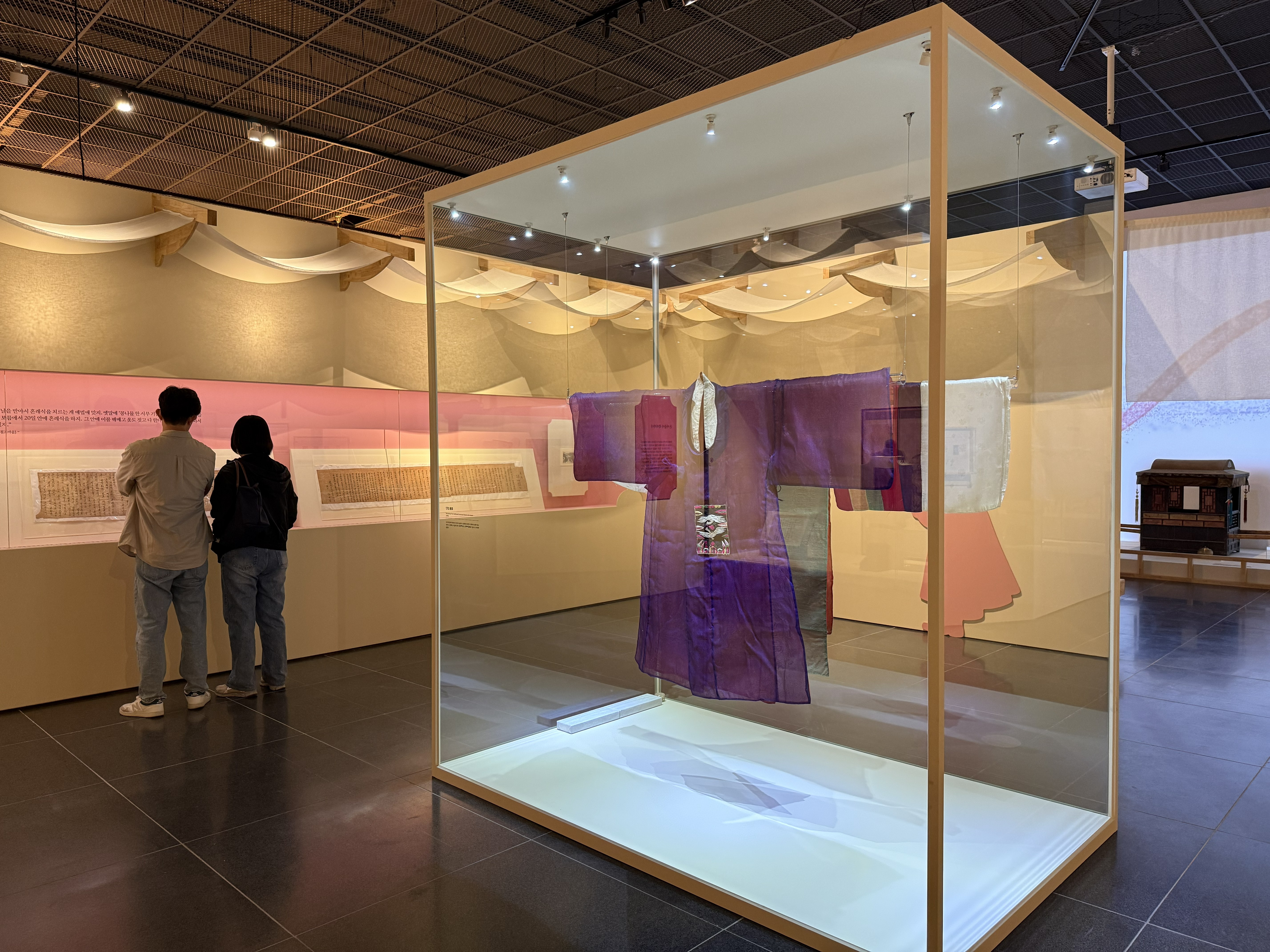
Visitors on May 23 view historical wedding records at the Ulsan Museum exhibition "Ulsan Wedding Chronicles."
By Hong Angie
Marriage is about forging a bond, the nature of which varies by era and culture. Whereas a wedding in the West focuses on the bride and the groom, traditional weddings in Korea were large social rituals and festivals that the families and their community participated in.
The exhibition "Ulsan Wedding Chronicles" running through July 26 at Ulsan Museum in Ulsan sheds light on the essence of domestic marriage culture and its evolution over time. Part 1, "Bond Sanctioned by Ritual," vividly recreates the rigid procedures and etiquette of forming a marriage based on Confucian principles.
Familial pride engraved on apparel
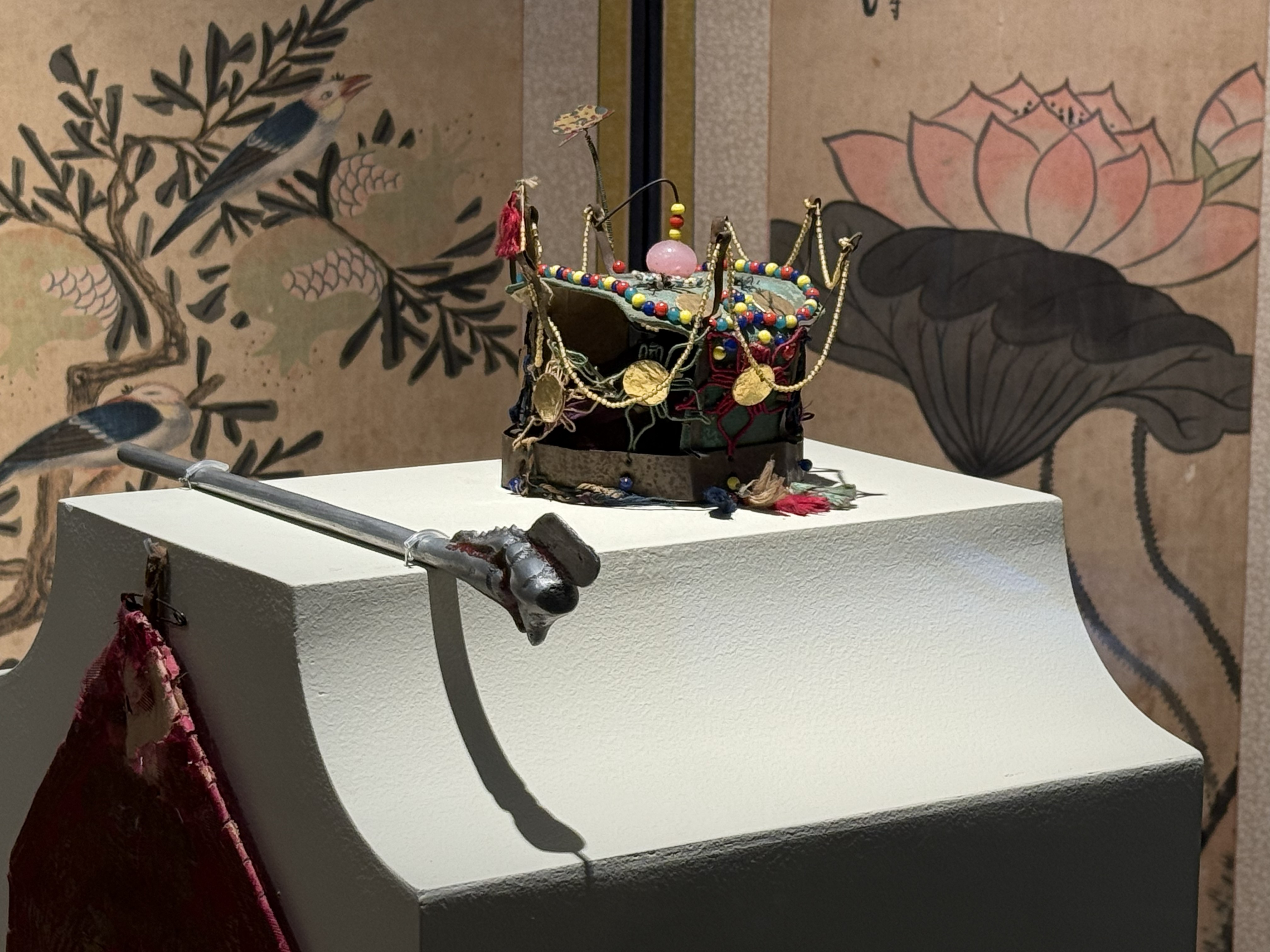
A binyeo (hairpin) and a jokduri, or a ceremonial head piece for women, are displayed at the exhibition "Ulsan Wedding Chronicles" at Ulsan Museum in Ulsan.
The first things that grab visitor attention after entering the exhibition hall are fancy wedding garments and accessories. They evoke images of flags fluttering in wedding processions of yesteryear and raise anticipation of a new life.
The wonsam, a traditional wedding robe for the bride that blends purple and green, has intricate embroidery and patterns that embody the beauty of brides in the past and the dignity of their families. The garment shines like a magnificent artwork in its own right.
Brides in the past wore heavy jokduri, a ceremonial headpiece for women with vibrant five-color decorations, and pinned binyeo (hairpins) to ward off evil spirits and attract good fortune. The items were also cultural devices to remind brides to approach the ceremony with reverence and shoulder the heavy social responsibility of uniting two families.
Unlike Western wedding dresses, which emphasize the bride's purity and beauty with a thin, transparent pure white veil, jokduri and binyeo represent the unique aesthetic of traditional Korean wedding attire, which transcended mere adornment to symbolize propriety.
Wooden geese couple: symbol of unflinching vow
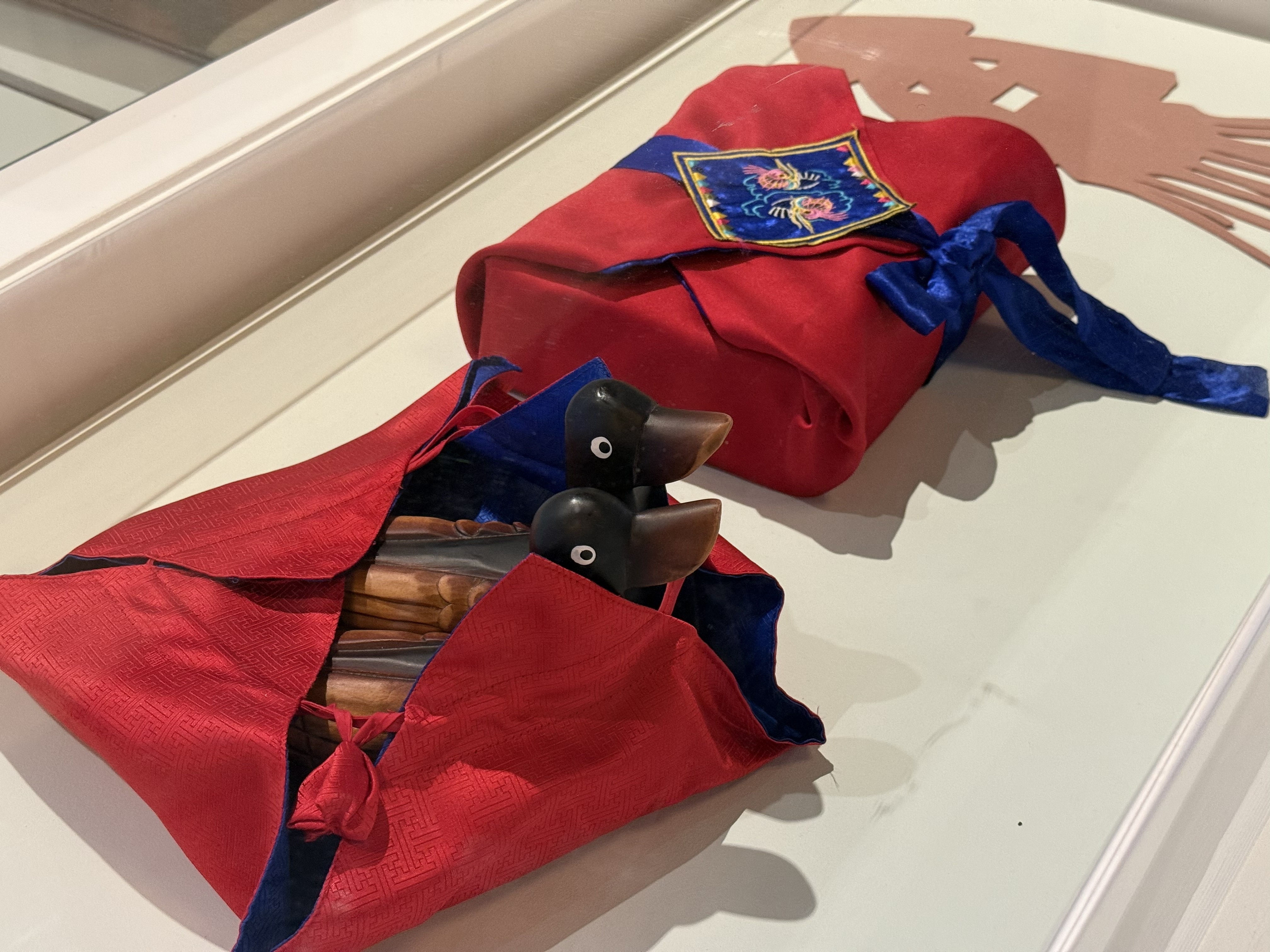
Pair of traditional wooden geese wrapped in blue and red cloth
Whereas a wedding ring in the West represents eternal love between two spouses, a pair of wooden geese in Korea symbolizes the couple's unwavering loyalty. The tradition of giving this gift to the bride's mother and carefully preparing wedding gifts reflects Korea's unique values, which view marriage not only as a union between two people but a bond of strong trust and mutual respect between their families.
Newlywed room: hope for new start
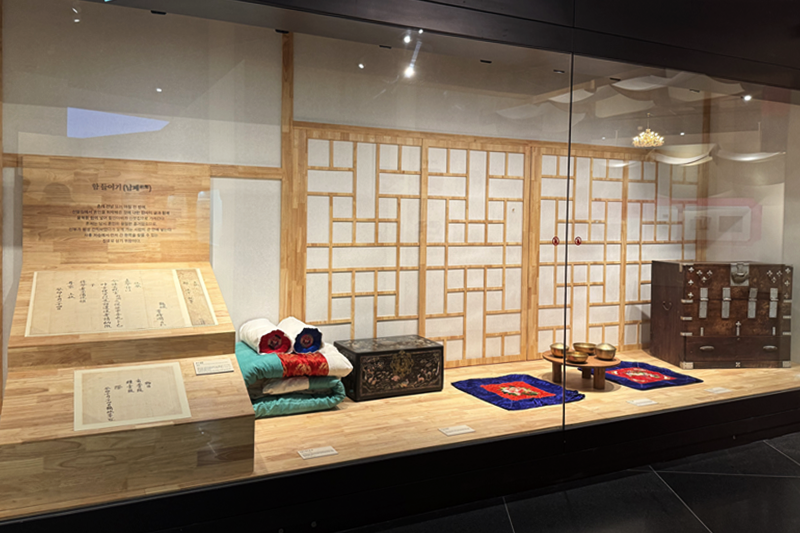
Replica of traditional sinhonbang (newlywed room)
The sinhonbang (newlywed room) exudes the rich history of Korean wedding traditions. The traditional chest of drawers, dowry box, colorful quilt and Mandarin duck ornaments are not just daily items; they represent the wish for stability and harmony in the new household.
While the Western tradition is preparing for the future through a honeymoon and gift registries, Korea filled the dowry and newlywed room with auspicious wishes for a fresh start.
shong9412@korea.kr