By Uyen Nguyen
Video = National Folk Museum of Korea
An exhibition newly opened in Seoul offers a glimpse into North Korea's folk traditions and everyday culture.
The National Folk Museum of Korea on Aug. 12 launched "Zero: North Korea Encountered on the Path of Folk Culture."
On display are the lifestyles and regional aesthetics of the North, primarily through the 346 items from 316 pieces of artifacts from the museum's collection that predated the Korean Peninsula's liberation from Japanese colonial rule in 1945. Select artifacts are being shown to the public for the first time in some 80 years after being in storage over that time.
The "zero" in the exhibition's title symbolizes a blank slate and starting point to develop a new understanding of the North by setting aside preconceptions. The goal is to present the North not as something foreign or aloof but as another way of life shaped by the same historical and cultural foundations.
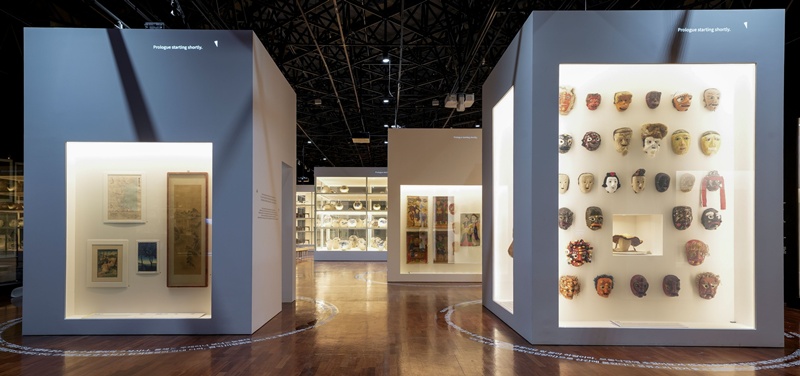
A highlight of the exhibition is the arrangement of the artifacts in tall "storage towers," letting visitors walk between the towers and see the displays up close. (National Folk Museum of Korea)
Upon entering the exhibition hall, visitors can immediately see the six tall "storage towers," a format inspired by the open-concept storage facilities at the museum's branch in Paju, Gyeonggi-do Province.
Visitors can move between the towers as if walking through a forest of buildings, seeing up close folk artifacts including household items and crafts. The exterior walls of the towers also serve as screens for displaying related videos throughout the exhibition space.
The exhibition starts by exploring the distinct regional cultures of North Korea through folk materials from Gaeseong and the provinces of Hwanghae-do, Pyeongan-do and Hamgyeong-do before shifting to the daily lives of their residents.
Bongsan, Gangnyeong and Haeju masks along with those used in the Bukcheong Saja Noreum (Lion Mask Dance of Bukcheong) reflect the spirit and joy of communities. Haejuban, a type of soban (a traditional portable dining table) from Haeju, Hwanghae-do, and bandaji (traditional wooden storage chest) also showcase the beauty of traditional crafts.
Well-known cuisine such as Pyeongyang naengmyeon (cold noodles) and Gaeseong mandu (dumplings) also show the lifestyle shared by people in both Koreas.
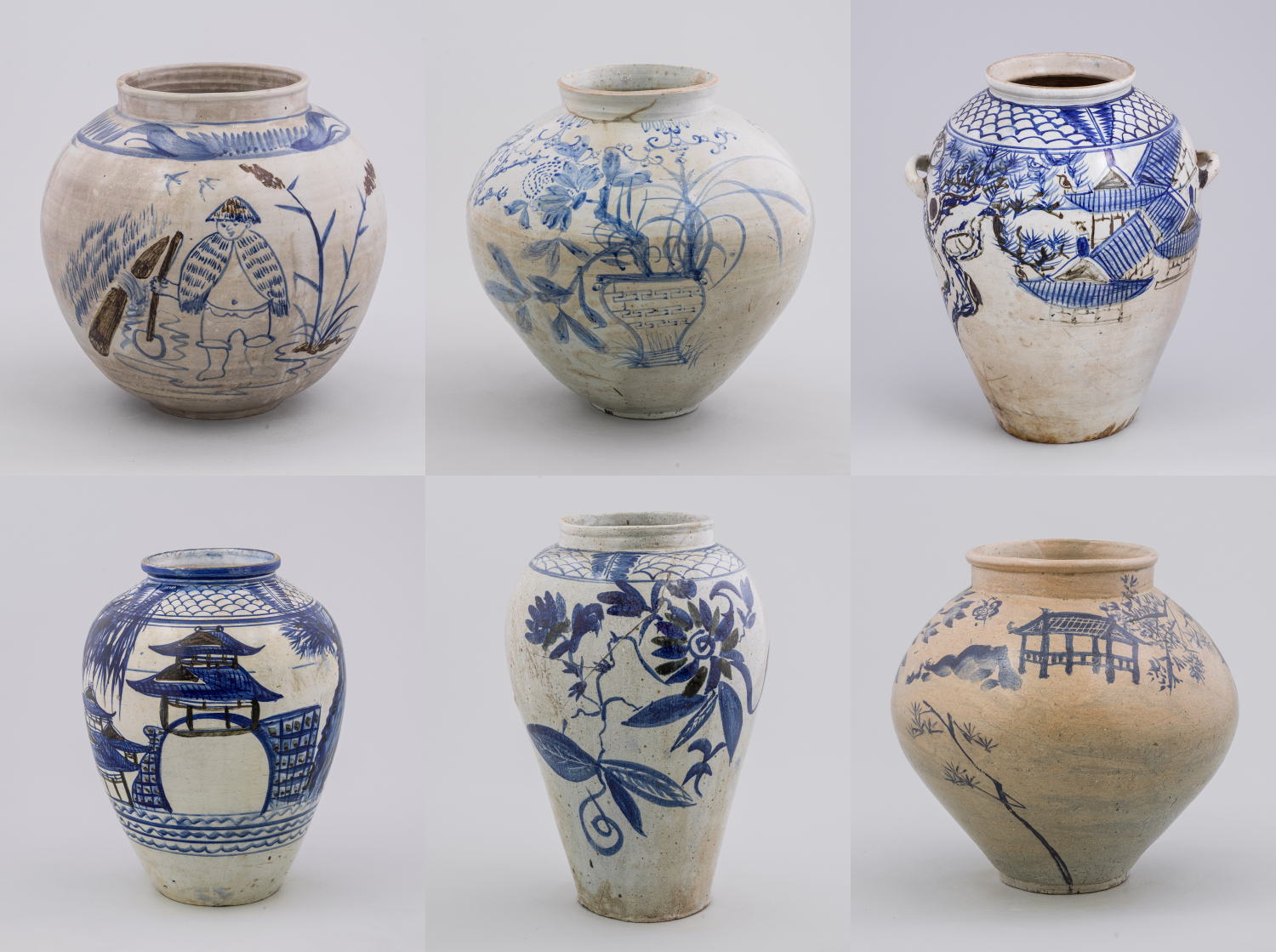
These Haeju jars from the early 20th century show free-flowing and lively designs of peonies, fish, chrysanthemums. (National Folk Museum of Korea)
At the center of the exhibition are 88 jars made in Haeju. Unlike onggi (traditional earthenware), these containers were kept and used indoors spaces such as daecheongmaru, a large and wide wooden-floored hall in the center of a traditional house, and pantry. They also served as decorative objects symbolizing a household's wealth.
The jars display the sturdy, practical forms of onggi and the clean, elegant aesthetic of cheonghwa baekja (blue and white porcelain). Their patterns including peonies, fish and chrysanthemums express wishes for wealth, prosperity and longevity.
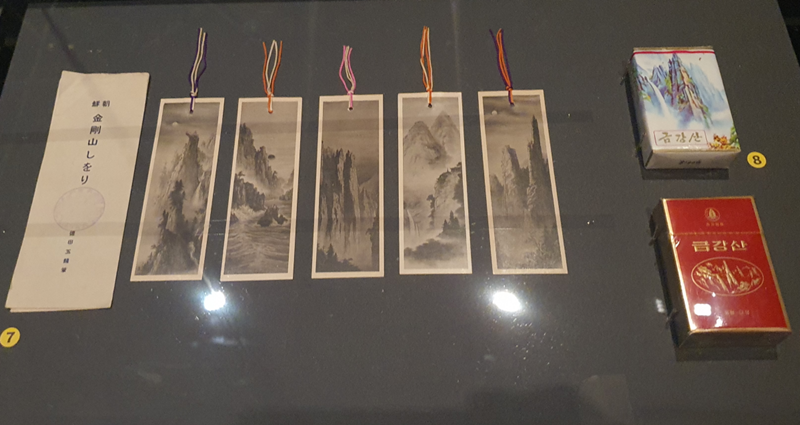
The Bookmark Set of Geumgangsan Mountain was a souvenir for visitors to the mountain during Japan's 1910-45 colonial rule of the Korean Peninsula. (Uyen Nguyen)
The exhibition also features a wealth of materials on the North's Geumgangsan Mountain, which is renowned for its breathtaking scenery.
Items showing how the mountain has been remembered over the years include travelogues, maps and folding screens as well as photo albums, postcards and bookmarks produced as tourist souvenirs in the modern era.
One of the works is "Cathedral Cliffs," which was done by American artist Lilian Miller after she visited Geumgangsan. The work offers a foreign perspective on the mountain, with Miller likening its unique rocky cliffs to the forms of a Western cathedral.
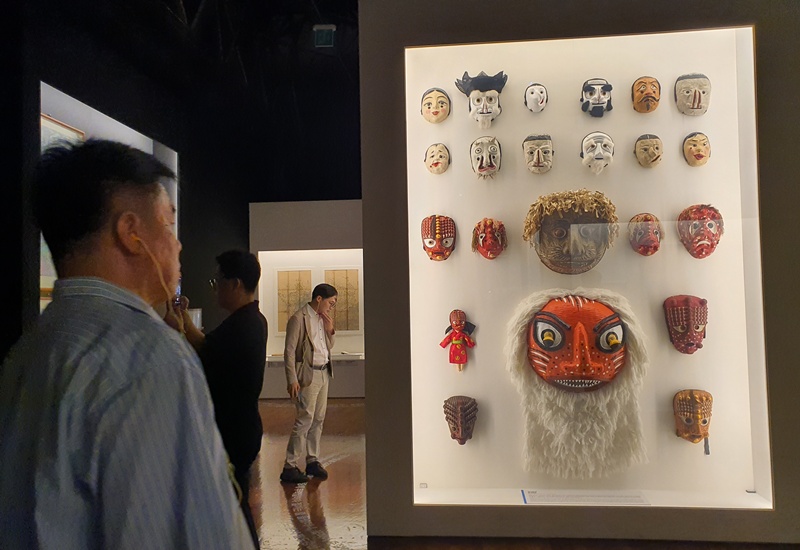
Exhibition hall of "Zero: North Korea Encountered on the Path of Folk Culture" at National Folk Museum of Korea (Uyen Nguyen)
North Korea is geographically close yet has remained unfamiliar for decades. This exhibition traces the cultural roots shared by the natives of the Korean Peninsula and Geumgangsan -- a mountain beloved by both Koreas -- offering an opportunity to rediscover the roots of a shared culture and lives that are more similar than different.
Admission is free and the event runs through Feb. 14 at the museum's Special Exhibition Gallery 1.
uyen81@korea.kr