- 한국어
- English
- 日本語
- 中文
- العربية
- Español
- Français
- Deutsch
- Pусский
- Tiếng Việt
- Indonesian
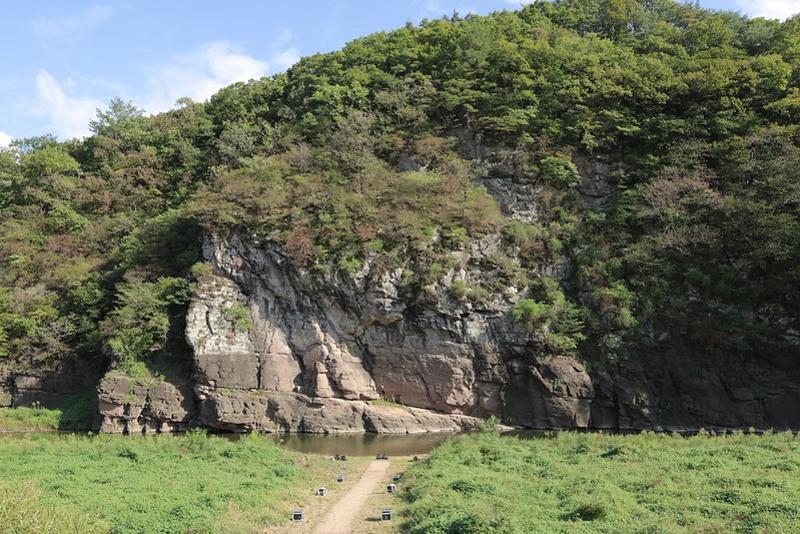
The Petroglyphs of Bangudae Terrace are in the village of Daegok-ri in the town of Eonyang-eup in Ulsan's Ulju-gun County.
By Lee Jihae
Photos = Park Dae Jin
Walking on the trail alongside Bangucheon Stream in Ulsan offers a glimpse of a massive rock cliff that has withstood the test of time across the waterway.
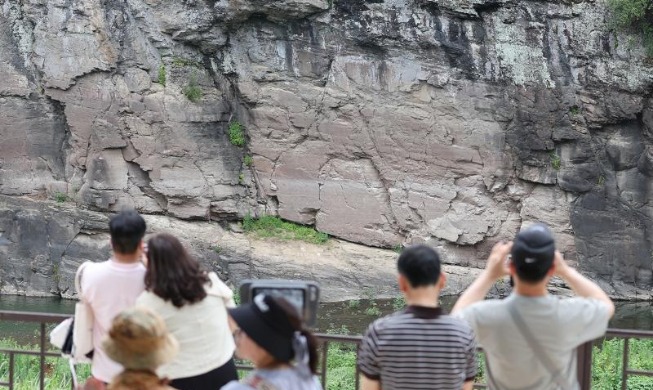
Looking through the telescope at the observation deck shows traces of life in the prehistoric era etched into the rock's surface. The Petroglyphs of Bangudae Terrace in the village of Daegok-ri are a record of life carved with stone tools by people 7,000 years ago, long before the advent of writing.
Korea.net on Sept. 8 visited this site, which was designated UNESCO World Heritage.
The petroglyphs include those discovered in the village of Cheonjeon-ri on Dec. 24, 1970, and at Bangudae Terrace in Daegok-ri found on Christmas Day the following year. Thus two major heritage sites of humanity were discovered in the same region over two consecutive years.
The Cheonjeon-ri site features Bronze Age motifs and inscriptions from the ancient Silla Kingdom (57 B.C.– A.D. 935) spanning millennia of time and space. Those at Bangudae Terrace depict a rich array of Neolithic-era activities including hunting for whales and on land as well as fishing.
At one point, a major portion of the petroglyphs was submerged following the construction of the Sayeon Dam. But careful management of water levels and conservation efforts have helped preserve the carvings in their original form to this day.
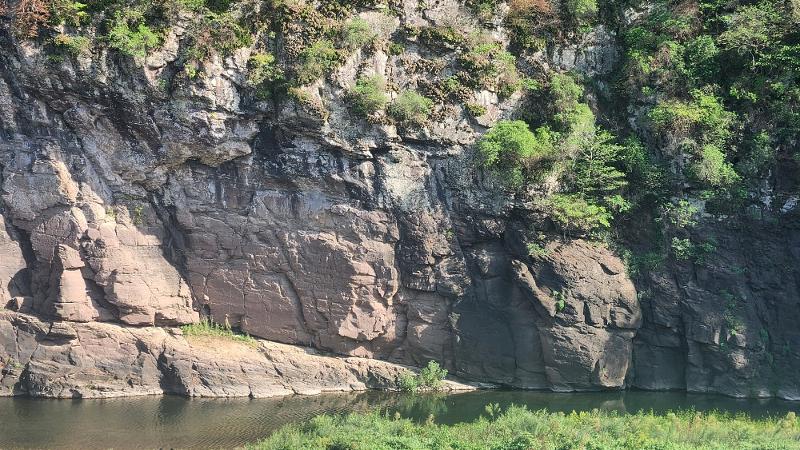
Petroglyphs of Bangudae Terrace in Daegok-ri
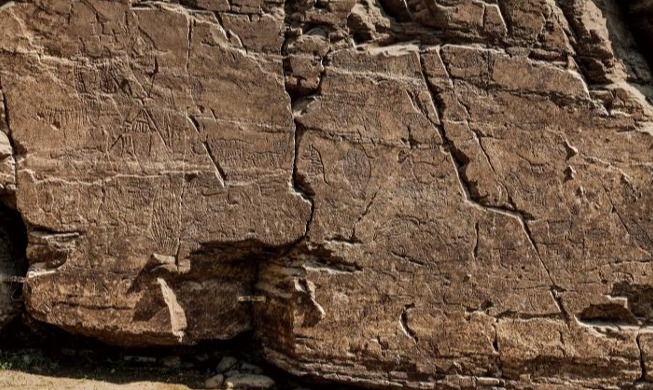
The petroglyphs at Bangudae Terrace comprise 312 engravings on a massive rock face measuring about 8 m wide and 4.5 m high. The drawings are in the lower reaches of Bangucheon Stream and a view from a telescope shows the keen observational skills of Neolithic people.
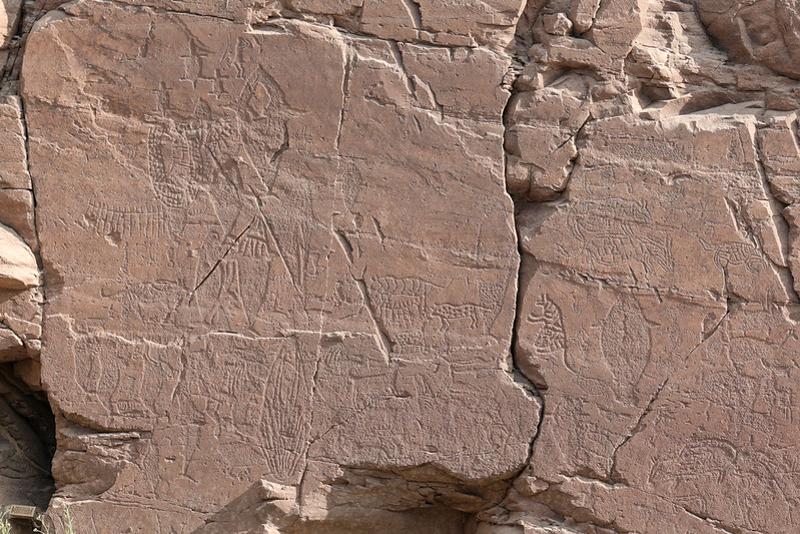
The Petroglyphs of Bangudae Terrace show marine life like turtles and whales intricately depicted alongside land animals such as leopards and lions.
Land animals such as tigers, deer and wild boars as well as sharks, turtles and numerous whales come vividly to life on a single rock canvas, with the intricate details of the whales particularly striking. At least seven whale species like the northern right, humpback, gray, finless porpoise, sperm, pilot and orca are shown with their distinctive morphological traits realistically portrayed.
These engravings collectively form a three-dimensional record of prehistoric life on the rock face. The scenes unfold in sequence from the pursuit and hunt for whales on boats with harpoons to hauling the captured mammals ashore for cutting and distribution.
These images provide invaluable evidence that a people with an advanced fishing culture and organized whaling practices from prehistoric times.
In addition, scenes show hunters capturing wild boars and deer with spears or snares and trapping tigers using pits or nets. Others display dancing shamans and rituals that were likely prayers for success in hunting and fishing or ceremonies performed after a successful hunt or catch, reflecting the ritual culture and spiritual life of Neolithic people.
The Petroglyphs of Bangucheon Stream last year were inscribed as UNESCO World Heritage -- Korea's 17th -- at the World Heritage Committee's annual session, gaining global recognition for outstanding value.
jihlee08@korea.kr