- 한국어
- English
- 日本語
- 中文
- العربية
- Español
- Français
- Deutsch
- Pусский
- Tiếng Việt
- Indonesian
By Lee Jihae
Photos = Lee Jeongwoo
Video = Park Dae Jin
"The King's Warden" is the country's No. 2 all-time box office champion, with sales of 16.72 million tickets since its release on Feb. 4.
The historical blockbuster has also fueled interest in visiting Yeongwol-gun County, Gangwon-do Province, to get a glimpse of where King Danjong, who reigned from 1452-55 as the sixth monarch of the Joseon Dynasty, spent his final days in exile.
The tragic king was usurped by his uncle, Prince Suyang Daegun, and died at age 17, just three years after his forced abdication. The traces of his last days still linger in Yeongwol-gun some 570 years after his death.
Korea.net on April 24 visited the county.
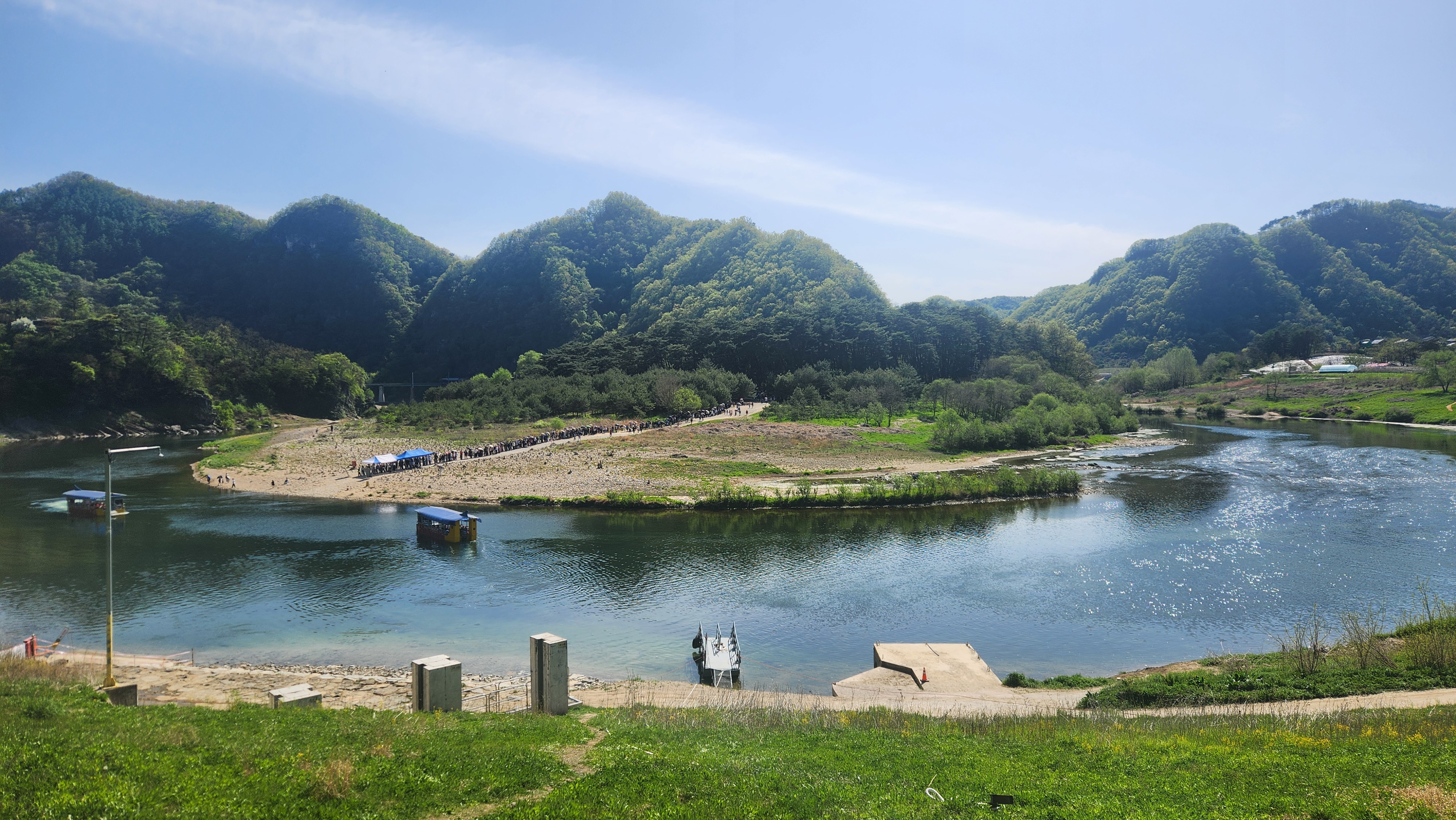
Cheongnyeongpo Meandering Stream in Yeongwol-gun County, Gangwon-do Province, is where King Danjong spent his final days in exile.
Cheongnyeongpo Meandering Stream: residence of exiled king
Cheongnyeongpo area, the main setting of the film, is considered a "natural prison." The small islet is surrounded by the stream on three sides -- east, south and north -- and its west side by the steep cliffs of Yuknyukbong Peak. Nobody can get in or out of this place without a ferry.
Filled with sad isolation amid a beautiful landscape, this was where Danjong was banished to from the capital Hanyang (present-day Seoul's Jongno-gu and Jung-gu districts) after being demoted to Prince Nosan-gun in 1457.
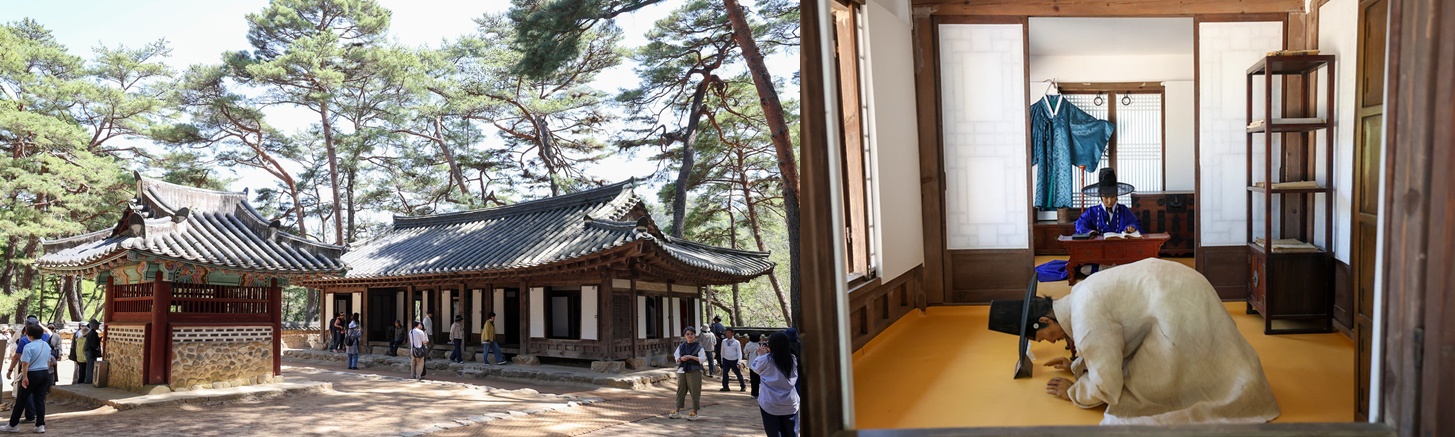
The main building (left) of King Danjong's royal residence had separate quarters for court ladies and servants. Wax figures (right) depict the scene at the time.
Danjong's residence, which was restored in 2000 after being lost to a flood, houses wax figures depicting the king's stay. Eom Heung-do, the film's protagonist, is based on an eponymous real-life figure who was a village chief in the county and secretly visited Danjong at night to keep him company.
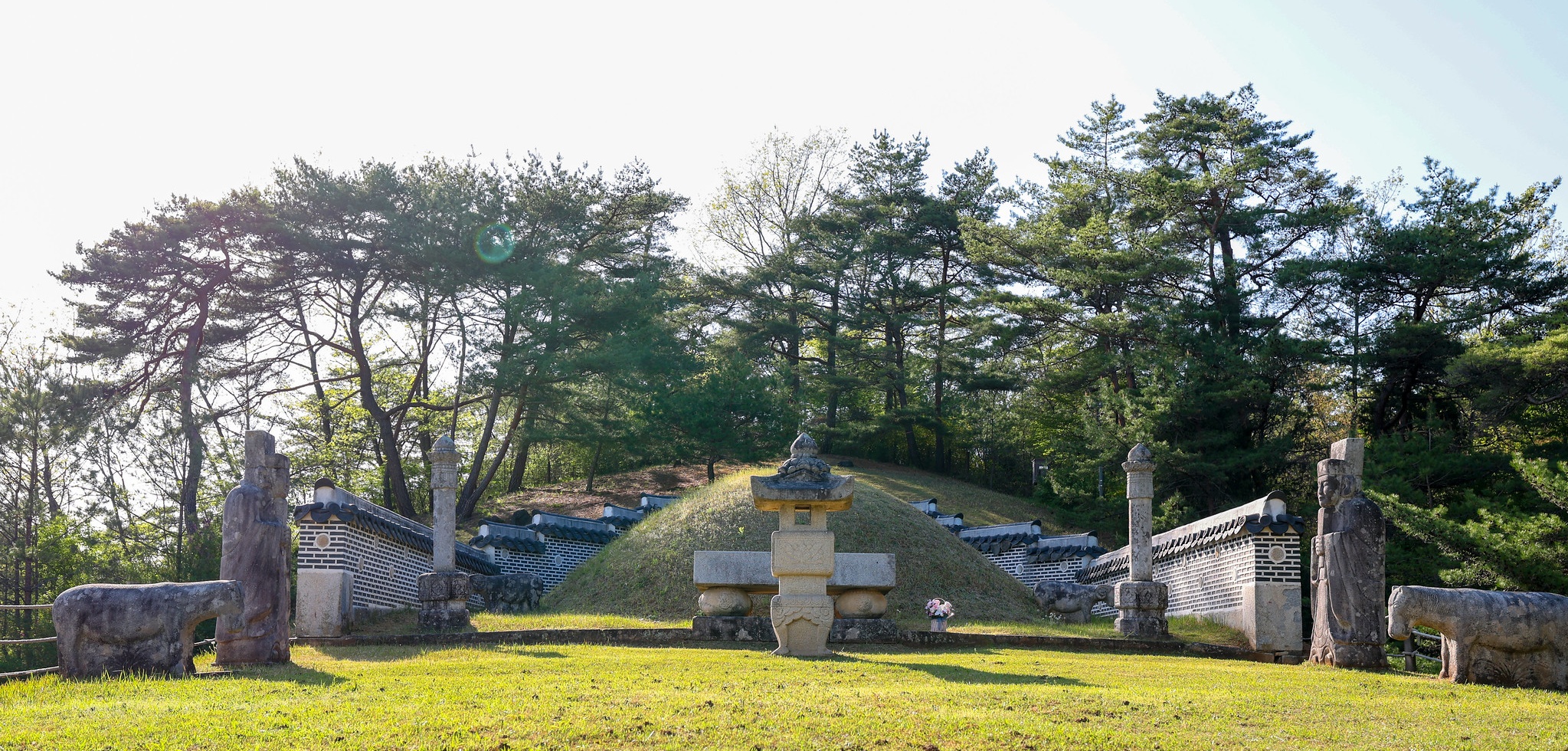
Jangnueng, the tomb of Danjong, who was posthumously restored to the throne in 1698, sports a simpler and more modest style than other royal tombs of the Joseon Dynasty given high political opposition to his restoration.
King Danjong's throne: simpler than other royal tombs
Jangneung, Danjong's tomb, is five minutes away by car from Cheongnyeongpo as the only Joseon royal tomb in Gangwon-do. This broke the custom of locating royal tombs near Hanyang for the living monarch's convenience, as the king had to pay tribute regularly at the tombs of his ancestors.
The isolation and distance from the capital of the tomb reflects Danjong's lonely death.
In 1698, 241 years after Danjong's death, King Sukjong posthumously restored the boy king to the position of a "retired king" and built a royal tomb for him. Because of heavy political opposition to the restoration, Danjong's tomb is conspicuously simple compared to other royal tombs.
It lacks byeongpungseok, or screen stones encircling the burial mound, and nanganseok, or stone fences one step outside of the screen stones, which represent royal dignity.
While other royal tombs have statues of both military and scholar officials, Danjong's only has those of civil officials.
On one side of Jangneung is Jangpanok, a building that enshrines the tablets of 268 subjects loyal to Danjong and people who died while trying to restore him as king. Jangneung is the only royal Joseon tomb with a monument and hall honoring loyal subjects.
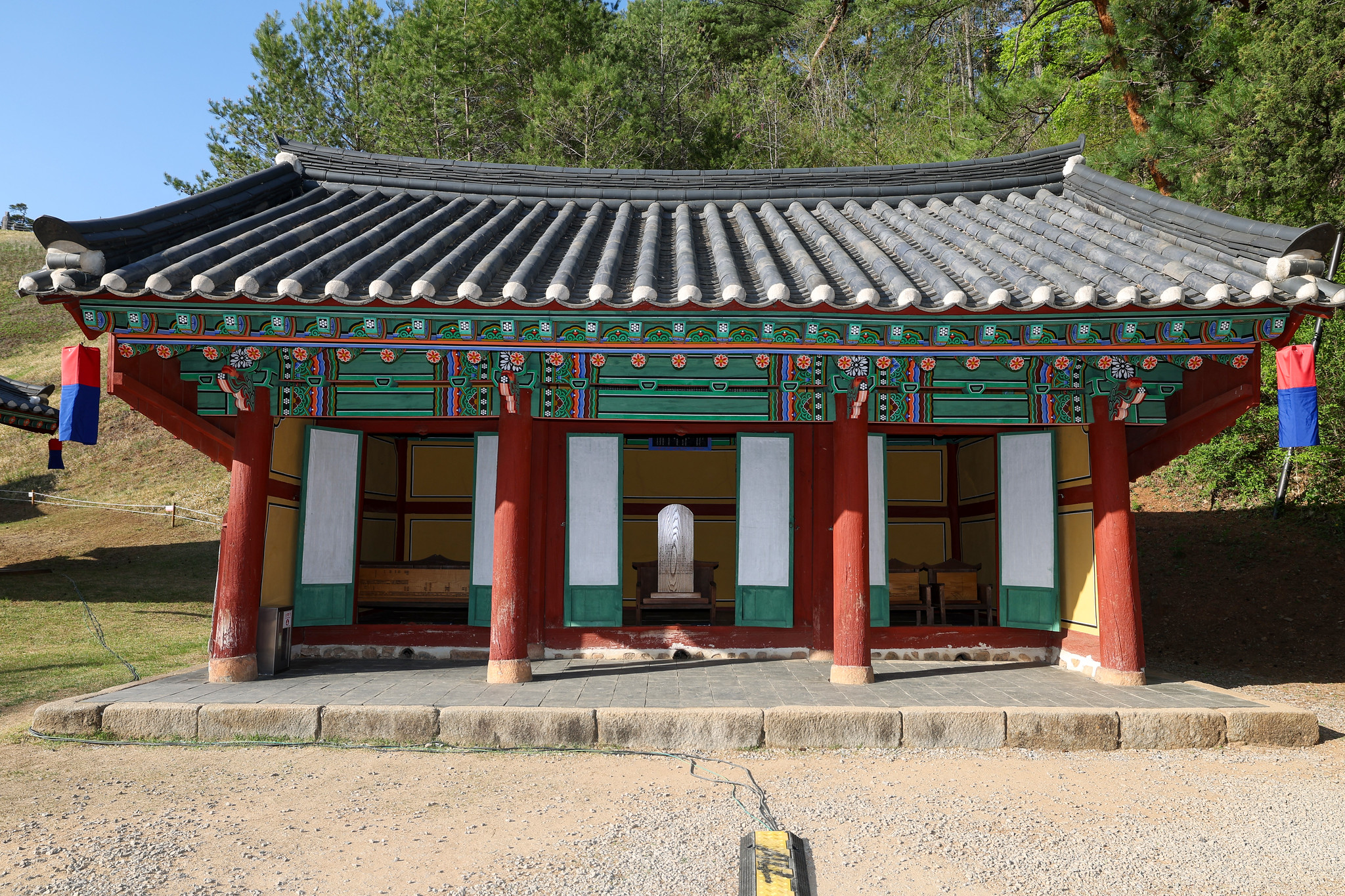
Jangpanok is a building that houses the tablets of 268 loyal subjects and people who died in the process of restoring the honor of King Danjong.
The fate of Danjong remains murky. The Annals of King Sejo said he took his own life but most scholars think this is not credible as it was written by a state institution under King Sejo, who usurped the throne from Danjong.
The Annals of King Seonjo said a royal magistrate presented to Danjong poison under orders from Sejo, while the Annals of King Sukjong and the document Noreungsasil about the death of Danjong said a servant killed Danjong after Sejo ordered Danjong to drink poison.
Although the documents give different causes of death for Danjong, one thing is certain. Nobody else dared to retrieve his body for fear of being branded a traitor and having himself and all male members of his family across three generations exterminated, but Eom courageously took his body and held a funeral.
Fearing punishment from Sejo, Eom and his sons fled Gangwon-do. He and his second son relocated to Daegu.
Among 42 Royal Tombs of the Joseon Dynasty, 40 including Jangneung were registered as UNESCO World Heritage on June 27, 2009.
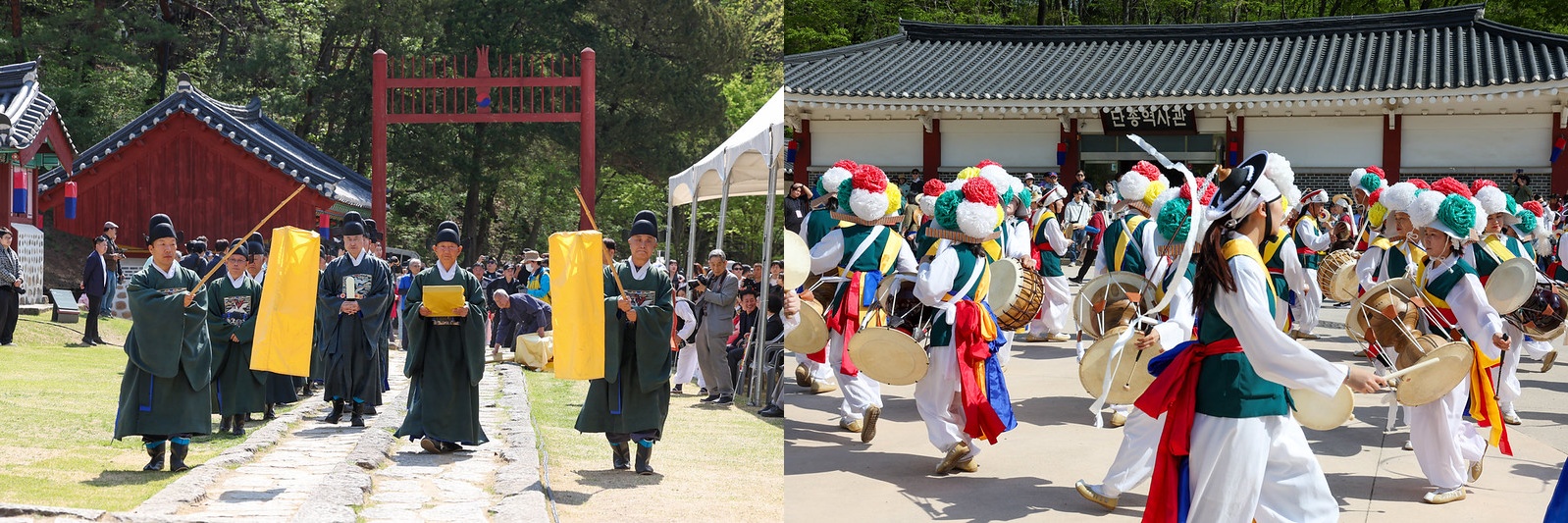
This reenactment of a memorial service for King Danjong is held on April 25 at his tomb Jangneung in Yeongwol-gun County, Gangwon-do Province. Held every April to honor the spirit of Danjong and his loyal subjects, the Danjong Culture Festival since 2007 has included a reenactment of a state funeral for Danjong, something he never received as a deposed monarch.