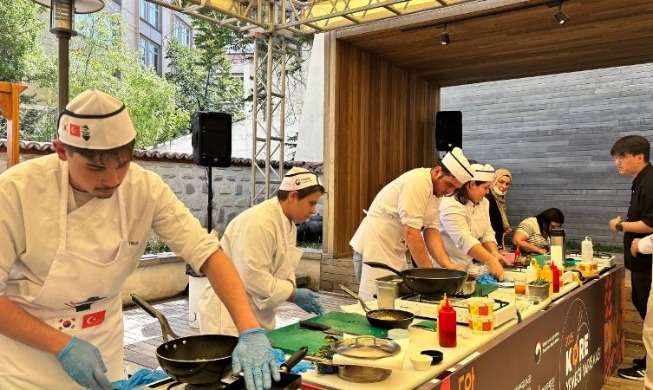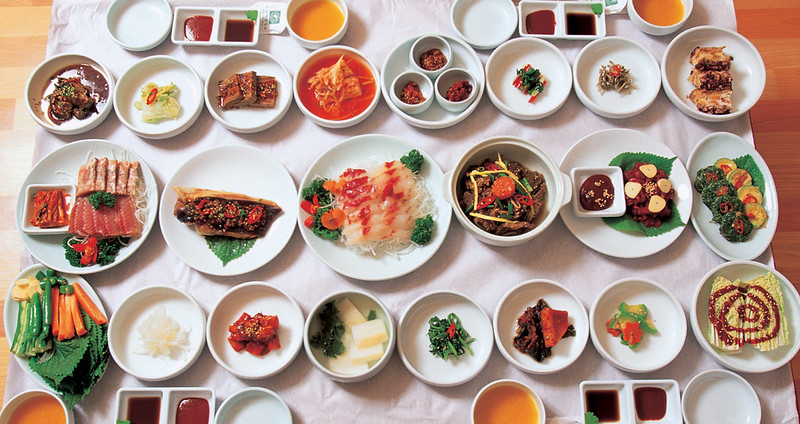
The Ministry of Agriculture, Food and Rural Affairs on Oct. 21 announced a plan to raise the competitiveness of Korean restaurants abroad. (Korea.net DB)
By Uyen Nguyen
The Ministry of Agriculture, Food and Rural Affairs is eyeing higher quality control and tailored support to raise the number of Korean restaurants overseas that diners want to frequent.
A ministry plan announced on Oct. 21 seeks to raise the competitiveness of such restaurants to meet rising global demand for Hansik (traditional cuisine).
The ministry said awareness of Korean cuisine worldwide grew from 60% in 2023 to 68.6% last year. Beyond staples such as bibimbap, or rice mixed with meat and vegetables and bulgogi (marinated stir-fried meat), a wider variety of selections such as Korean-style fried chicken, tteokbokki (spicy rice cake) and gimbap (seaweed rice rolls) are also gaining popularity.
The certification program Excellent Korean Restaurant, which has focused on high-end establishments, will be expanded to more accessible casual restaurants. Over the next five years, 1,000 such restaurants will be designated under the system -- 900 as "recommended" and 100 as "excellent."
To this end, a two-tier rating system will use "recommended" for restaurants meeting basic service and sanitation standards and "excellent" for those fulfilling additional criteria such as the use of domestic ingredients. Agencies in host countries will conduct the evaluations, and stronger quality control will come through a three-year designation period with a renewal process.
Training for staff at Korean restaurants overseas will also be expanded. A digital library of Korean cuisine, scheduled for launch by the second half of next year, will offer recipes and instructional videos in multiple languages. A mobile-based global academy for Korean dining will provide short video lessons of 10-20 minutes each on topics like cooking, hygiene and ingredient management.
A proposed global map of Korean restaurants will help consumers easily find restaurants overseas recommended by the Korean government, featuring establishment locations, ratings and signature dishes by country and city. It will be integrated with mapping and reservation services, with joint promotions like a Korean restaurant week also planned.
The supply of domestic ingredients will be expanded by connecting Korean restaurants abroad with domestic food ingredient exporters. From next year, the ministry will support the overseas deployment of Hansik professionals by connecting graduates of Sura (Royal Meal) School, a culinary training program run by the public and private sectors, with such restaurants.
"We must ensure the competitiveness of Korean restaurants overseas for K-food's global popularity to achieve sustainable growth and not just be a passing fad," said Jeong Kyung-seok, director general of the ministry's Food Industry Policy Bureau. "By reforming the certification system and customizing support, we will expand the number of Korean restaurants worldwide that consumers trust and seek."
uyen81@korea.kr