View this article in another language
- 한국어
- English
- 日本語
- 中文
- العربية
- Español
- Français
- Deutsch
- Pусский
- Tiếng Việt
- Indonesian
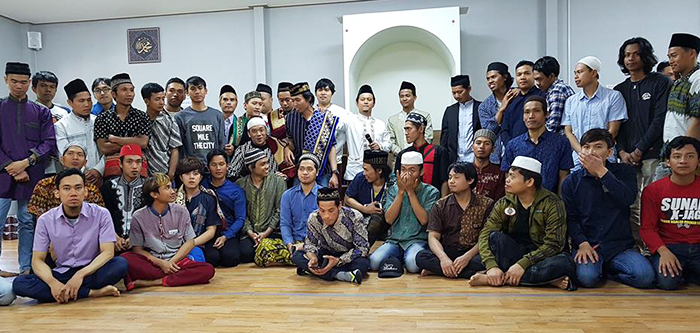
After the iftar break fast, Rayhan Hanif Usamah and other Muslim friends in Gunsan pose for a group photo.
By Korea.net Honorary Reporter <font color="#0070c0">Stephanie Pradnyaparamita </font>from Indonesia
Photos = Rayhan Hanif Usamah
Throughout the year, Ramadan always feels different than other months in Indonesia, as a majority of citizens are Muslim. In Indonesia, you can hear some people go around the housing complex before sunrise and yell, “Suhoor, suhoor,” to wake people up so that they can eat before starting to fast. One or two hour before the break before sunset, many sidewalks will be filled by seasonal sellers that only sell some snacks that usually people have to break their fast Ramadan, such as fritters or any other sweets to regain energy before having a proper meal after the fasting ends. Without having this special tradition during Ramadan this year, Rayhan Hanif Usamah, who usually goes by Rayhan, will share his experience spending Ramadan and Eid al-Fitr in Gunsan, Jeollabuk-do Province.
Rayhan is a university student from Indonesia who is currently studying mechanical engineering, with a focus on future automotive engineering, at Kunsan National University. As a Muslim who is currently living in Korea, Rayhan surprisingly doesn’t find it is hard to fast in Korea. It is definitely longer than in Indonesia, as he does it for approximately 16 hours and 30 minutes each day, while in Indonesia, on the equator, it's shorter, approximately 13 hours. After having the suhoor meal consumed early in the morning before fasting, he still has time to rest, while in the afternoon he finishes his activities from university and arrives at his place around 50 minutes before breaking the fast, which he can then spend cooking a meal.
The weather also makes his fasting a lot easier this year, as May in Korea isn’t as hot as it would be in Indonesia, so it doesn’t really cause much thirst. Rayhan also finds it easy to find halal food in Gunsan. He can buy it online, as there are many Indonesians who cook and sell delicious halal food at affordable prices. For other options, he can directly buy Uzbekistani or Turkish halal food around the mosque in Gunsan. Even better, they also have halal food ingredients so that he can cook by himself.
Even though Rayhan lives quite far from the Seoul Central Mosque, he is happy because there is a mosque, too, in Gunsan. Of course, he needs to put more effort to get to the mosque compared to when he was in Indonesia. In Indonesia, you only need to take a short walk to reach a mosque. Now he needs to ride a bus for 30 minutes. Even though it is further in distance compared to what he used to have in Indonesia, he feels excited every time he visits the mosque as he can find many familiar halal foods, meet friends, and, of course, break his fast and pray together in the night prayer during Ramadan, after breaking the fast, just like in Indonesia.
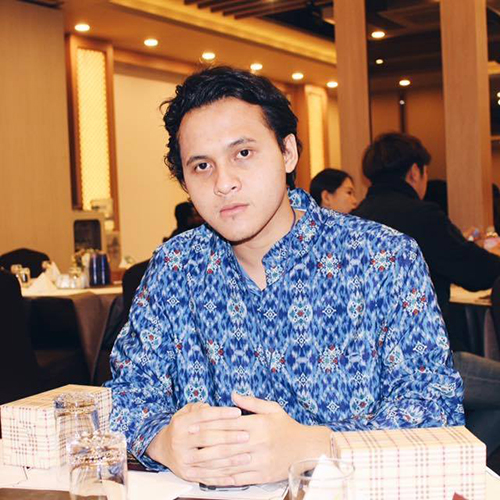
Many Indonesian students, including Rayhan Hanif Usamah, study at Kunsan National University.
Different with the standard Ramadan experience, which more or less can be handled very well, celebrating Eid al-Fitr in Korea feels different for Rayhan. Just like when Koreans celebrate Seollal Lunar New Year, there's a tradition to meet family during Eid al-Fitr, too, in Indonesia. Besides, there are some typical Eid al-Fitr foods in Indonesia, such as opor ayam braised chicken cooked with coconut milk and ketupat rice packed inside diamond-shaped woven palm leaves.
This year, Rayhan celebrated Eid al-Fitr without those foods and without his family and it made him miss his home and family so much. During Eid al-Fitr, he did the Eid prayer at the Anas Bin Malik Mosque in Gunsan in the morning and after that he continued with taking classes and working. Even though the celebrations are not as big as they are at the Seoul Central Mosque in Itaewon, Rayhan finds this mosque quite nice, it feels like home, as the prayer was delivered in Bahasa Indonesian.
There are, of course, some similarities and differences in experiencing Ramadan and Eid al-Fitr in different countries, compared to one's own home country. Rayhan said there's no need to worry about being in a different country, especially in Korea. More effort is needed in finding halal food and a mosque or a place to pray, sure, but everything’s still possible in Korea.
wisdom117@korea.kr
* This article is written by a Korea.net Honorary Reporter. Our group of Honorary Reporters are from all around the world, and they share with Korea.net their love and passion for all things Korean.