- 한국어
- English
- 日本語
- 中文
- العربية
- Español
- Français
- Deutsch
- Pусский
- Tiếng Việt
- Indonesian
By Honorary Reporter Victoria Harwood from New Zealand
Photos= Yonhap News
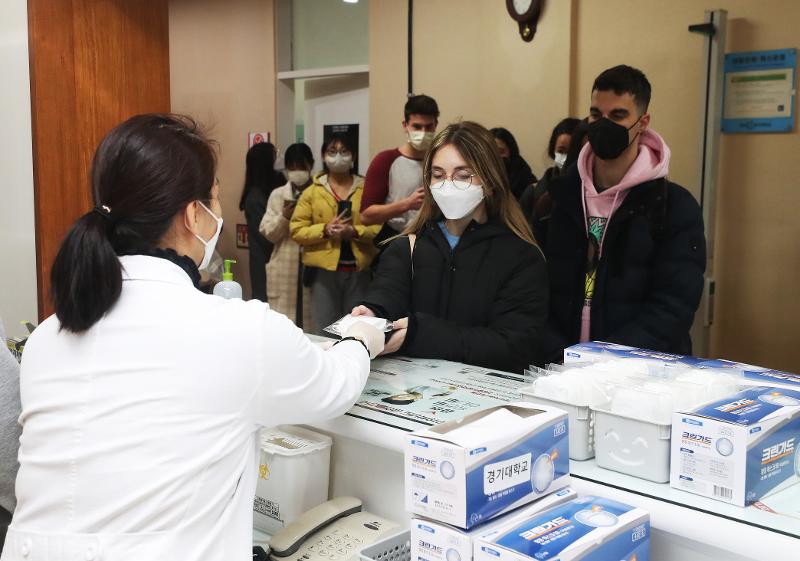
Korea recently lost the title of the country having the most cases of COVID-19 outside of the epicenter China to Italy, which in turn lost that title to the U.S. New Zealand remains in the early stages of the pandemic, but for safety reasons, the country is on lockdown. Being in different stages of handling the outbreak, countries are looking to each other for strategies to defend themselves.
Korea has been applauded for its efficient and effective response. Nearly 20,000 people are tested per day, more per capita than anywhere else in the world, according to the BBC. Thanks to drive-through testing clinics moving to the frontlines, Korea's death rate from COVID-19 is only 0.7%, well below the world average of 3.4% at the time of this article. The country's expansive system of clinics is strong, and with samples being processed within 24 hours, Korea is working well to flatten the disease's curve, or the projected number of people to contract COVID-19 over a period of time.
It is now New Zealand's turn to follow the lead of countries who have contained the pandemic as well as they could. The country is in an advantageous position here, as health officials can learn from other governments' mistakes and triumphs. The number of confirmed cases is 600 as the pandemic curves upwards, but work to flatten the curve has begun. Strict border controls, a hyper-vigilant community and a full lockdown are safeguarding kiwis, but it is a waiting game. No one knows how bad things will get, but New Zealand must try to respond well to each new development the same way other countries have.
So far, Korea and New Zealand's measures are working well. Yet any continued success relies on community responsibility, as in the sick must take responsibility to ensure that they don't infect anyone else.
Despite the coronavirus being exceedingly harmful to our communities by bringing society to a halt, more harm can come in the form of what the fear of infection has produced: panic and racism.
This is especially apparent in New Zealand, a predominantly white country. This is seen in panic buying and hoarding and fighting over well-stocked essentials such as toilet paper, things that are straining our customer service workers and supply chains. No one has medical-grade masks or hand sanitizer, they've all been taken. The popular e-commerce site Trade Me has even removed listings by individuals selling sanitizer stolen from hospitals. Supermarkets are urging people to shop normally and ensuring the public that supplies will not run out.
More worryingly, racist and xenophobic actions have made their way to headlines. A Korean resident of Christchurch said she has experienced these multiple times, the first well before the threat of COVID-19 was a danger to New Zealand and just emerging in Asia.
"We were walking home from school as usual. I held the hands of my (two young children), and two men began to cross the road, and as they passed us, one of the men shouted 'Coronavirus!' at us. What he said was directed at us -- there was no one else around," she said.
Racist actions put our minorities in danger and can often be hurtful and confusing to society’s youngest members. Unfortunately, these attitudes exist in New Zealand, but some have taken the COVID-19 outbreak as an excuse to voice these thoughts louder.
"It was upsetting. My 7-year-old said he was afraid, and my 4-year-old was angry. I had prepared myself for the inevitable day where I'd have to explain racism to them and that it's not their fault, but I didn't anticipate that the perpetrators would be grown men. I had expected the usual schoolyard bullying," she added.
Behavior like this reported by the media serves as a reminder close to the anniversary of the Christchurch mosque attacks last year that we are responsible for stopping this behavior in its tracks, whether from extremists or casual racists. One of the many events canceled due to the COVID-19 outbreak was the memorial service on March 15 for the attacks, which would have highlighted again the consequences of silence and willful ignorance in the face of discrimination.
"The pandemic has brought out the ugly side in a lot of people -- not just the extremists. There have been disgusting, overtly racist attacks against Asian people in all the viral videos lately, but I've also seen countless everyday people inadvertently let slip that they were wary of Chinese people, or just Asians in general. It's hurtful and disappointing that so many people don't recognize their own ignorance. The fear and panic has brought out a lot of the deep-rooted, ugly biases in 'normal' people," the Korean resident of Christchurch said.
It's a question we have to ask ourselves. What is more harmful, the virus or the attitudes and behavior created and given voice by it? In Korea, there were reports of anti-Chinese sentiment growing as panic started to take root, with many businesses displaying signs saying "No Chinese allowed," but in Western societies, where racism toward more than just the Chinese has long been an issue, the rhetoric is quickly turning from anti-Asian to anti-foreigner at an alarming rate. As the borders close, it's important to remember that they are closing to stop the spread of disease, not foreigners and tourists. After all, New Zealand's economy relies heavily on tourism.
It is society's responsibility to look after the most vulnerable at a time like this -- minorities, those with weak immune systems, the elderly and the disabled. The following are my suggestions to help improve the situation.
First, wash your hands. Second, isolate yourself if you're sick. Third, don't panic buy, and check on the elderly and the disabled. Panic buying doesn't help you in the long term and takes away supplies from those who cannot easily access a supermarket. Lastly, don't allow racism. Call out people who voice racist and xenophobic attitudes. Show them that there's no safe space for racism in your community.
The COVID-19 pandemic is unlikely to end anytime soon, but things will get better. Korea and New Zealand are just two examples of countries that are flattening their curve and handling the situation well. Do your part to keep your community safe, and stay up to date with information provided by the government.
chaey0726@korea.kr
*This article is written by a Korea.net Honorary Reporter. Our group of Honorary Reporters are from all around the world, and they share with Korea.net their love and passion for all things Korean.