- 한국어
- English
- 日本語
- 中文
- العربية
- Español
- Français
- Deutsch
- Pусский
- Tiếng Việt
- Indonesian
By Honorary Reporter Minnath Azeez from Sri Lanka
Photos = Wuluck Studio
Minhwa literally means "painting of the people." This form of traditional Korean art features the lives of ordinary Koreans in the past as well as elements considered auspicious and intended to ward off evil. Many Koreans often hung such paintings in their homes or on their doors, and event today, minhwa holds a sentimental place in the country.
In an email interview on Aug. 4, minhwa artist Choi Soyeon said she initially took up this genre as a hobby. Graduating with a bachelor's in information communication and engineering from Korea Aerospace University, she worked over 15 years as an educational content designer and developer for companies and cyber universities. The burnout she felt was a turning point in her life.
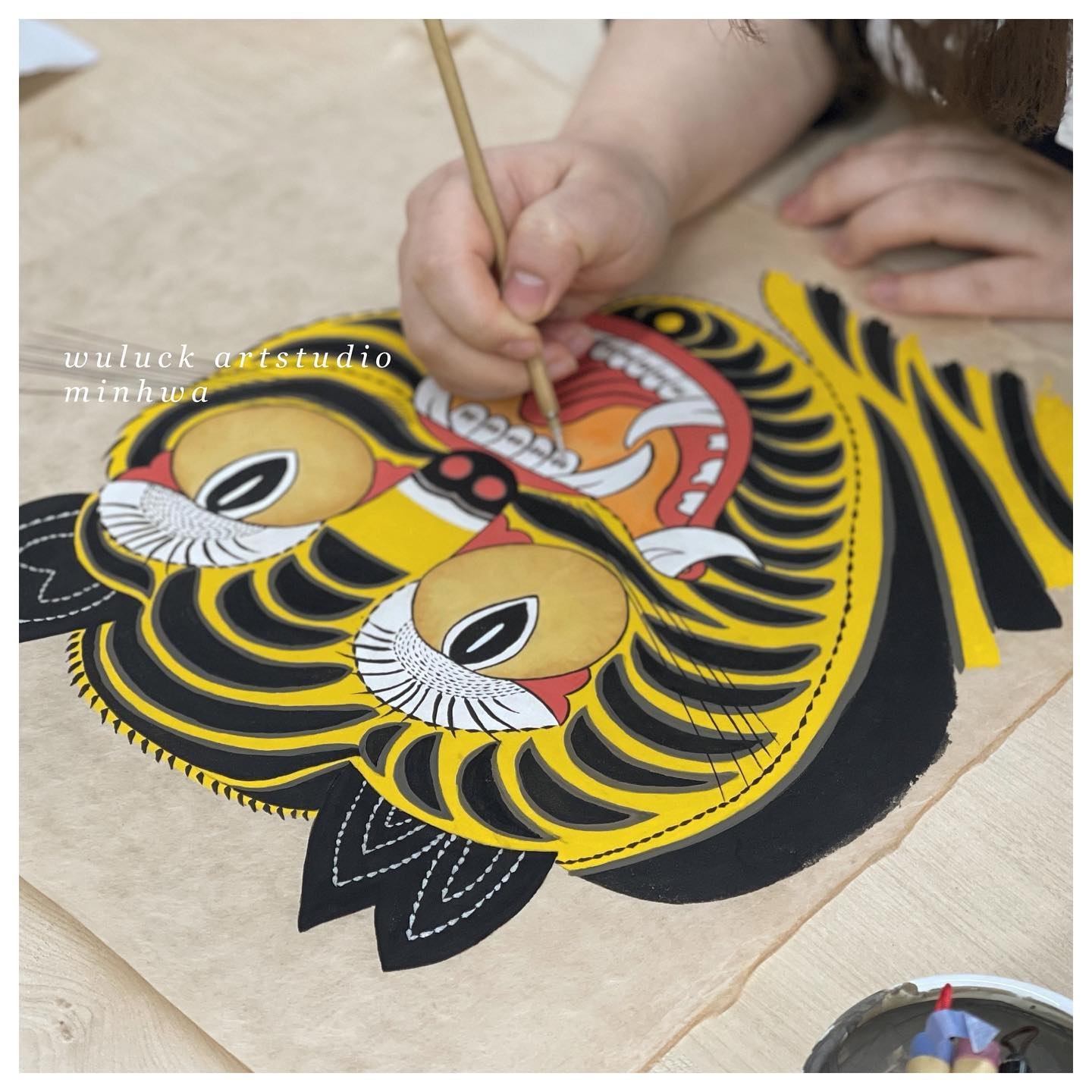
This minhwa represents the Year of the Tiger under the Asian zodiac.
"I took a break for about a year and started pursuing hobbies, one of which was minhwa," she said. "I wanted to try drawing by hand rather than just designing on a computer. So I tried minhwa. Even when it was time to eat, I instead searched for and read materials on minhwa or looked for places to learn more about it."
Choi said it was hard to leave her stable job but added that taking up minhwa full time brought her "joy and satisfaction."
Starting minhwa for the first time in 2016, she went on to earn a master's in art from Dongguk University. She now manages Wuluck Studio and has received an award from the Korean Folk Painting Education Association.
"A common saying among people who experience minhwa for the first time is 'I didn’t know it takes so much time and effort to complete one piece,'" the artist said. "But folk paintings are delicate paintings that require devotion during the entire process. They are honest and transparent paintings like a mirror of the mind."
Choi's works have been displayed at many exhibitions in Korea and abroad including Argentina, Italy and Japan. Her latest pieces will be shown from Sept. 3-28 alongside those by 20 other artists in Andong, Gyeongsangnam-do Province, at three galleries.
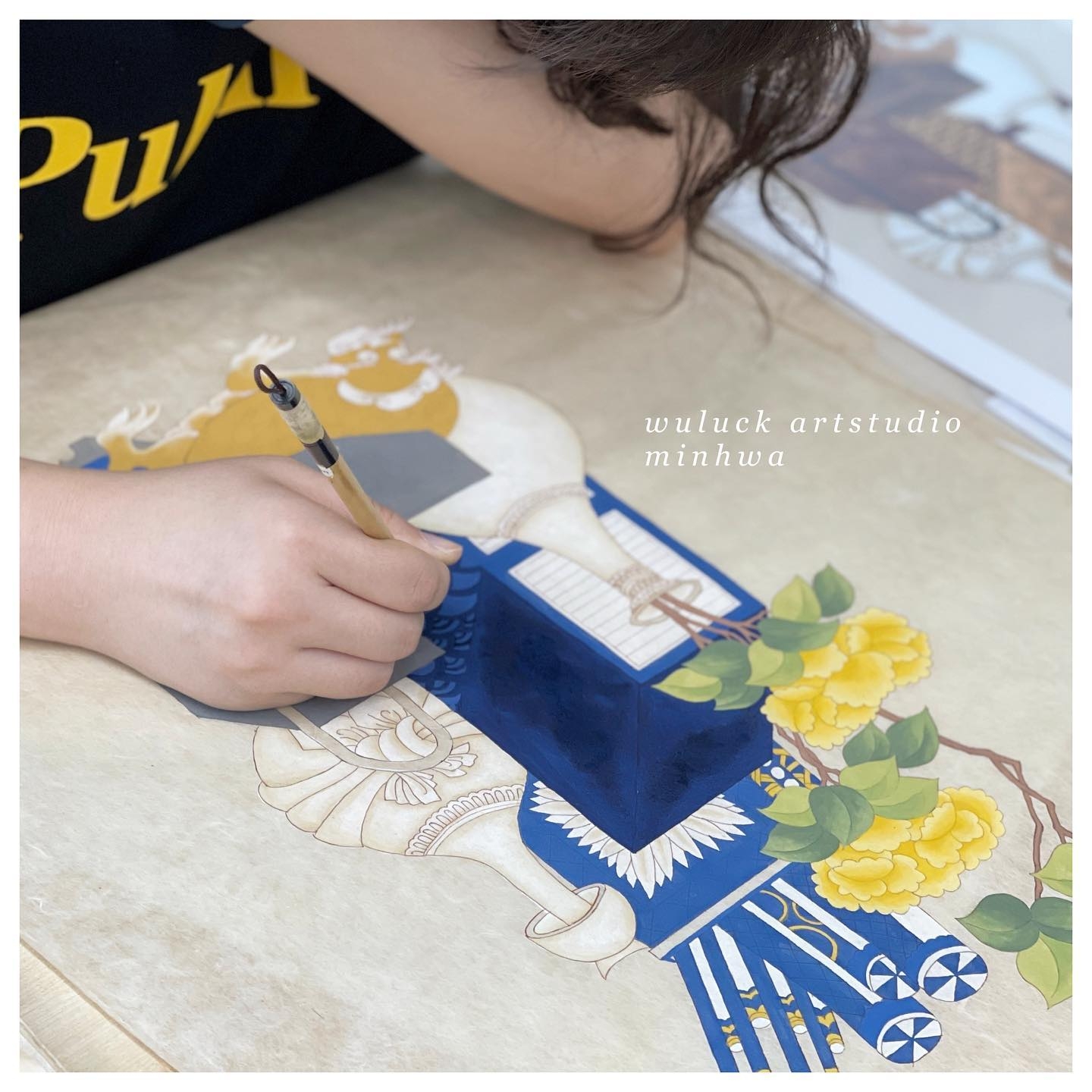
Minhwa expresses wishes for education, longevity and success.
On what is most challenging when painting minhwa, she said, "There is the urge to give up in the middle of a painting and start a new one. So I would say it takes a lot of courage to complete a drawing till the end so that your hard work pays off."
Choi also gives lessons to those interested in minhwa, saying, "My students tell me how they thought their paintings were ruined at first, but when they returned the next day, things seemed perfect. They wonder whether I made corrections for them. But minhwa takes time. As Hanji (traditional paper) and water come together over time, the more they blend to create the perfect painting."
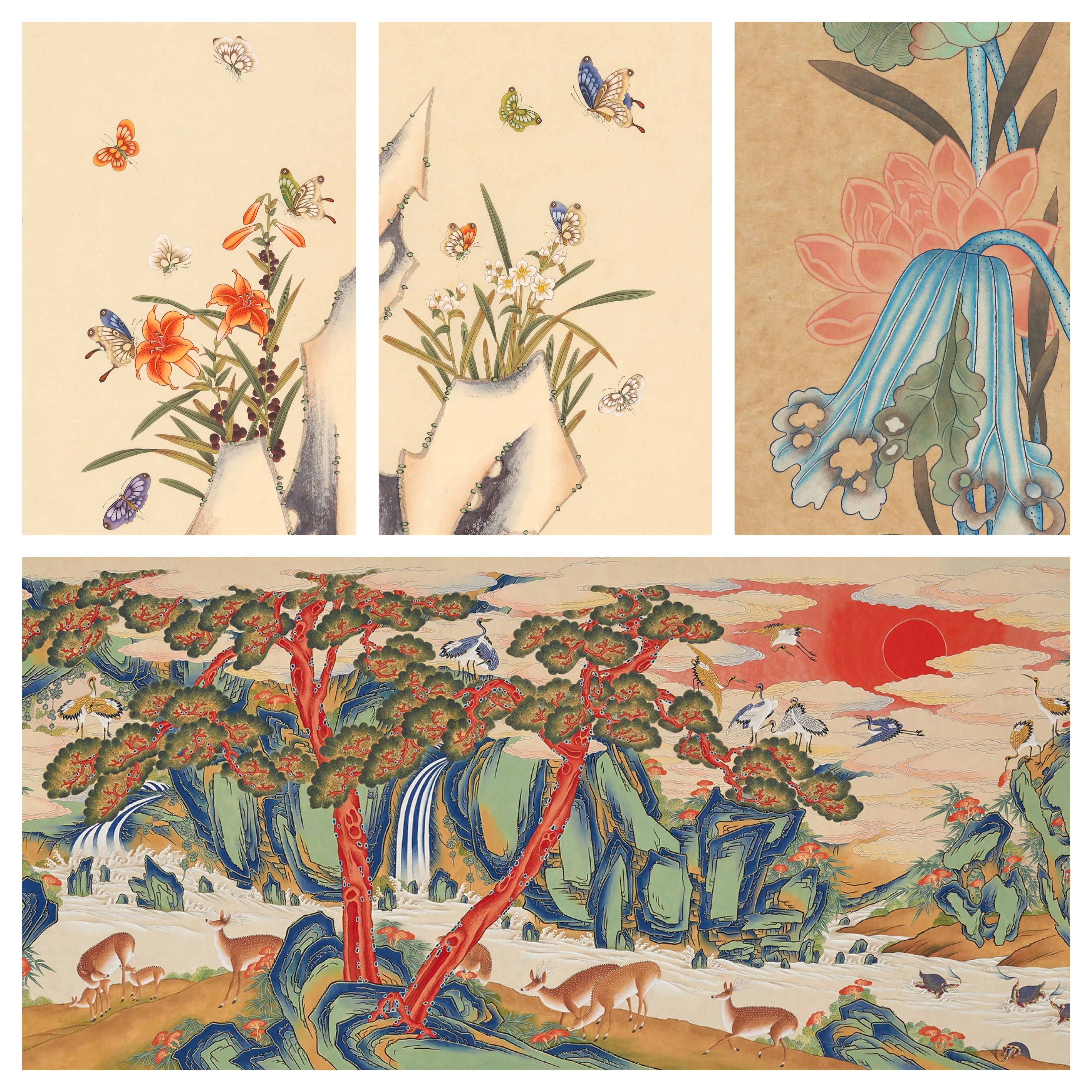
Choi Soyeon has presented her works at exhibitions in Korea and abroad.
Choi said that when she started, few knew about folk painting or showed interest in it, but that over time, minhwa has grown in popularity and is used in many fields.
"I think that folk paintings have a unique charm and value in Korea," she said. "They are also changing in a desirable direction to suit modern Korean society. The only downside is that most paintings are imported. So I hope that minhwa becomes a bigger part of life and grows more popular so that more research is done on it."
enny0611@korea.kr
*This article is written by a Korea.net Honorary Reporter. Our group of Honorary Reporters are from all around the world, and they share with Korea.net their love and passion for all things Korean.