- 한국어
- English
- 日本語
- 中文
- العربية
- Español
- Français
- Deutsch
- Pусский
- Tiếng Việt
- Indonesian
By Honorary Reporter Dayviana Díaz from Cuba
Photo by = Staz and Víctor Seus
In Gunsan, Jeollabuk Province, recently, were two mural artists from different backgrounds but with the common goal of promoting recovery and a “cure” from COVID-19 by rehabilitating the streets.
Víctor Seus is from the Canary Islands and has been a muralist since 1999, as well as a rapper and an educator, and Korean artist Jong Bae Lee, known as “Staz,” is originally from the city of Gunsan, and also a muralist since 1999 alongside being a B-boy dancer.
The following are excerpts from an interview with both artists between January 16 and 18, via email, where they shared how they met and decided to offer their art to a Korean community to raise awareness about how to face life in the post-COVID era.
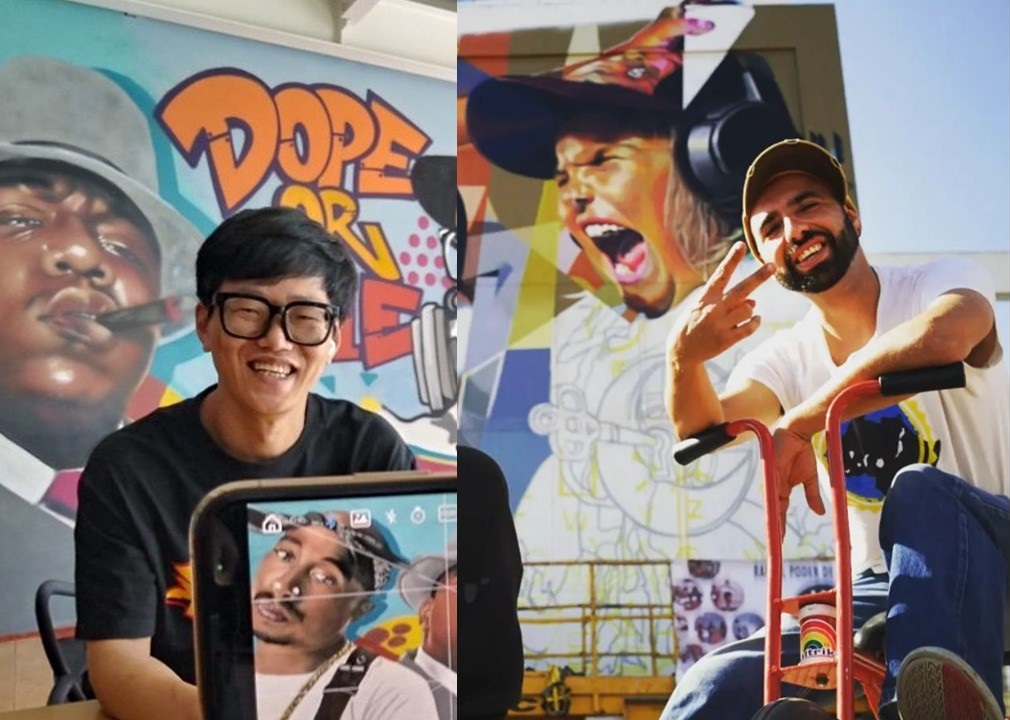
Jong Bae Lee, Staz (left) and Víctor Seus (right). (Staz and Victor Seus)
What made you decide to collaborate for this work?
Víctor: Through SIEAF, Seomjingang International Experimental Arts Festival, I met Staz. He was a local artist and we quickly became friends. I’ve always wanted to make a mural art in Korea.
Staz: Victor Seus was part of the graffiti team that collaborated with me at the Gwangju World Festival. Working with Victor, I suggested he take part in my project, which is held in my hometown community, Gunsan. He had gladly accepted my request and we started a collaborative work.
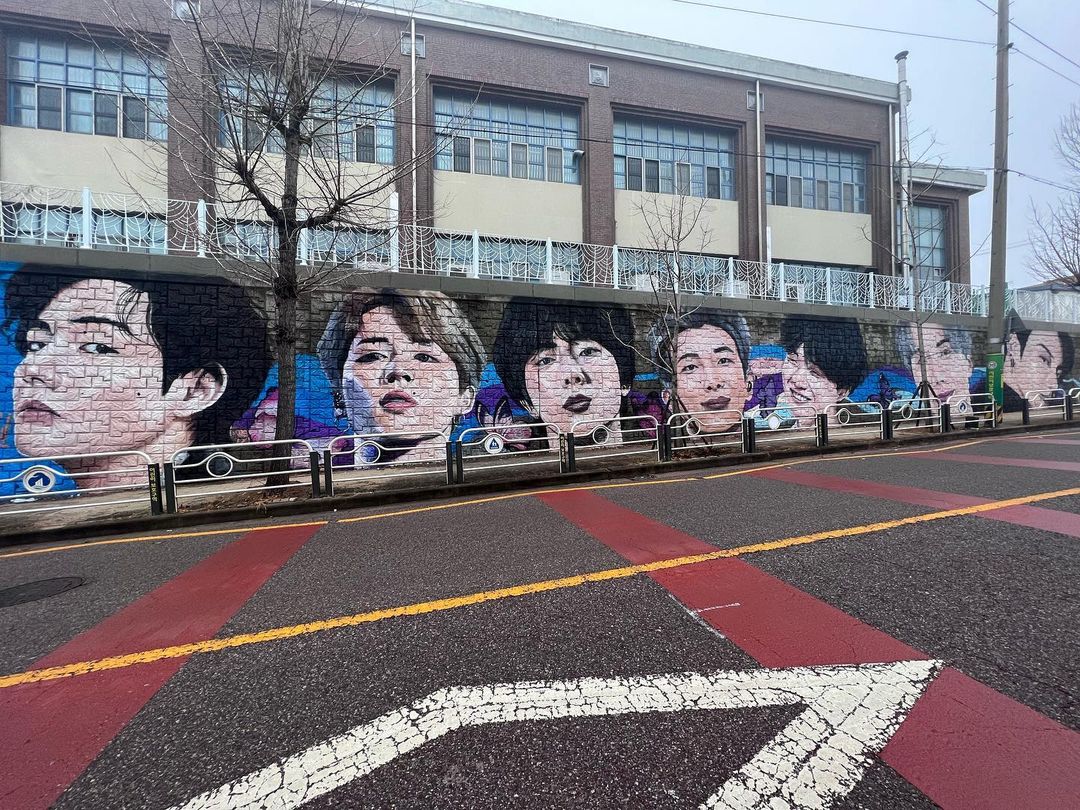
A BTS mural by Staz in the city of Gunsan. (Staz)
Do you have any particular messages you want to convey with your art this time?
Staz: “HOPE.” From the beginning, I’ve thought about ways to dedicate my paintings in making a better public society. That is why I’ve decided to carry out this project with Víctor Seus on the school wall. As an artist, I personally wanted to give the public and students hope, walking down the street and seeing my work. I would like to thank the local public who gave me a great support during the project.
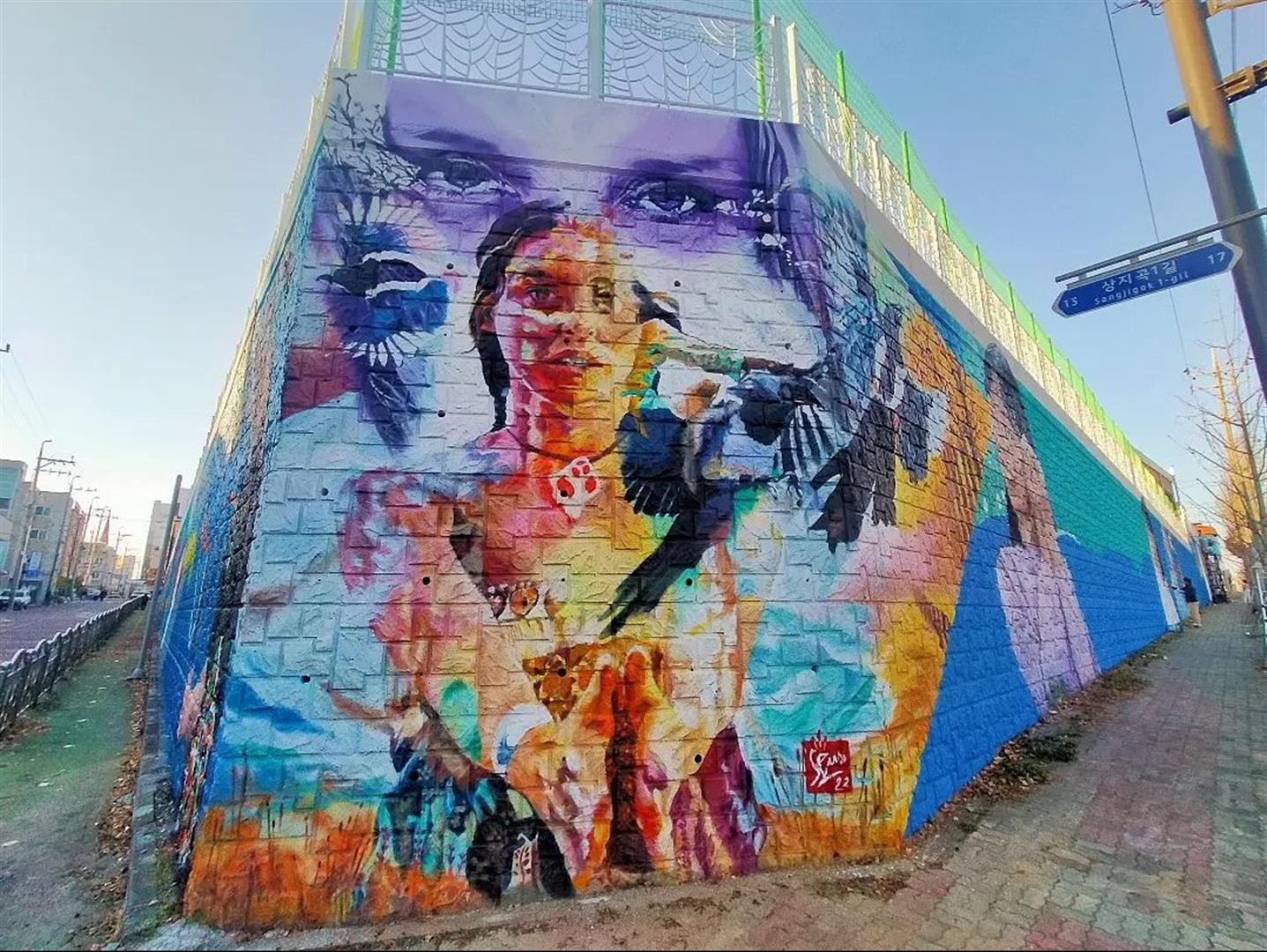
A mural "Connection" by Victor Seus. (Victor Seus)
Could you introduce one of your murals in this project?
Víctor: The piece called "Connection." It is based on a diluted body with an inward look. Reka Fodor, an artist and educator who allowed me and Staz to have her image for the mural, jumps on the feeling of freedom provided by a magpie, a bird that symbolizes happiness in Korea, to become one with herself.
In the upper part, we find her eyes wide open after immersing herself in a world full of colors, showing her emotions and a connection with nature. The hands at the bottom represent breaking into a new path.
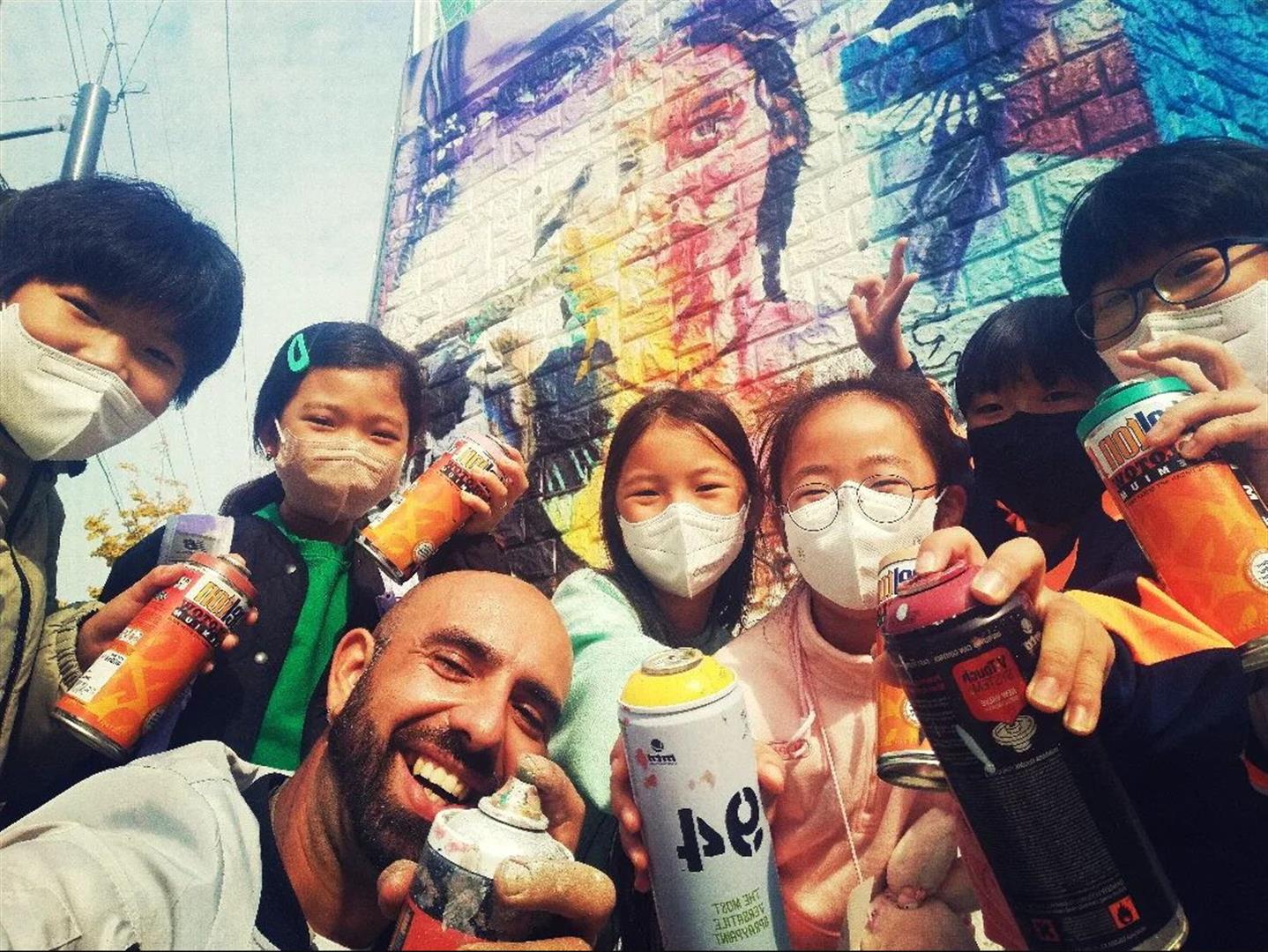
Víctor with Korean children in Gunsan during his project. (Victor Seus)
What was the most memorable moment of this opportunity for both of you?
Víctor: During the process of making the mural, one day about 10 school children came with the intention that I write their names on a piece of paper and sign it for them. It was a lot of fun interacting with them while trying to guess how their names were spelled.
Staz: I have very good memories of the collaboration with Victor. I was very impressed by his passion and energy in bringing his art to a foreign country.
Is there any project in which we can see you soon?
Víctor: I’ll return to Korea this year. I’ve moved to quite a few spaces for my work during my journey. I’ve done my painting in Gwangju, Gunsan and Busan. The last piece, scheduled to be painted in Seoul, however, because of bad weather, didn't go as scheduled. If everything goes favorably, I would like to return for that work.
Staz: Very soon, I will be traveling to San Francisco to work on a project and I look forward to connecting more with people through my messages of hope and love.
msjeon22@korea.kr
*This article is written by a Korea.net Honorary Reporter. Our group of Honorary Reporters are from all around the world, and they share with Korea.net their love and passion for all things Korean.