- 한국어
- English
- 日本語
- 中文
- العربية
- Español
- Français
- Deutsch
- Pусский
- Tiếng Việt
- Indonesian
By Honorary Reporter Hurum Maqshuro from Indonesia
The Korea Cultural Center (KCC) in Jakarta, Indonesia, through Dec. 16 is holding its cultural classes offline like those on Hanbok, basic Hangeul calligraphy and traditional dance, having launched them on Nov. 20. I was a student of the calligraphy class on Nov. 22 and 24 led by calligraphy artist Oh Soon-ok.
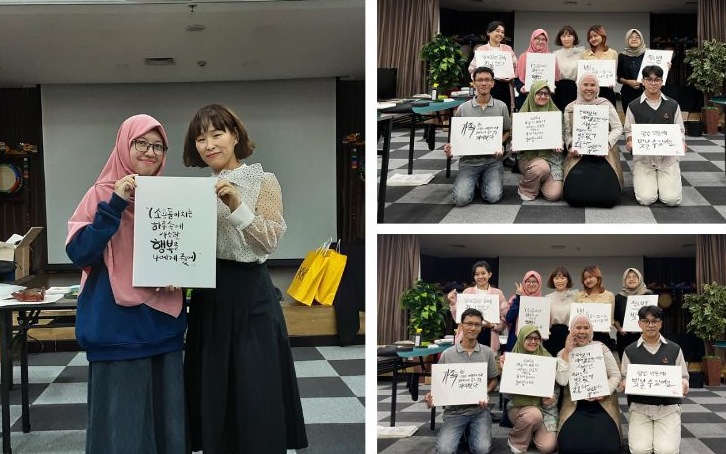
On the left is my calligraphy work on canvas that I did in the class on canvas and on the right are two photos of the students, their works and teacher Oh Soon-ok. (Hurum Maqshuro and Fadiah Zahrah)
With a limit of eight participants, the class provided hands-on exposure to manual Hangeul calligraphy. Utilizing traditional tools like a brush, ink and paper, students delved into the intricate world of creatively crafting Korean characters. Accustomed to digital Hangeul calligraphy with a tablet and S-pen, I found adapting to a brush more difficult than expected. Our teacher said that in Korea, calligraphy is taught from elementary school, allowing many Koreans to skillfully write Hangeul with a brush and create exquisite calligraphy.
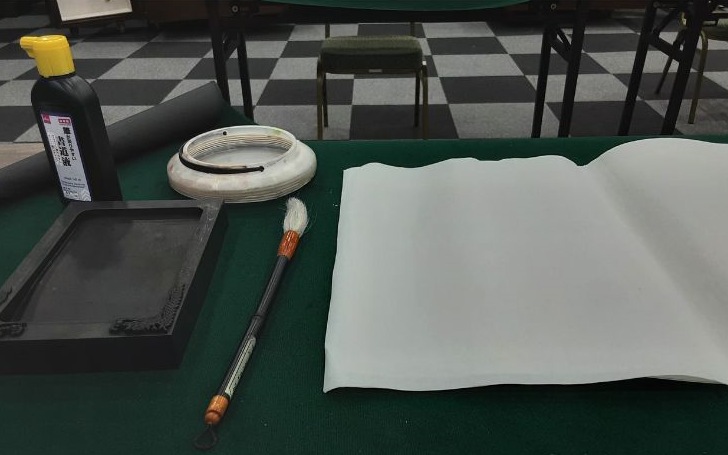
Munbangsawoo refers to the four essential tools of Hangeul calligraphy: paper, brush, ink and ink stone. (Hurum Maqshuro)
In Hangeul calligraphy, munbangsawoo refers to the four essential tools of the art: Hanji (traditional paper), brush, ink and ink stone. Oh, a familiar presence at KCC events, guided the class with insightful demonstrations, offered hands-on guidance and encouraged development of students' stylistic approaches.

Teacher Oh Soon-ok on the left demonstrates creating Hangeul calligraphy and my attempt at the calligraphy following her example is on the right. (Hurum Maqshuro)
Transitioning from digital to manual Hangeul calligraphy proved deeply satisfying, sparking a newfound interest and stronger desire within me to delve deeper into this traditional art form. While the two offline classes provided valuable insights, I hope that future classes in the craft are longer for a more comprehensive learning experience.
msjeon22@korea.kr
*This article is written by a Korea.net Honorary Reporter. Our group of Honorary Reporters are from all around the world, and they share with Korea.net their love and passion for all things Korean.