- 한국어
- English
- 日本語
- 中文
- العربية
- Español
- Français
- Deutsch
- Pусский
- Tiếng Việt
- Indonesian
By Honorary Reporter Maulia Resta from Indonesia
Photos = Maulia Resta
I visited on Feb. 23 the Korean Cultural Center (KCC) in Jakarta, Indonesia, to experience how Koreans celebrate Jeongwol Daeboreum, or the celebration of the first full moon of Seollal (Lunar New Year).
Over 50 visitors gathered at the KCC, with 40-50 including myself chosen to compose ohaengsi (five-line poetry).
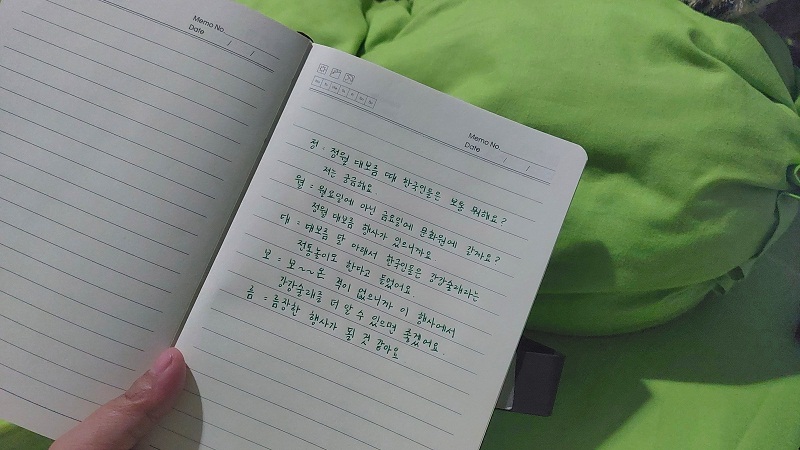
The ohaengsi I composed was about my curiosity about Jeongwol Daeboreum and ganggangsullae (women's circle dance).
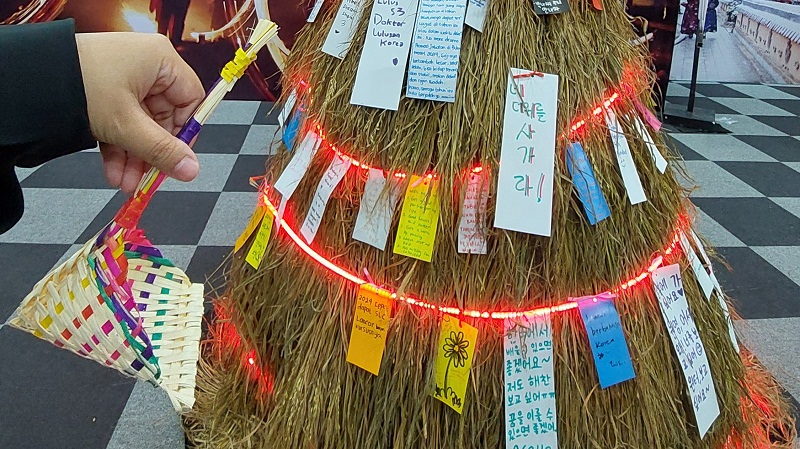
I wrote my wishes for Lunar New Year and hanged them on the daljip (moon house) at the KCC's Multifunctional Hall, as did others who lined up to do so. The hall had a large cone-shaped daljib made of dry straw to which participants tied their funny to heartfelt wishes.
The tradition is to burn the daljip in a ceremony to symbolize the wishes reaching the sky. While we couldn't do this at the event, a red LED lamp created the illusion of burning the house in the darkness.
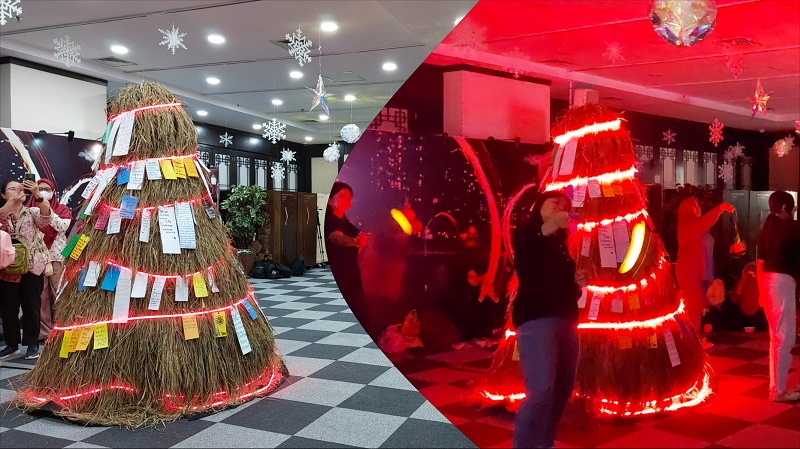
This daljip (left) takes on a spectacular view after its red lights are turned on (right).
I tried a dish for the occasion, ogokbap, or mixed grain rice with red and black beans, wheat, soybeans and millet. Unaware of its cultural significance, I've enjoyed it at home thanks to my mother's insistence on its health benefits.
Koreans traditionally pair this dish with namul, or edible greens or seasoned herbal dishes made of them like spinach, bean sprouts and bracken.
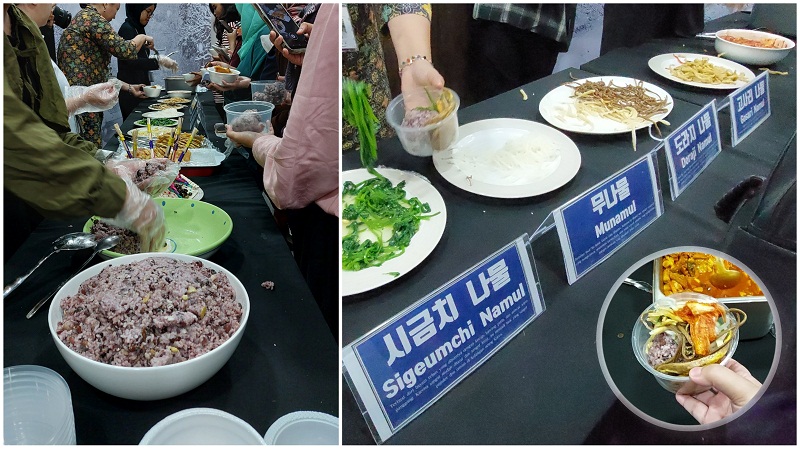
Served at the KCC in Jakarta event are ogokbap and namul.
The traditional games played at the event included jwibulnori, in which players create streaks of light by swinging cans filled with burning item, bureomkkaegi (cracking chestnuts) and ganggangsullae (women's circle dance).
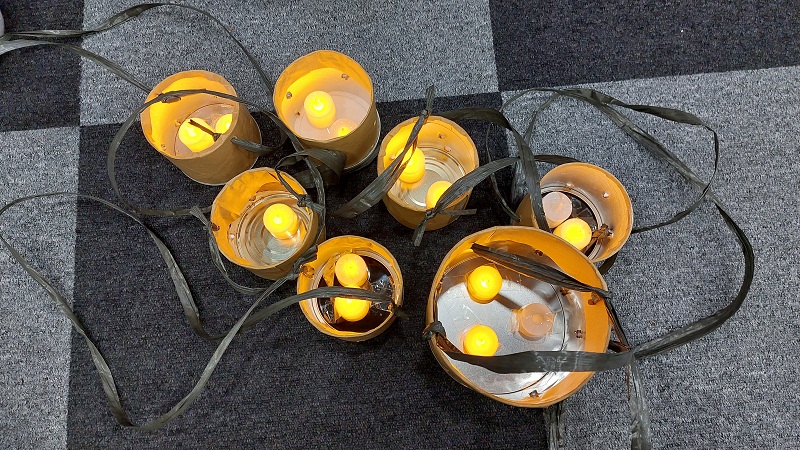
To play jwibulnori at the event, participants used containers with battery-powered fake candles.
Jwibulnori requires spinning a torch in a tightly tied container. I lacked the power needed to create a perfect circle of light, unlike others who did so beautifully.
Select participants received a bokjori as a souvenir from the KCC in Indonesia.
At the event's conclusion, the KCC gave a bokjori, or a traditional rice strainer hung on doors for good luck on Seollal, to 20 outstanding poems by participants. I was lucky to be among them.
msjeon22@korea.kr
*This article is written by a Korea.net Honorary Reporter. Our group of Honorary Reporters are from all around the world, and they share with Korea.net their love and passion for all things Korean.