- 한국어
- English
- 日本語
- 中文
- العربية
- Español
- Français
- Deutsch
- Pусский
- Tiếng Việt
- Indonesian
By Honorary Reporter Daniela Astolfi from Italy
Photos = Daniela Astolfi
The Festival of the Orient held in Padua, Italy, in December last year featured the culture and traditions of Asia through traditional ceremonies, folk shows, photo exhibitions and performances.
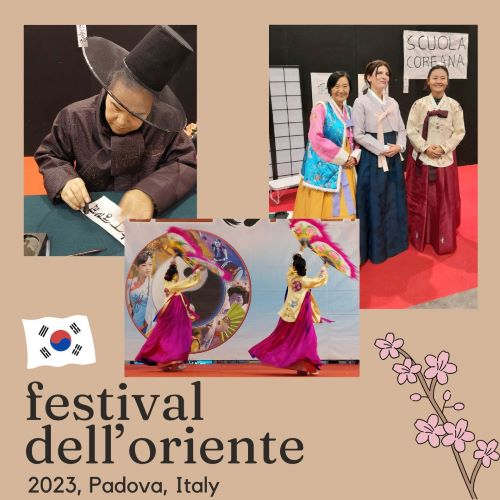
The 2023 Festival of the Orient was held in Padua, Italy.
The Korean booth allowed visitors to wear Hanbok and try other activities organized by the Coreare Association, which provided a small stand featuring approaches to studying Korean. I got my name written in Hangeul by a staff from the organization.
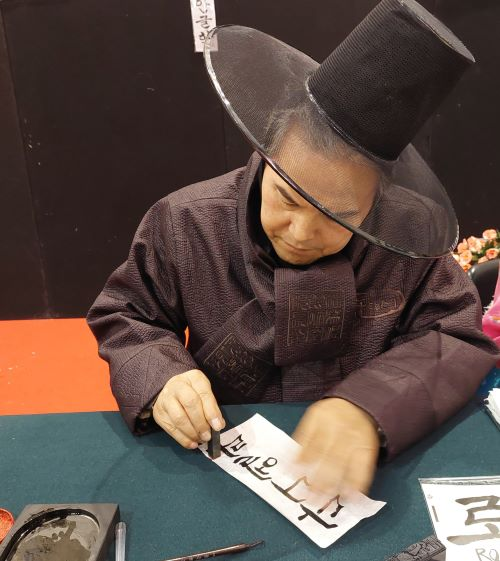
A Korean man from the Coreare Association writes my name "Daniela" in Hangeul at the Korean booth of the Festival of the Orient in Padua, Italy.
I saw many items at the section including masks used for the Bongsan talchum (traditional mask dance), a UNESCO Intangible Heritage. In the past, the dance used comic dialogue, songs, games and even a lion dance to criticize the noble class through satire.
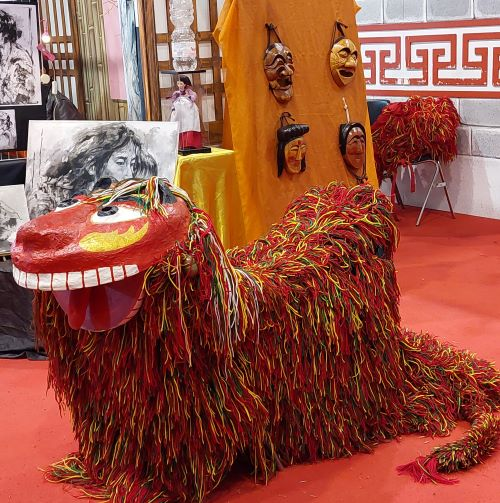
This prop is part of the Bongsan talchum (traditional mask dance).
In other activities, I saw a culinary performance by a chef who prepared bibimbap, or rice mixed with meat, vegetables and gochujang (spicy red pepper paste), a popular dish famous for its healthy and simple recipe. The chief showed all the steps in preparation of this dish to curious and attentive visitors.
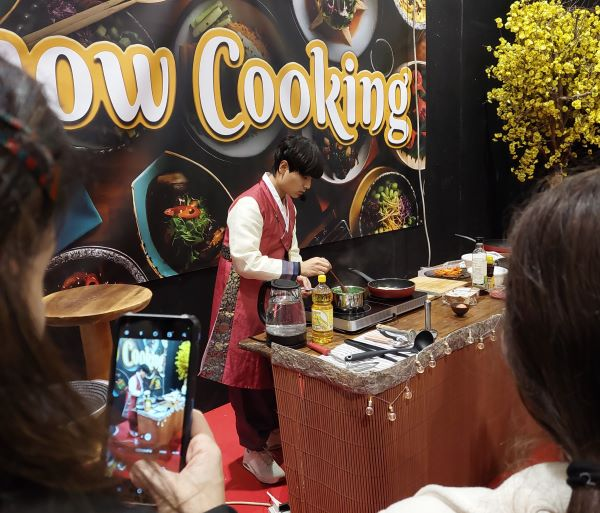
A Korean chef prepares bibimbap, or rice mixed with meat, vegetables and gochujang (spicy red pepper paste), at the Korean booth of the Festival of the Orient.
A stage had musicians and dancers from all over Asia perform. Korean dancers thrilled the audience with the fan dance buchaechum, which originated during the Goryeo Dynasty, using large and brightly colored fans to create beautiful choreography similar to the movement of a butterfly's wings.
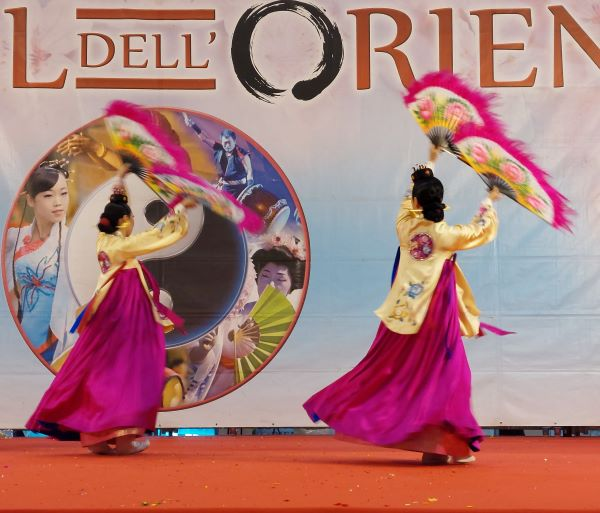
The buchaechum (traditional fan dance) is performed on the festival stage.
While wearing a Hanbok outfit, I found it rewarding to have people stop and ask me about the origin of Hanbok and complimenting the one I wore.
msjeon22@korea.kr
*This article is written by a Korea.net Honorary Reporter. Our group of Honorary Reporters are from all around the world, and they share with Korea.net their love and passion for all things Korean.