- 한국어
- English
- 日本語
- 中文
- العربية
- Español
- Français
- Deutsch
- Pусский
- Tiếng Việt
- Indonesian
By Honorary Reporter Seema Thomas from India
The Busan Biennale runs from Aug. 17 to Oct. 20. Transforming Korea's No. 2 city into a dynamic canvas, this event will blend city with art.
This year's theme "Seeing in the Dark" caught my attention due to its paradoxical character. To better understand the curatorial vision behind this event, I held an interview with the event's co-artistic directors Vera Mey and Philippe Pirotte and executive director Kim Seong-youn.
The following are excerpts from the written interview conducted from July 11 to Aug. 2.
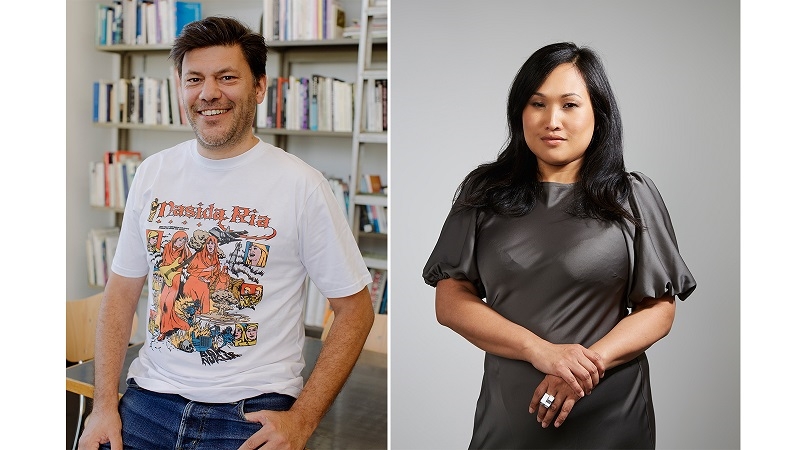
Philippe Pirotte (left) and Vera Mey are the co-artistic directors of this year's Busan Biennale. (Diana Pfammatter and Christa Holka)
Briefly introduce yourselves.
Mey: I am an art historian and curator at SOAS, University of London. My expertise lies in Southeast Asian modern and contemporary art. My curatorial experience includes the foundational team of the NTU Centre for Contemporary Art Singapore and the exhibition "Sunshower: Contemporary Art from Southeast Asia 1980s to Now" in Tokyo. Based in London, I collaborate with contemporary artists globally.
Pirotte: I am an art history professor at Staedelschule Frankfurt (art school in Germany) and independent curator. I served on the Documenta-Commission, which selected Ruangrupa for Documenta 15's artistic direction in 2022. Recently, I curated Melati Suryodarmo's exhibition at the Bonnefanten Museum and am developing "Spectres of Bandung," a major exhibition on the 1955 Bandung Conference's cultural impact. My curatorial experience includes La Biennale de Montreal, the Jakarta Biennale, and "Arus Balik: from Below the Wind to Above the Wind and Back Again" in Singapore.
Kim: Since 1999, I've been engaged in non-profit art initiatives in Busan. Launching Bandee, a hub for exhibitions and international residencies, and the Busan International Video Art Festival are among the milestones in my career. I was guest curator of the 2010 Busan Biennale, visual arts director of the 2014 Moving Triennale and executive art director of the 2017 PyeongChang Biennale. I was also the first director of the Museum of Contemporary Art Busan and have led the Busan Biennale committee since 2019.
How did you get involved in this year's Busan Biennale?
Mey: The Busan Biennale had an open call for curators. I participated in the Gwangju Biennale International Curators Course in 2011 and have since been interested in working in Korea on a large-scale exhibition project.
Pirotte: I was an adviser to the last Busan Biennale and motivated to do something in Busan again, as the city is extremely fascinating with its harbor and migration history. Luckily, the organizers were interested in the project we proposed.
As the first co-artistic directors in the Biennale's history, how do you balance your artistic visions to curate the event?
Mey and Pirotte: Bienniales are now seen as collaborative platforms. Our shared research on the artistic and political confluence of cultural movements in Asia and Africa has led us to challenge the notion of solitary curation. Instead, we aim to engage diverse individuals in our exploration of ideas.
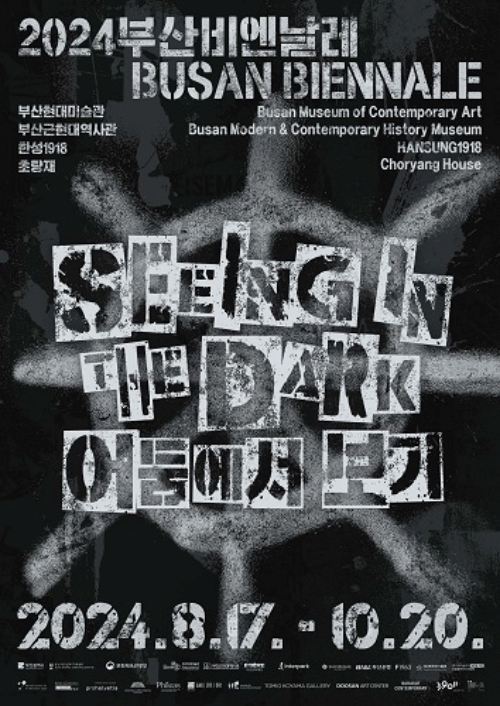
This is the official poster of this year's Busan Biennale (Busan Biennale Organizing Committee)
Explain the theme "Seeing in the Dark."
Mey and Pirotte: "Seeing in the Dark" encompasses both the notions of both "pirate" and Buddhist enlightenment. We consider these alternatives to the surveillance-industrial complex's demands for transparency. We see tactics of operating stealthily as another tradition of cultural experiment through seeking alternative enlightenment movements.
How does the Biennale aim to foster dialogue between the art, audience and cultural landscape of Busan?
Kim: The Biennale is designed to reflect the city's identity and history by featuring venues that showcase Busan's unique traits. Visitors can engage with Busan's culture and past through both the artworks on display and the city's historical sites.
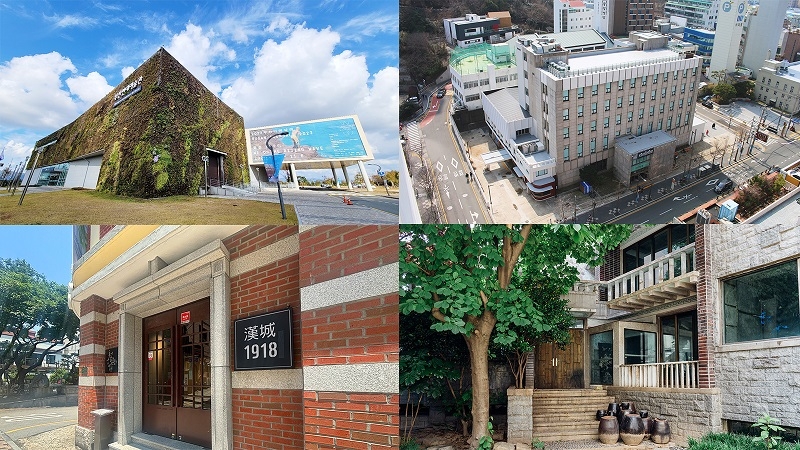
The venues of Busan Biennale include (clockwise from top left) the Busan Museum of Contemporary Art, Busan Modern & Contemporary History Museum, Choryang House and Hansung 1918. (Busan Biennale Organizing Committee)
How do the chosen venues contribute to the narrative of the Biennale?
Mey and Pirotte: Integrating the exhibition into Busan's urban landscape is crucial. Our selection includes historical residences, former bank buildings significant to civil movements and the Busan Museum of Contemporary Art (MoCA), a center for art and environmental ecology. Central to the Biennale's engagement with Busan, venues like the culturally diverse Choryang area, the historically significant Busan Museum of History and the continuity-offering Busan MoCA were chosen. Additionally, Hansung 1918 will host multimedia performances, and the Panstar Cruise will serve as a unique cross-cultural space between Busan and Osaka (Japan).
What do you hope visitors take away from their experiences at the Biennale?
Mey: We believe in and are hopeful about the autonomy of art.
Pirotte: The Biennale is best experienced by immersing oneself in art and allowing it to evoke personal sensations and interpretations. The exhibition aims to be a space for free thought and speculative imagination, free from the constraints of commercial return or curatorial control. It seeks to foster dialogue that accepts ideological differences and promotes a celebratory critique rather than conflict.
msjeon22@korea.kr
*This article is written by a Korea.net Honorary Reporter. Our group of Honorary Reporters are from all around the world, and they share with Korea.net their love and passion for all things Korean.