- 한국어
- English
- 日本語
- 中文
- العربية
- Español
- Français
- Deutsch
- Pусский
- Tiếng Việt
- Indonesian
By Honorary Reporter Ece Yildirim from Turkiye (Turkey)
Photos = Ece Yildirim
Actor Cha In-pyo, who has turned to writing in recent years, on Oct. 23 attended an event at Istanbul University in Turkiye (Turkey) sponsored by the school's Department of Korean Language and Literature attended by students and the public.
About 120 people attended including university faculty and students from both the school and the branch of King Sejong Institute, ethnic Koreans and Turks interested in Korean literature.
Graduating from Rutgers University of the U.S. with a bachelor's in economics, Cha was supposed to take over his father's shipping company but entered acting. His breakout role came in 1997 in the K-drama "Star in my Heart" and he later married actor Shin Ae-ra.
Cha in 2009 released his debut novel "Someday, When We Look at the Same Star" (also known as "Goodbye Hill") about the history of "comfort women," or Koreans forced into sexual slavery by the Japanese military before and during World War II. This year, he received the Emerging Writer Award for his 2022 historical fantasy novel "Mermaid Hunt" from the Hwang Sun-won Literary Awards of Korea.
Below are excerpts from an email interview with the actor from Oct. 24 to Nov. 8.
What does writing give you that acting can't?
Acting is a tool to express the writer's world. As an actor, you can create your own way of expressing something within your role, but it's still a creative act allowed only inside the frame set by the writer. At some point in my acting life, I started to want more than just to be a tool of expression, I wanted to become the purpose of expression itself. That's when I began to write novels.
How do writing and acting differ as forms of expression?
Writing is a solitary act where all responsibility rests on the writer alone. It brings total freedom but also loneliness. Acting, especially in commercial films and dramas, is a collaborative effort. You commit to fulfilling a role within a team, which naturally limits personal freedom, but it also means responsibility and pressure are shared. This balance of freedom and loneliness is what separates the solitary nature of writing from the collective nature of acting.
In the film "What Happened to Mr. Cha?" you played a version of yourself facing fame and identity. Was this a dialogue between your public and inner persona?
I think the character in the film is quite similar to how I am publicly viewed in real life. In the story, he's a former star whose popularity has died after a series of box office failures and can no longer find work. I could think and act as he does in the film not only as an actor, but also as a person who has faced similar moments in life.
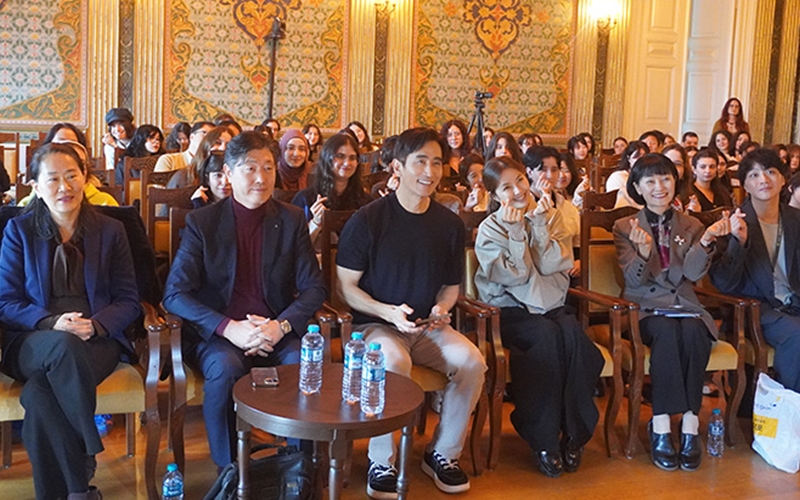
Actor Cha In-pyo (third in front row) poses for a photo with students and faculty of Istanbul University in Istanbul, Turkiye.
What memories do you have of your two close college friends who were Turkish?
Cevdet was four years older than me. I was an immigrant and he an international student. We met while painting the bathrooms at a community college. What made us close was his sense of dignity and manliness. We worked as assistant painters under a middle-aged supervisor who used to call Cevdet "Turkey," so Cevdet politely told him, "My name is not Turkey, it's Cevdet. Please don't call me that again." When the man said it again, Cevdet replied, "Yes, Yankee!" After that, the man never called him "Turkey" again.
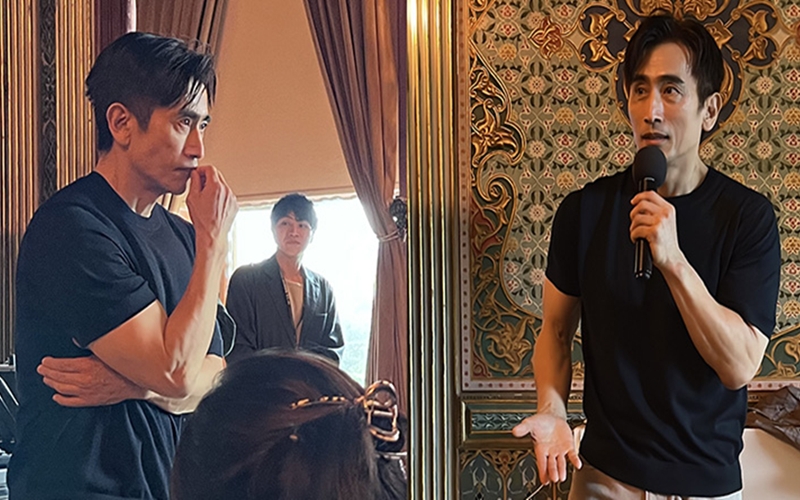
Actor Cha In-pyo speaks at the event "Korean Writers."
From there, Cevdet and I became close friends, supporting each other through daily life. Through him, I met another Turkish friend, Timur, and the three of us often spent time at the student union building talking about everything. Timur studied philosophy and explained ideas from Carl Jung's analytical psychology. Despite my poor English at that time, I tried to listen to Timur because I enjoyed those intellectual moments.
When I recently met students at Istanbul University, I felt that same energy; inside, I couldn’t help thinking, "They remind me so much of Cevdet and Timur 40 years ago."
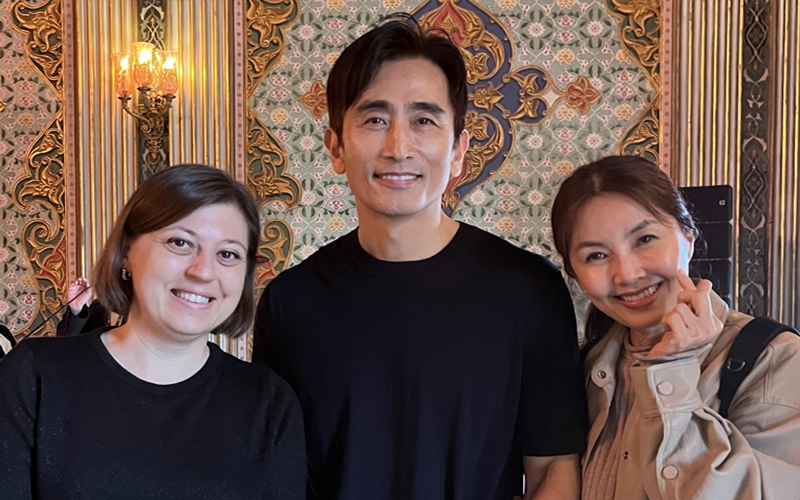
Actor Cha In-pyo (center) poses with his actor wife Shin Ae-ra.
What message do you have for youth who want to create meaning through art?
We are all artists because we create our own lives. Just as artists need an audience, people need others who watch, support and believe in them. To pursue your dream, you must also support the dreams of others. Dreams are meant to be shared, and we grow by becoming each other's audience and cheering each other on.
msjeon22@korea.kr
*This article was written by a Korea.net Honorary Reporter. Our group of Honorary Reporters are from all around the world, and they share with Korea.net their love and passion for all things Korean.