- 한국어
- English
- 日本語
- 中文
- العربية
- Español
- Français
- Deutsch
- Pусский
- Tiếng Việt
- Indonesian
By Honorary Reporter Divyanshi Gaur from India
Photos = Song Yoo-jin
Song Yoo-jin is a reporter for Arirang TV, Korea's only 24-hour English-language broadcast network for viewers in over 100 countries.
Going from culture reporter to correspondent at the presidential office, she reports on Korea's leadership, policy and diplomacy as well as major international events.
The following are excerpts from an email interview with her from Dec. 14-20.
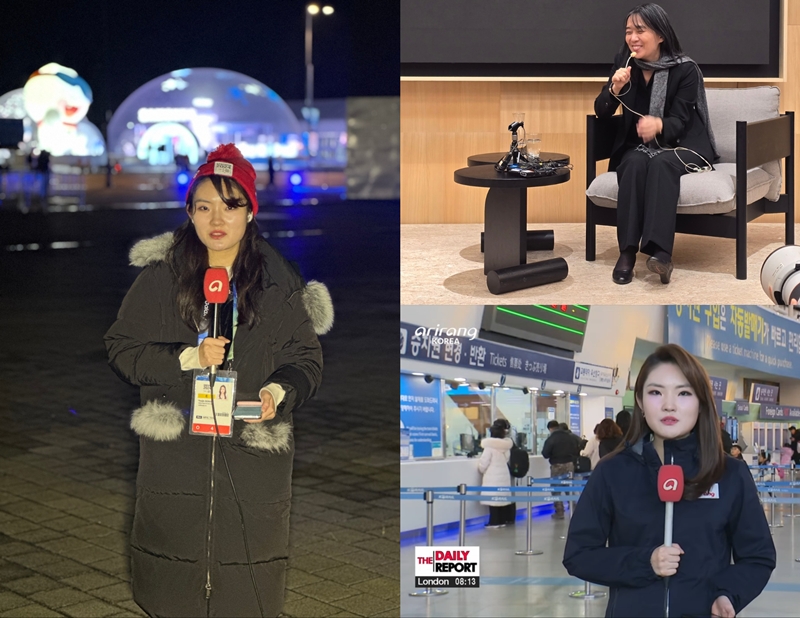
Clockwise from left is Song reporting from the opening ceremony of the Gangwon Youth Winter Olympics in Gangwon-do Province; author Han Kang's news conference with Korean media in Sweden after Han won the Nobel Prize in Literature; and the Lunar New Year holiday travel rush from Seoul Station.
How do you approach a story?
Every story has its own value but I try to assess its potential impact and resonance internationally. I pay close attention to what people abroad are curious about Korea and then develop stories that bridge that curiosity with reality in Korea.
Ultimately, my goal is to pitch and report stories not only for Korean audiences but also international viewers seeking a clearer and more nuanced understanding of Korea.
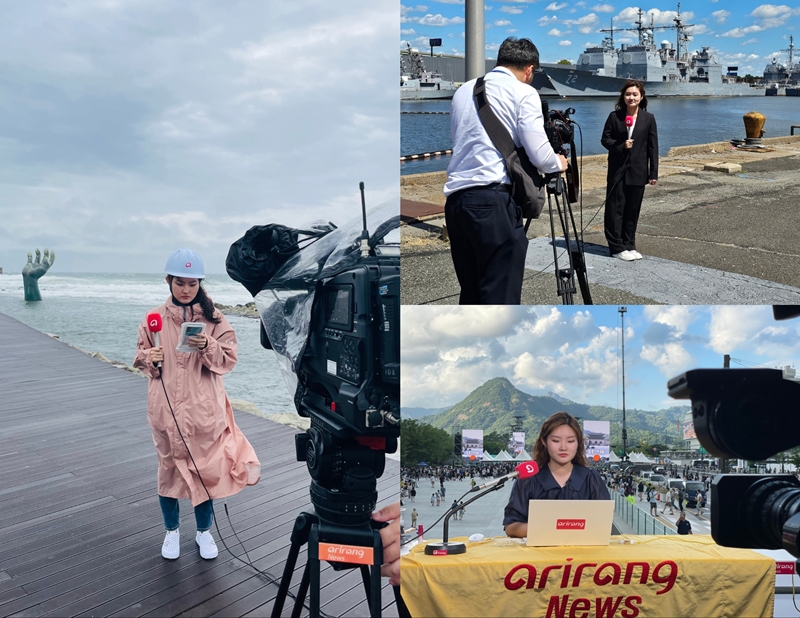
Song Yoo-jin's assignments have taken her all over Korea and the world.
How has your job shaped your understanding of Korea's global role?
My understanding of Korea's global presence began to take shape while I was a culture reporter. On overseas assignments, I saw how much global attention Korea now commands. A memorable moment was in Sweden shortly after then President Yoon Suk Yeol on Dec. 3, 2024, declared martial law. The locals asked where I was from and when I said Korea, they wanted to know what was happening there politically and what it meant. That showed me how closely Korea is being watched not only culturally but politically.
How was shifting the focus of your coverage from culture to politics?
This transition was one of the most challenging aspects of my career and remains a learning process. Culture reporting offered creative freedom and allowed me to meet extraordinary people from celebrity chef Edward Lee and Nobel laureate Han Kang to the hearing impaired K-pop group Big Ocean. Listening to people tell their stories often brought moments of awe.
My first months as a political reporter were exhausting, as I struggled to identify what mattered under tight deadlines and felt like a cub reporter again. Working with skilled colleagues accelerated my growth as political reporting demands speed, precision and clarity, with accuracy paramount. Covering overseas summits is physically demanding but deeply rewarding.
What advice do you have for those interested in pursuing journalism and media?
Watch widely, read deeply and listen carefully. Push yourself to produce your original content. Then look beyond your own country's media and don't be afraid to reach out for advice or opportunities. Finally, stay engaged and alert because journalism is fast-paced, and the world changes constantly. Your attention and willingness to understand the world truly matter.
jcy0531@korea.kr
*This article is written by a Korea.net Honorary Reporter. Our group of Honorary Reporters are from all around the world, and they share with Korea.net their love and passion for all things Korean.