- 한국어
- English
- 日本語
- 中文
- العربية
- Español
- Français
- Deutsch
- Pусский
- Tiếng Việt
- Indonesian
By Honorary Reporter Diya Mitra from U.K.
Photos = Diya Mitra
In 2025, I observed a growing number of readers in the U.K. interested in translations of Korean literature, a genre that received a huge boost from Han Kang's Nobel Prize in Literature in 2024.
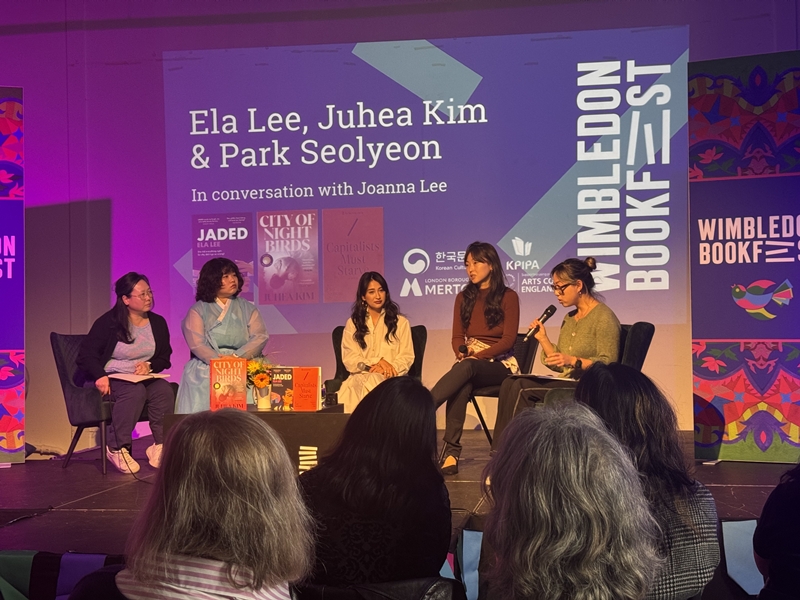
This scene is from the event "New Voices in Fiction" on Oct. 18, 2025, at the Wimbledon Book Festival held at Merton Arts Space of Wimbledon Library in London.
Attending many literary events last year, I noticed a shift in conversations, questions audiences ask, recommendations between readers, and curiosity around how people are discovering Korean literature, often through word of mouth, translation and chance encounters rather than formal promotion.
At literary events and bookshops and in conversations between sessions, I repeatedly spoke with readers, booksellers, translators and writers who discovered Korean literature through a translated book and were looking for more.
In June, I met author Hur Heuijung, who went to the U.K. to promote her first translated work "Failed Summer Vacation," a collection of short stories. Speaking at the Korean Cultural Centre (KCC) in London, Hur spoke about the writers who shaped her craft like Han Yujoo, Gu Byeong-mo and Han Kang and described her own writing as semi-autobiographical, a sustained interrogation of the self functioning as both reflection and reckoning.
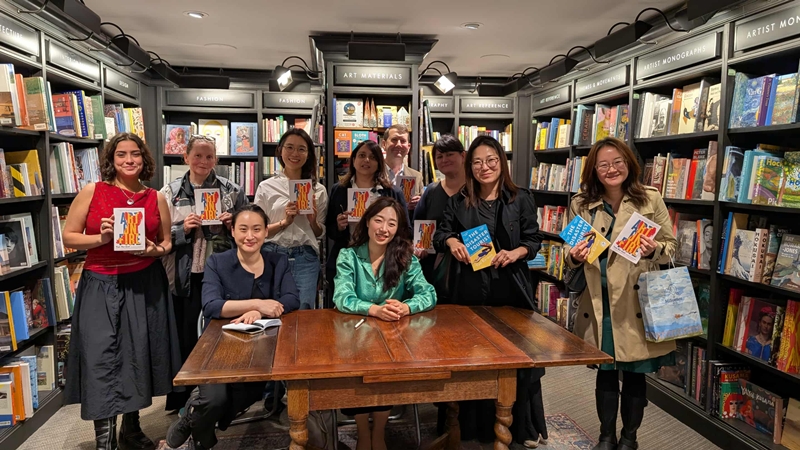
Author Yun Ko-eun (sitting at center) and attendees on Oct. 9, 2025, pose for a group photo at the bookstore Waterstones Covent Gardens in London.
Later that summer, author Yun Ko-eun visited London to speak about her book "Art on Fire" at the bookstore Waterstones Covent Garden. Her talk offered insight into her approach as a writer who uses quiet absurdity to expose unease embedded in everyday life, allowing humor and fear to coexist.
During October Culture Month organized by the KCC and the bookstore Foyles. I spoke with a reader who had a copy of "A Thousand Blues" by Cheon Seonran, marking the passages that moved her most. She said her journey into Korean literature began with "Almond" by Sohn Won-pyung, a work that resonated so deeply that she later sought it in Polish.
At the same event, another reader quietly pressed a recommendation into my hands: "Hunger" by Choi Jin-Young.
At the Wimbledon Autumn Book Festival, I met novices in Korean literature, some drawn by a specific author and others by a translated title that piqued their interest in exploring more. One woman said her eureka book was "A Magical Girl Retires" by Park Seolyeon, adding that she wanted to read works beyond those of the few names she knew.
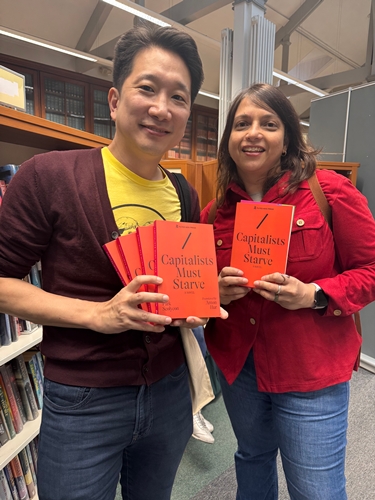
Noted translator Anton Hur (left), whose Korean name is Jung Bum, and I on Oct. 18, 2025, pose for a photo at the Wimbledon Book Festival at Merton Arts Space of Wimbledon Library in London.
msjeon22@korea.kr
*This article was written by a Korea.net Honorary Reporter. Our group of Honorary Reporters are from all around the world, and they share with Korea.net their love and passion for all things Korean.