- 한국어
- English
- 日本語
- 中文
- العربية
- Español
- Français
- Deutsch
- Pусский
- Tiếng Việt
- Indonesian
By Honorary Reporter Foteini Chatzoudi from Greece
Photos = Oleg and Evgenii Smagin
Oleg and Evgenii Smagin, identical twin brothers from Russia and currently based in Seoul, are the co-authors of "The Korean Dream: A Foreigner's Guide to Success in the Land of Innovation," which was released last year on Nov. 19.
Their careers have focused on market and investment strategy, ecosystem building in finance, artificial intelligence and gaming for globally recognized companies like SK Telecom and JB Financial Group.
The Smagin brothers have been featured on major Korean TV media like KBS, MBC and JTBC and both earned an MBA from the Korea Advanced Institute of Science and Technology, aka KAIST.
The following are excerpts from an email interview with them from Dec. 31 to Jan. 1 on their book.
What inspired you to write your book?
Korea is home to over 2.5 million foreigners and that number continues to grow every year. That gap between policy and reality and ambition and understanding is where many expats struggle. Writing the book felt like capturing a moment when Korea and global talent need each other more than ever, but don't yet fully understand one another.
When we began writing about our decade-long experience of building a life and careers here as expats, the response surprised us. We received an overwhelming number of questions from people we'd never met on everything from careers and networking to language learning and everyday life. We eventually decided to share what we learned.
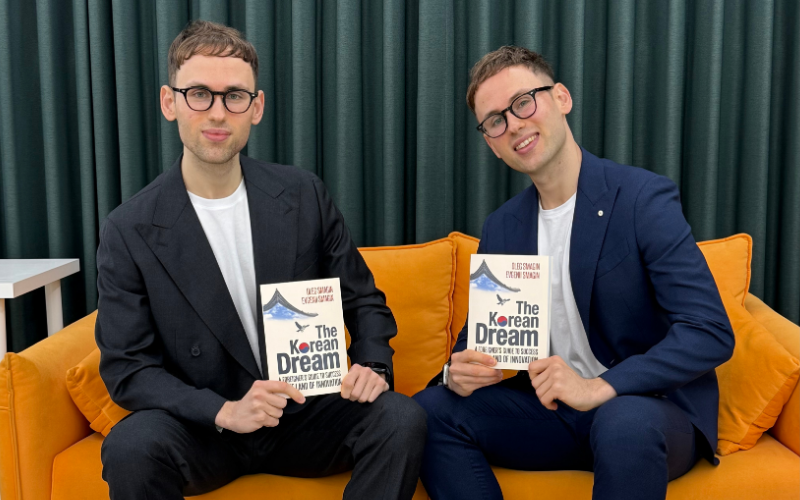
Oleg and Evgenii Smagin hold copies of their book "The Korean Dream."
How is your book different from others on Korea?
The idea for our book grew directly out of the questions we received from readers about careers, language, relationships, belonging and building a sustainable life in Korea. Those questions shaped not only what we wrote but how.
The book is also partly a memoir. As we walk readers through our own journey, from exchange to full-time students and eventually to corporate and social life, we try to offer an inside view of how life in Korea unfolds over time.
Our experience is something many foreigners can relate to. We arrived in Korea as students and built our lives from scratch, just as thousands of others are trying to do now.
Which moments best represent daily life in Korea for you and why?
Everyday life in Korea is best captured in small but telling moments: quick and reliable delivery, strong and efficient public services like health care, and clean, safe and well-maintained public spaces.
That same mindset is visible in the workplace. You rarely see people clocking in and out at the exact times per a contract. While this can feel unusual or even overwhelming at first, it often reflects a cultural emphasis on doing one's job properly in Korea.
Many comforts of daily life in Korea ranging from efficiency to convenience are rooted in this mindset. On an everyday level, the quality and comfort of life here are difficult to match elsewhere because Koreans take responsibility for their roles and try to do them well. Sometimes it takes leaving Korea to fully feel and appreciate this.
What questions about Korea do you wish readers asked more often?
What does Korea reward and what kind of people does it need? It's natural to look for shortcuts, but especially in Korea, what tends to be rewarded is long-term commitment and thinking. Language fluency, careful observation of how people work and communicate, recognizing what the country and its industries need, identifying niches and building networks all sound obvious. Yet success here rarely happens overnight, so these fundamentals are often overlooked or forgotten.
Another question is about priorities and sustainability. When considering building a life in Korea, the first question should be "Why do I want to be here, today and tomorrow?"
What impact do you hope this book will have?
We hope the book gives people not just answers but understanding. Many foreigners in Korea quietly internalize their difficulties, assuming that confusion, exhaustion or slow progress means they are doing something wrong. We want readers to know that these are not individual failures but shared stages of a much larger journey. That alone can restore confidence and a willingness to keep going.
On a broader level, we hope the book helps shift the narrative around foreigners in Korea from temporary guests to long-term contributors. When foreigners receive the tools to integrate and when their commitment is recognized, they can become genuine partners in Korea's next chapter.
What are your goals?
As authors, we want to keep expanding the conversation started by "The Korean Dream" through writing, open dialogue and education to raise understanding of not just Korea but foreigners themselves.
As professionals, we will continue contributing to where Korea is shaping the global future: technology, AI, investment and mentorship. These areas are where global perspective and local understanding must coexist and where our experiences can create real value.
Ultimately, our goal is to help build a permanent bridge between Korea and those who choose to live here and between ambition and understanding. "The Korean Dream" is the foundation for that ongoing work.
jcy0531@korea.kr
*This article was written by a Korea.net Honorary Reporter. Our group of Honorary Reporters are from all around the world, and they share with Korea.net their love and passion for all things Korean.