- 한국어
- English
- 日本語
- 中文
- العربية
- Español
- Français
- Deutsch
- Pусский
- Tiếng Việt
- Indonesian
By Honorary Reporter Viktoriia Voronova from Russia
Photo = NIKA
NIKA, formerly a member of the K-pop girl group BADKIZ under the name MONIKA, spent four years with the act before going solo. Since her 2016 debut with her digital single "Goodbye," she has worked as a singer-songwriter and expanded her scope while refining a sound rooted in electronic music.
Born Seo Ji-yu in Japan to a German father and a Korean mother, she was raised in Korea and now pursues her music career in Seoul.
The following are excerpts from an in-person interview with NIKA conducted at an office in Seoul on Feb. 6.
What are your thoughts on your ethnic identity?
I haven't arrived at a clear answer about my identity. Not having a single, defined identity sometimes makes me feel incomplete, and I think that sense naturally finds its way into my music. I kind of like it right now.
(While with BADKIZ), it was more important to focus on the group than on who I was as an individual. Now as a solo artist, I feel more inclined to speak honestly about my background and where I come from. I've started thinking more deeply about who I really am.
How have your appearances on TV reality shows shaped your music?
Participating in competitions did not significantly shape my musical style or direction. Instead, they served as moments of self-assessment, prompting me to reflect on what I want and where I am headed and reaffirm my commitment to music. Through my appearance on "Sing Again 4," I confronted fears I had long avoided. Facing them allowed me to move past some of those doubts. The experience also made me aware of how strongly I had been influenced by others' opinions. Going forward, I intend to trust my own judgment and continue making music that aligns with my artistic direction.
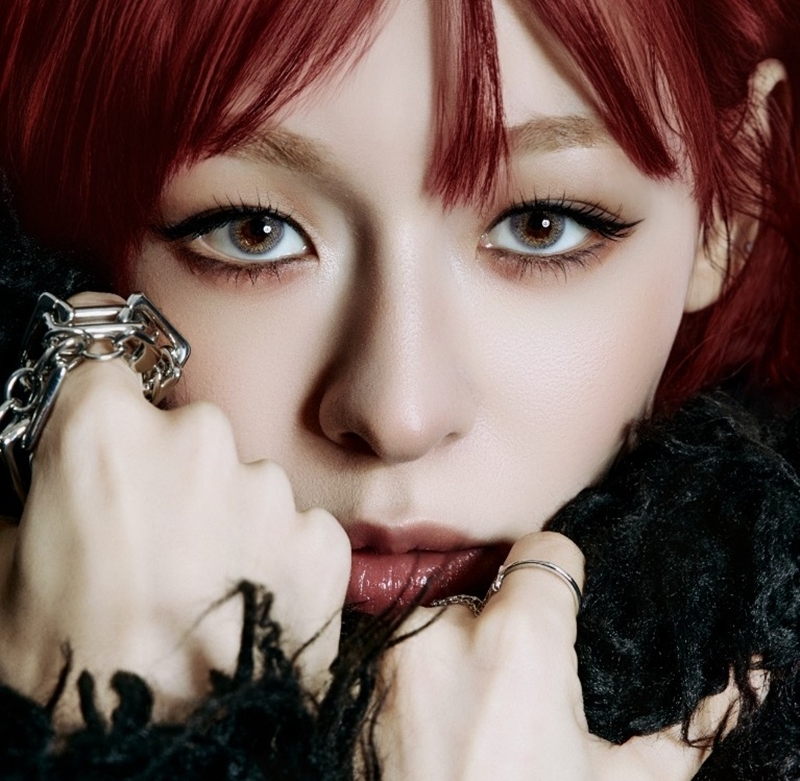
NIKA in photo shoot
You are pursuing "your own music" as a solo artist via a range of genres. What part of your music feels most honestly you?
Since transitioning into a solo artist, the greatest advantage has been the chance to pour my own stories and emotions into my songs; this is when I feel the most honest. Some songs come directly from personal experience while others are shaped by my imagination. But I'm most truthful when I convey through my music the feelings I've experienced as a woman.
Having gone from a group member to a solo songwriter, how has this experience changed your approach to songwriting and storytelling?
When I worked on a team, the producer set the overall direction and I shaped my expression within that framework. As a solo artist, I begin each project from scratch. That independence is both the most rewarding and most demanding aspect of my work, as it places full responsibility on me.
I am highly responsive to emotion. When something moves me, melodies and lyrics often emerge simultaneously. I record ideas on my phone, develop them on the piano or sketch them in MIDI. Building a song from the ground up, starting with a personal emotional impulse, is the part I value most.
Does your emotional expression change when your use Korean or English?
Korean is the language I speak most fluently, so it feels natural to express myself through it. When I think about Korean listeners, I find myself unconsciously censoring certain thoughts, as if my music needs to fit specific sensibilities. But when I write in English, I feel more emotionally unrestricted. Though my English isn't perfect, the distance from my mother tongue allows me greater freedom in expression.
jcy0531@korea.kr
*This article was written by a Korea.net Honorary Reporter. Our group of Honorary Reporters are from all around the world, and they share with Korea.net their love and passion for all things Korean.