- 한국어
- English
- 日本語
- 中文
- العربية
- Español
- Français
- Deutsch
- Pусский
- Tiếng Việt
- Indonesian
By Honorary Reporter Preeti Rawat from India
Photos = Nagendra Kumar Kaushik
Seoul-based Indian researcher Nagendra Kumar Kaushik has expanded science and technology in Korea through academic contributions like research papers, patent filings and international conferences.
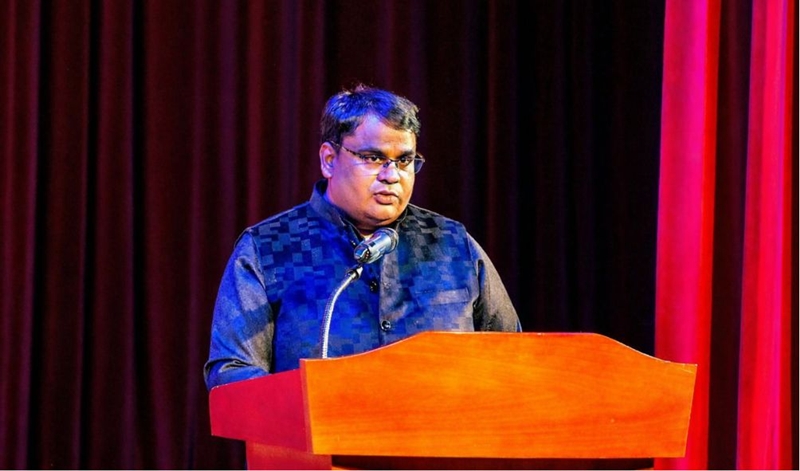
Nagendra Kumar Kaushik is a professor of electronic biophysics at Kwangwoon University in Seoul.
As a professor at the Department of Electronic Biophysics at Kwangwoon University in Seoul since 2011, he leads academic and community initiatives including the Plasma Bioscience Research Center and the group Indians in Korea. A specialist in plasma technologies and their biomedical and nanotechnology applications, he has published many papers, holds multiple patents and received international honors.
Last year, he was named an honorary Seoul citizen by the Seoul Metropolitan Government.
In an email interview conducted from Jan. 19 to Feb. 9, Kaushik reflected on his journey, scientific contributions and recent recognition from the capital.
Why did you pursue academia in Korea and how has your work evolved?
After completing my Ph.D. at the University of Delhi in 2010, I joined academia in Seoul in early 2011 due to the opportunity to work in a country with a strong emphasis on science, technology and innovation. Korea's rapidly expanding research ecosystem and openness to interdisciplinary and international collaboration made it an ideal environment for long-term academic growth.
Initially, my focus was on setting up a robust program for plasma bioscience research. Over time, this evolved into leading large interdisciplinary research initiatives, mentoring young scientists, securing research funding, filing patents, and collaborating extensively with hospitals, industries and global think tanks.
My role also expanded into academic leadership, international collaboration and science diplomacy like organizing major international conferences and strengthening Korea's global research visibility.
What challenges did you face as a foreign professor in Korea?
Like many foreign scholars, I initially faced challenges related to language, cultural adaptation and differences in academic systems, which I tackled with openness, mutual respect and consistent engagement. Over time, Korea became not only my professional base but also my second home. Professionally, I admire the country's discipline, resilience and innovation-driven mindset. Personally, I have experienced its warmth, respect for relationships and strong community values.
What makes Seoul a global innovation hub?
Seoul's openness to global researchers positions it as a world-class hub for innovation and advanced research. International collaborations bring diverse perspectives, global expertise and shared resources that accelerate scientific progress.
What about your activities related to person-to-person exchanges and your group?
Established in 2002, Indians in Korea connects the Indian diaspora with Korean society and friends of India. Since assuming the presidency in 2024, I have overseen community representation, academic–industrial partnerships, cultural programs, and coordination with diplomatic and government bodies, while supporting university collaborations, joint research, student exchanges and bilateral forums.
At its core, the group fosters inclusivity and mutual understanding, ensuring that the Indian community contributes to Korea's social, economic and academic development.
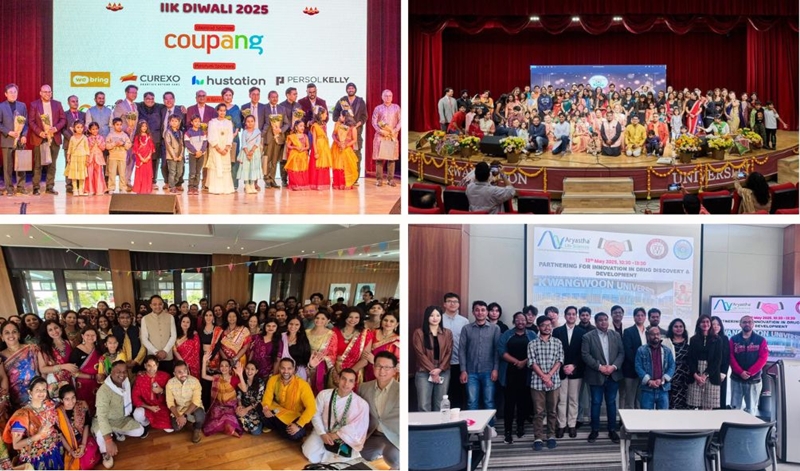
As head of the group Indians in Korea, Nagendra Kumar Kaushik promotes community advocacy, academic and industry partnerships, cultural programs, and liaising with diplomatic and government authorities.
As an honorary Seoul citizen, what do you hope to accomplish?
I look forward to expanding deep-tech collaborations, mentoring the next generation of global scientists, and launching new interdisciplinary platforms that integrate science, innovation and societal impact.
jcy0531@korea.kr
*This article was written by a Korea.net Honorary Reporter. Our group of Honorary Reporters are from all around the world, and they share with Korea.net their love and passion for all things Korean.