- 한국어
- English
- 日本語
- 中文
- العربية
- Español
- Français
- Deutsch
- Pусский
- Tiếng Việt
- Indonesian
By Honorary Reporter Ayushi Kharayat from India
The Korean Cultural Centre (KCC) in New Delhi, India, on Feb. 17 hosted a Seollal (Lunar New Year) celebration at its main auditorium Daecheong Maru, attracting 90 visitors including students from King Sejong Institute.
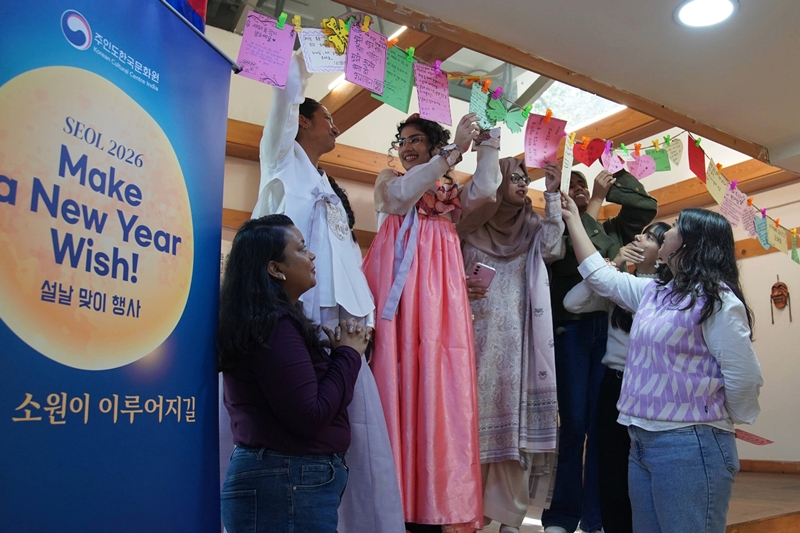
Visitors on Feb. 17 hang handwritten Lunar New Year wishes at a Seollal celebration hosted by the Korean Cultural Centre in New Delhi. (KCC)
The event began with an explanation of the cultural background and celebration of Seollal, covering the meanings behind its traditions.
The first tradition introduced was sebae (prostration), led by the teachers and several students and teaching the correct posture and etiquette of the bow. Next was deokdam, or the exchange of blessings that embodies the Seollal spirit of encouragement and goodwill.
Afterward, the students donned Hanbok (traditional clothing) and practiced sebae, greeting teachers with the traditional blessing "Saehae bok mani badeuseyo" (Lots of luck in the new year).
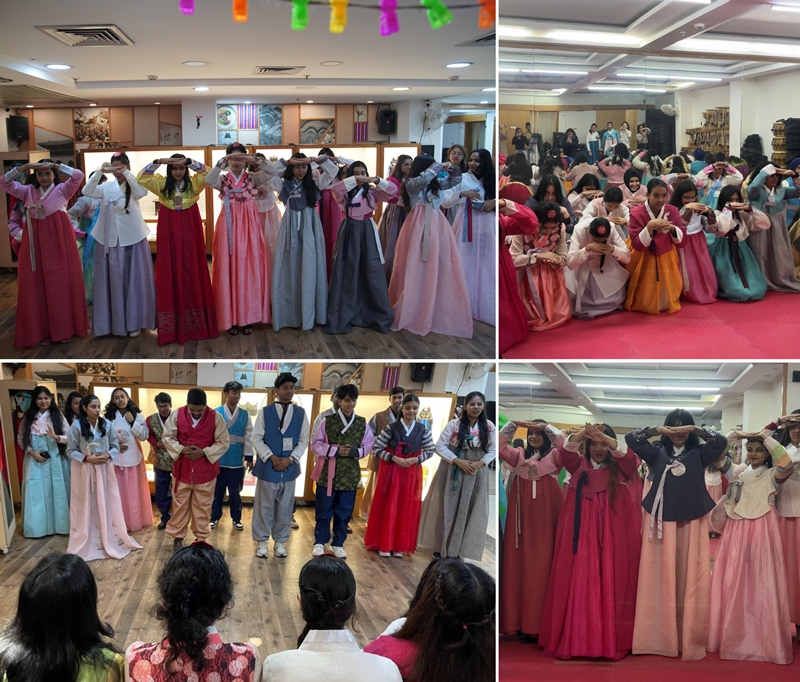
Visitors dressed in Hanbok practice sebae after learning about its cultural significance. (KCC and Ayushi Kharayat)
A highlight of this year's event was a wish-making ceremony inspired by the first full moon of the lunar year. The ritual encouraged reflection, thanks and the expression of hope for the year ahead.
Participants reflected on their goals, expressed gratitude and wrote wishes on cards that they hanged with a rope. The event concluded with the serving of tteokguk (rice cake soup), a custom during Seollal and symbolizing growing a year older. While eating, people discussed their impressions of the celebration.
KCC Director Hwang Il Yong called the gathering a meaningful opportunity for cultural exchange highlighting the universal desire for happiness, peace and prosperity that connects people across cultures.
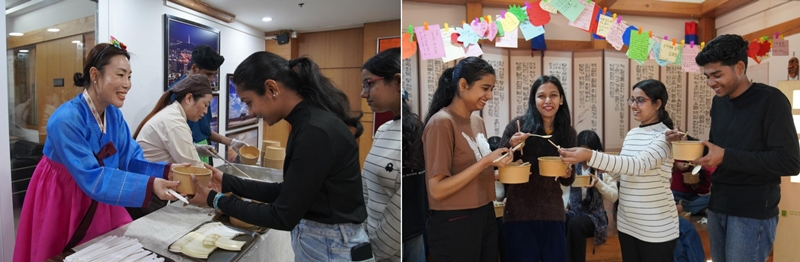
The celebration concludes with the sharing of tteokguk (rice cake soup). (KCC)
Through this experience, I recognized cultural parallels between Korea and India as lunar traditions and the moon's symbolism carry deep significance. Major festivals also mark new beginnings through family gatherings, traditional foods and shared rituals.
jcy0531@korea.kr
*This article was written by a Korea.net Honorary Reporter. Our group of Honorary Reporters are from all around the world, and they share with Korea.net their love and passion for all things Korean.