- 한국어
- English
- 日本語
- 中文
- العربية
- Español
- Français
- Deutsch
- Pусский
- Tiếng Việt
- Indonesian
By Honorary Reporter Fetty Asihta Kencana Putri from Indonesia
Dancheong, a traditional style of decorative painting on wooden buildings, is usually seen at palaces and temples.
Ahn Yu-jin (Eugene) is a master of this art and designated a National Intangible Cultural Heritage and National Heritage Repair Technician in dancheong.
In an email interview from Feb. 23 to March 5, she discussed her thoughts and preservation of this heritage.
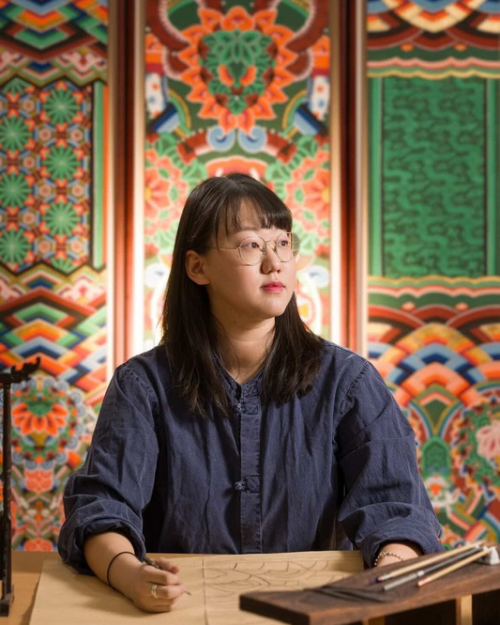
Ahn Yu-Jin is a dancheong master designated a National Intangible Cultural Heritage of Korea. (National Intangible Heritage Center of Korea Heritage Service)
When an arsonist in 2008 nearly destroyed the traditional gate Sungnyemun, Ahn, then in elementary school, said she was stunned that a national treasure could be burned in just six hours. She wondered if it be restored to its original form.
In college, she majored in design at an art university and heard of the disrupted passing down or disappearance of intangible cultural heritage. This made her decide to help preserve such heritage and restore cultural assets rather than pursue her goal of design. After completing three years of training and passing the qualification test, she was appointed a dancheong inheritor in 2021.
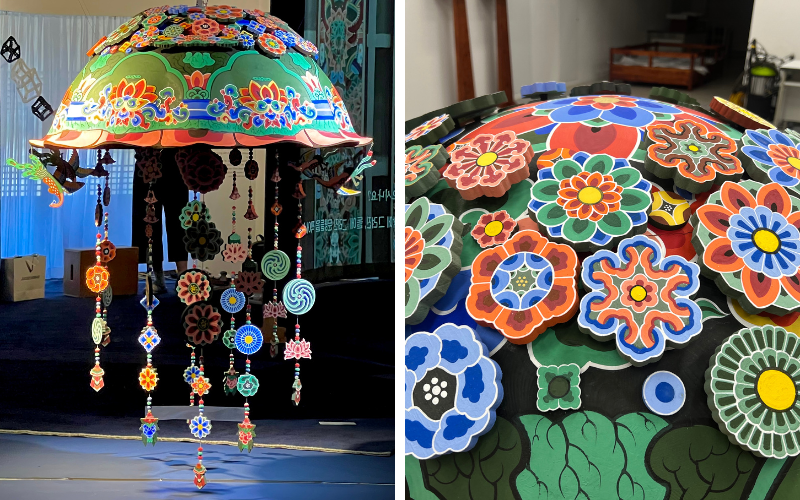
Flower garden dancheong shaped like jellyfish by Ahn Yu-jin (Ahn Yu-jin)
She said dancheong is characterized by vibrant colors and strict system of rules.
"In Korea, plant motifs are especially common in dancheong. This reflects the wisdom of our ancestors, who drew inspiration from nature. The floral patterns, animal motifs, human figures and geometric designs each carry symbolic meanings and decorative purposes," she said.
"Traditionally, types of dancheong were used depending on architectural space. The reason for the different names was to create a distinction in hierarchy and atmosphere within each space. Dancheong visually expresses differences in status and function."
Ahn also seeks to expand her craft beyond architectural surfaces by painting it on skateboards or guitars and making artistic furniture such as chairs. These transformations allow the tradition to serve modern contexts.
"Finding the right balance and creating variation is not easy, but sketching and developing ideas on my iPad helps me visualize and refine concepts before executing them," she said. "I also gain inspiration by regularly visiting art fairs and exhibitions. Through these methods, I can explore and develop new ideas while staying rooted in tradition."
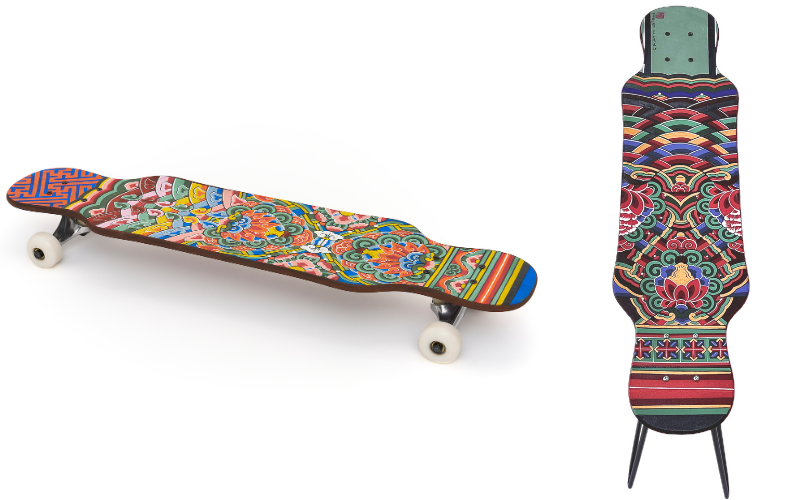
Dancheong skateboard (left) and a tabletop design (right) at Changbang Hall of Heungguksa Temple in Namyangju Gyeonggi-do Province (Ahn Yu-Jin)
"As someone trained in intangible cultural heritage, I feel a duty to preserve, reinterpret and pass it on to the next generation. It's also my creative language. Through dancheong, I can express myself while respecting tradition; it's a bridge between past and present and defines who I am as an artist," she said.
Interpreting the art today without losing its authenticity requires a delicate balance, she said. "Many in modern society perceive heritage as something distant from their daily lives," she added. "By applying dancheong to modern objects such as skateboards, guitars or art furniture, I want to help people experience it more naturally."
jcy0531@korea.kr
*This article was written by a Korea.net Honorary Reporter. Our group of Honorary Reporters are from all around the world, and they share with Korea.net their love and passion for all things Korean.