- 한국어
- English
- 日本語
- 中文
- العربية
- Español
- Français
- Deutsch
- Pусский
- Tiếng Việt
- Indonesian
By Honorary Reporter Imane Bouhnika from Algeria
Photos = Imane Bouhnika
Korea has raised its culinary accommodation for tourists Muslim countries through the provision of prayer rooms at travel destinations, mosques in populated districts and halal-friendly food options.
I noticed this during my trip to Korea last year from April 4-15, and was surprised by how halal-friendly options in Seoul had expanded, especially in the Myeong-dong district and other tourist attractions.
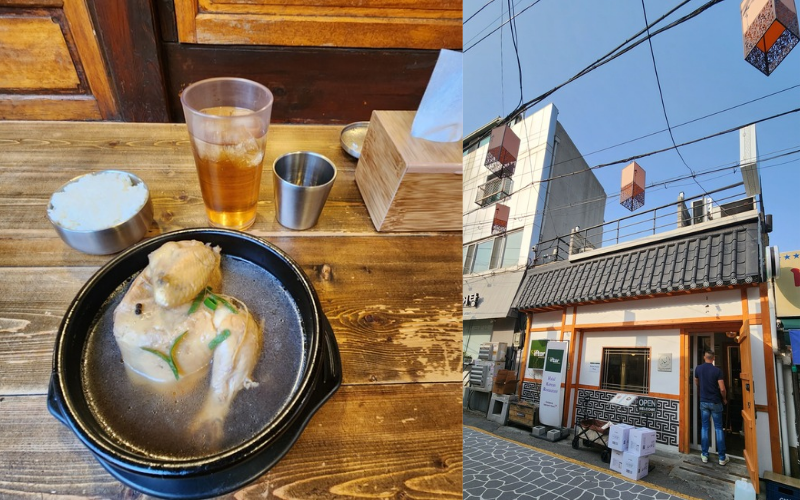
Samgyetang (ginseng chicken soup) (left) in Seoul's Jongno-gu District
My first stop was near Gyeongbokgung Palace at the restaurant Iftar, which had a design inspired by Hanok (traditional architecture). I chose a dish I'd always dreamed of trying, samgyetang (ginseng chicken soup), known for its health benefits. I was truly impressed by the healthy taste of this soup, especially with rice as a side dish.
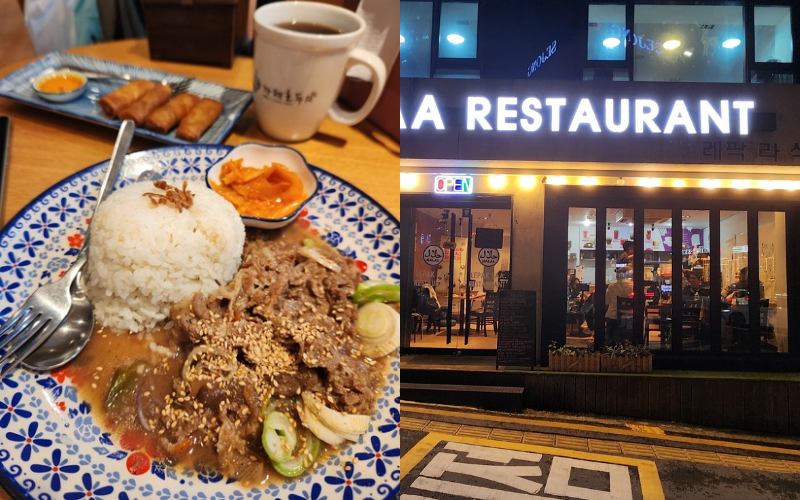
Bulgogi (marinated stir-fried meat) with meat at halal-friendly Korean-Malaysian restaurant in Myeong-dong
Myeong-dong has many restaurants with food from Muslim countries like Indonesia, Tunisia, Pakistan and Turkey. At Lepak Laa Restaurant in Myeong-dong, I tried bulgogi (marinated stir-fried beef) to try more Korean flavors, and the version I had featured thin slices of tender beef marinated for a few hours in a blend of soy sauce, brown sugar, garlic, ginger, sesame oil and caramelized onions.
This marinade gave the meat a balanced flavor between sweet and salty with a hint of sourness. I loved the combination of succulent bulgogi with cooked rice along with vegetables like carrots, spring onions, bell peppers and kimchi.
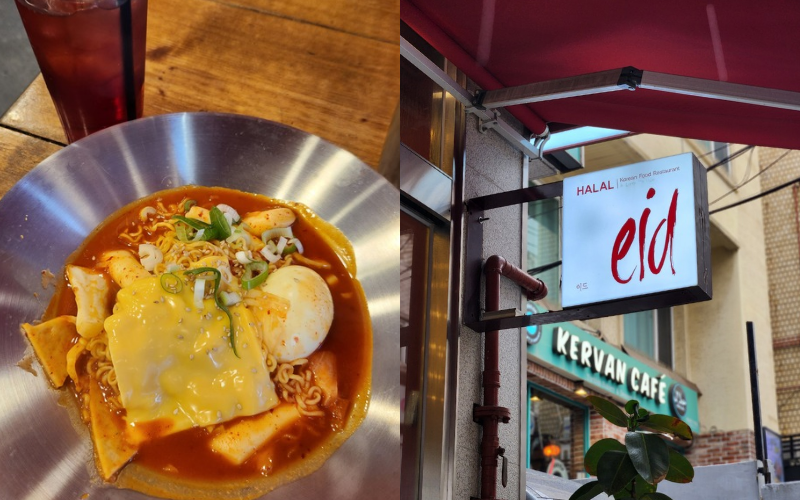
"Rabokki," a combination of tteokbokki (spicy rice cake) and ramyeon (instant noodles), at Eid in Itaewon
Later I visited Itaewon, Seoul's international district rich in halal options. I opted for "rabokki," a combination of ramyeon (instant noodles) and tteokbokki (spicy rice cake), noodles, eomuk (fish cake) and boiled eggs in a rich spicy sauce. What I like about this dish was the textures presented -- smooth noodles and chewy rice cake -- the filling of eomuk and boiled eggs, and melted cheese.
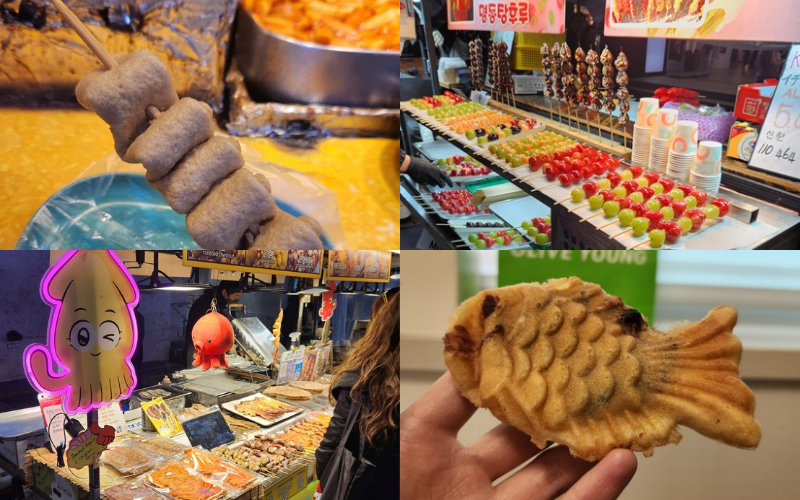
From left clockwise are eomuk (fish cake), tanghulu (candied grapes), bungeoppang (fish-shaped bun) and crispy squid at Gwangjang Night Market and Myeong-dong.
To complete my gourmet tour, I visited Gwangjang Night Market and Myeong-dong street food stalls and tried halal street foods like eomuk (fish cake) and bungeoppang (fish-shaped bun).
From the lively street food stalls of Myeong-dong to diverse restaurants in Itaewon catering to tourists from all over the world, Korea is growing more halal-friendly in its food offerings.
jcy0531@korea.kr
*This article was written by a Korea.net Honorary Reporter. Our group of Honorary Reporters are from all around the world, and they share with Korea.net their love and passion for all things Korean.