- 한국어
- English
- 日本語
- 中文
- العربية
- Español
- Français
- Deutsch
- Pусский
- Tiếng Việt
- Indonesian
By Honorary Reporter Faranak Solat from Iran
The Yeondeunghoe (Lotus Lantern Festival), which is on UNESCO's Representative List of the Intangible Cultural Heritage of Humanity, was held from May 16-17 in Seoul's Jongno-gu District and Jogyesa Temple ahead of Buddha's Birthday (May 25).
The event featured Korea's unique Buddhist traditions, contemporary pop culture and cutting-edge technologies, creating a colorful night in the city center.
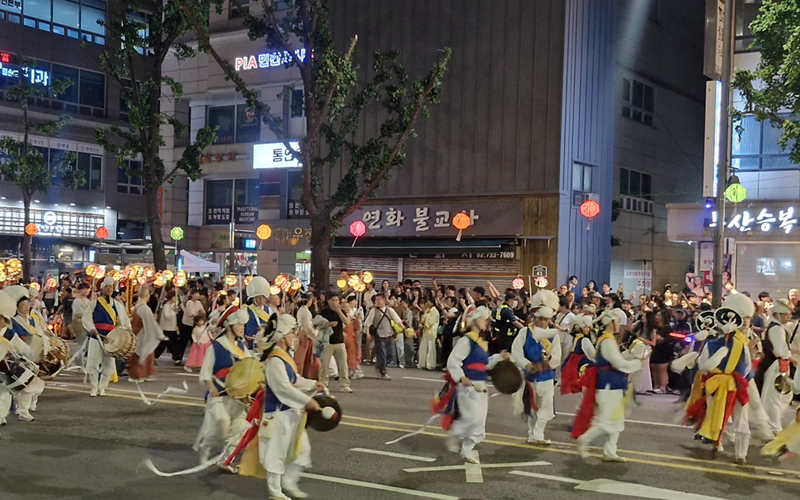
Large crowds on May 16 watch the annual Yeondeunghoe parade in Seoul's Jongno-gu District. (Faranak Solat)
The main celebration began at 7 p.m. from Dongguk University, the country's lone Buddhist institution of higher learning. The parade then moved through central Seoul, attracting spectators along Jongno-gu's main streets.
Decorated with thousands of lanterns, Jogyesa served as the festival's central venue. Lotus-shaped lanterns in a range of sizes were displayed and sold as a symbolic aspect of the festival.
In Buddhism, the lotus flower represents purity and enlightenment, and the glowing lanterns created a peaceful yet festive atmosphere around the temple.
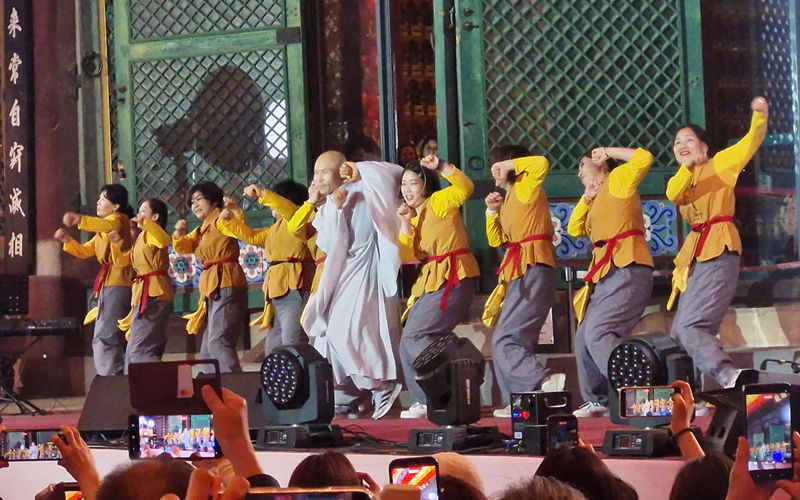
A monk and performers on May 16 put on a dance performance at Jogyesa Temple in Seoul. (Faranak Solat)
The temple hosted performances presenting Buddhist culture in a more accessible format. With an energetic rhythm and movements, a dance by monks reminded me of Korea's popular performing arts culture and K-pop's stage presence.
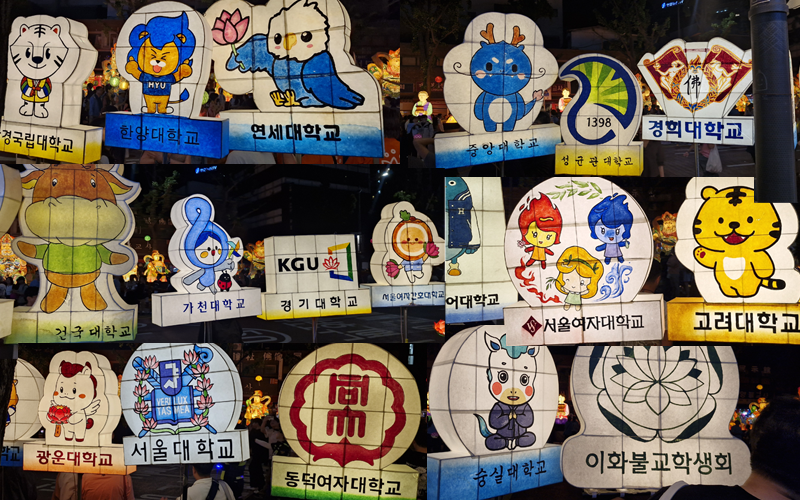
Lantern displays from universities on May 16 decorate the Yeondeunghoe parade in Seoul. (Faranak Solat)
Another feature was the participation of universities across the country. Several school groups joined the festival with enthusiasm, showing how youth interacts with traditional culture.
Buddhist monks from other countries also joined the celebration to give the festival a more international flavor. Their presence reflected the event's development into something that welcomes people from around the world.
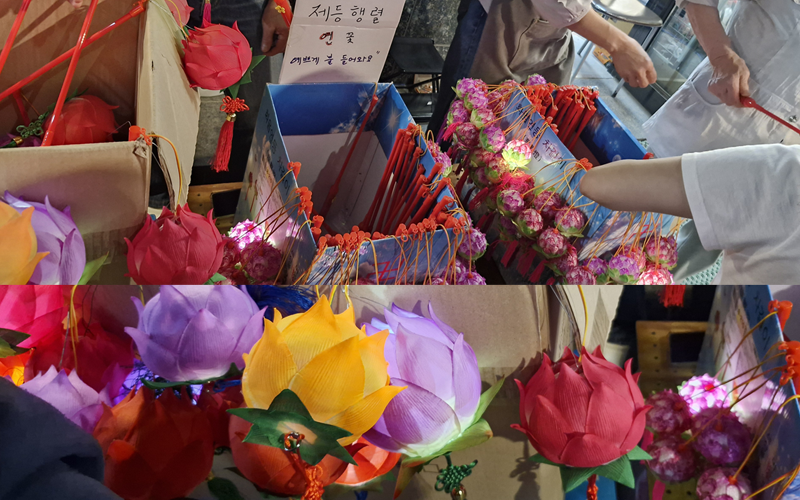
Lotus-shaped lanterns on May 16 are displayed near Jogyesa Temple at the Yeondeunghoe in Seoul. (Faranak Solat)
Artificial intelligence (AI) elements and performances shone alongside traditional lanterns, Buddhist rituals and temple decorations. Robot monks punctuated the role of AI-related imagery in a traditional Buddhist setting and the value of the latest technology at cultural events.

The AI-powered monk Ven. Hyeahn (left) and Googi (right), a four-legged patrol and safety robot equipped with multiple sensors, on May 16 walk at the parade of the annual Lotus Lantern Festival in Seoul's Jongno-gu District a week before the holiday Buddha's Birthday. (Official Flicker account of Korea.net)
ljyhwa@korea.kr
*This article was written by a Korea.net Honorary Reporter. Our group of Honorary Reporters are from all around the world, and they share with Korea.net their love and passion for all things Korean.