- 한국어
- English
- 日本語
- 中文
- العربية
- Español
- Français
- Deutsch
- Pусский
- Tiếng Việt
- Indonesian
By Honorary Reporter Preeti Rawat from India
Photos = Kylie Genter
Jeju Island's haenyeo (female divers) recently welcomed a foreign member.
Kylie Genter, an American from a small town in upstate New York, on April 14 was officially designated a haenyeo in Yeongrak-ri, a coastal village on the western edge of Jeju.
The haenyeo in 2016 were inscribed on UNESCO's List of Intangible Cultural Heritage of Humanity and their fisheries system in 2023 was designated as a Globally Important Agricultural Heritage System by the United Nations Food and Agriculture Organization.
In an email interview from May 7-14, Genter shared her experience in becoming a haenyeo.
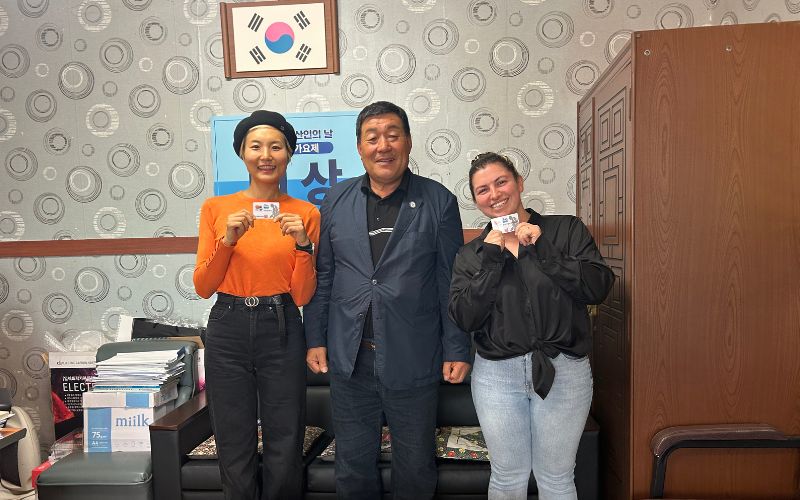
Kylie Genter (right) in April 2026 after receiving the official haenyeo license holds her license with Kim Chang-shik, the fishery chief of Yeongrak-ri (center), and fellow diver Choi Jung-yoon at the Yeongrak-ri Fishery Office in Seogwipo, Jeju Island.
Moving to Korea in 2012, Genter later relocated to Jeju, where she introduced to her students the island's history and culture in English. Her growing interest in haenyeo culture led her to enroll at Jeju Hansupul Haenyeo School in 2018.
"I found it interesting that it's a very physical, mostly female profession," she said. "It was also very cool that they've kept the traditional practices, like not using air tanks."
In late 2023, Yeongrak-ri was looking for new haenyeo, and Genter's Korean husband quickly suggested her. Though the village initially rejected her, the village fishery chief invited her for an interview a month later and she began diving in January 2024.
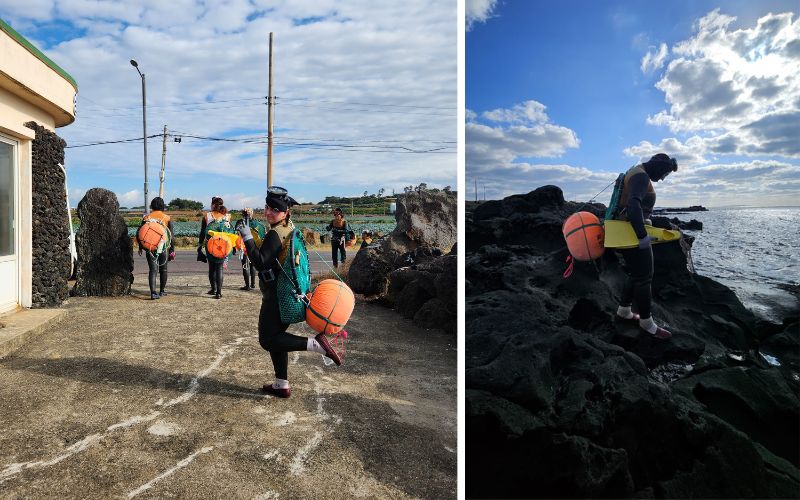
Kylie Genter (left) and her fellow divers in November 2025 head for the water, and she gets ready for a dive along the coast of the village of Yeongrak-ri in Seogwipo, Jeju Island.
After more than two years of hard work, Genter on April 14 received her official haenyeo license.
During diving season, Genter typically arrives an hour before entering the water to prepare her wetsuit and gear. The timing of each dive depends on the tidal cycle. At the beginning of a cycle, a haenyeo usually dives into the water around 10 a.m., but as the cycle progresses, the start time gradually shifts later to often around noon.
Preparation is part of the routine. She repairs small tears in her wetsuit, applies flour or baby powder inside the suit to make it easier to put on and gathers in the village changing room with other divers. They often drink tea or coffee and watch television together while waiting for the signal from the haenyeo village head to begin.
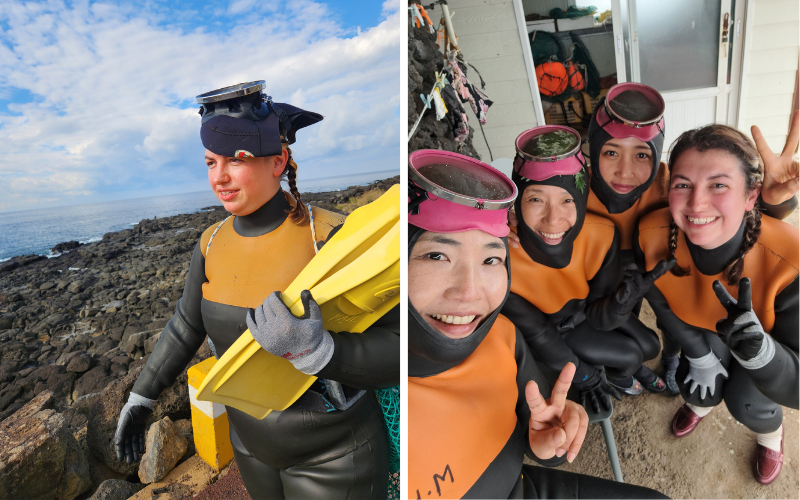
Kylie Genter (left) in November 2025 heads to the shore before going into the water on the coast of Yeongrak-ri, a village in Seogwipo, Jeju Island, and poses for a photo in April with her fellow divers (from left to right) Kim Minhee, Kim Sunhee and Jeong Saehee in the village.
Beyond the physical demands of diving, Genter also had to navigate a language barrier. While she could speak Korean, understanding the Jeju dialect proved challenging in the beginning. Over time, she grew more familiar with the patterns and routines of haenyeo work.
Genter said her understanding of haenyeo culture and her journey have greatly impacted her life, adding that joining helped her find balance in her life as it requires her to focus entirely on the task at hand. Through the experience, she said, she also gained a loving, caring community while feeling a heavy responsibility for preserving haenyeo tradition and legacy.
ljyhwa@korea.kr
*This article was written by a Korea.net Honorary Reporter. Our group of Honorary Reporters are from all around the world, and they share with Korea.net their love and passion for all things Korean.