- 한국어
- English
- 日本語
- 中文
- العربية
- Español
- Français
- Deutsch
- Pусский
- Tiếng Việt
- Indonesian
By Honorary Reporter Foteini Chatzoudi from Greece
Photos = Jan Coveney
Jan Coveney, a Hanji (traditional paper) artist and educator based in Strathalbyn, Australia who opened Hanji Studio in 2020, has focused on creating art and conducting workshops to introduce Korean paper craft to Australian audiences.
Growing up in a creative family, she developed an early interest in the arts. Her career as a teacher of English as a second language provided opportunities to reside in five countries including Korea, Malaysia and the United Arab Emirates. This sparked a lifelong interest in Korean cultural heritage.
She has showcased her Hanji works at events like the exhibition "Dissolve: Inspiration by Korea" at the Korean Cultural Centre (2017) and Hanji/K-Paper Festival Exhibition (2016) in Sydney and the Creative Pursuits Arts Festival in Macclesfield, the U.K. (2025).
The following are excerpts from an email interview with Coveney from June 11-13.
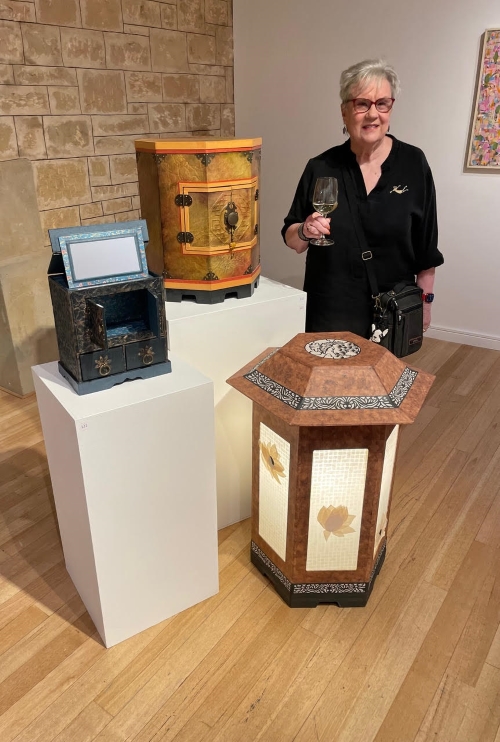
Jan Coveney on May 4, 2025, poses with her artworks at the opening of the Murray Bridge Rotary Art Show at Murray Bridge Regional Gallery in Murray Bridge, Australia.
What was your first contact with Hanji?
While living in Korea, I was introduced to Hanji craft by a friend. Coming from a creative family, I had tried many arts before but none had fully captured my interest until I worked with Hanji. I was immediately captivated by its texture and versatility, experimenting with colors, patterns and techniques. The paper's unique ability to become soft, pliable and tactile when dampened made the creative process both intuitive and creative.
Working with Hanji was not only rewarding but also deeply therapeutic. Hours would pass unnoticed as I crafted a wide variety of functional and decorative pieces including lamps, coffee tables, boxes and bowls.
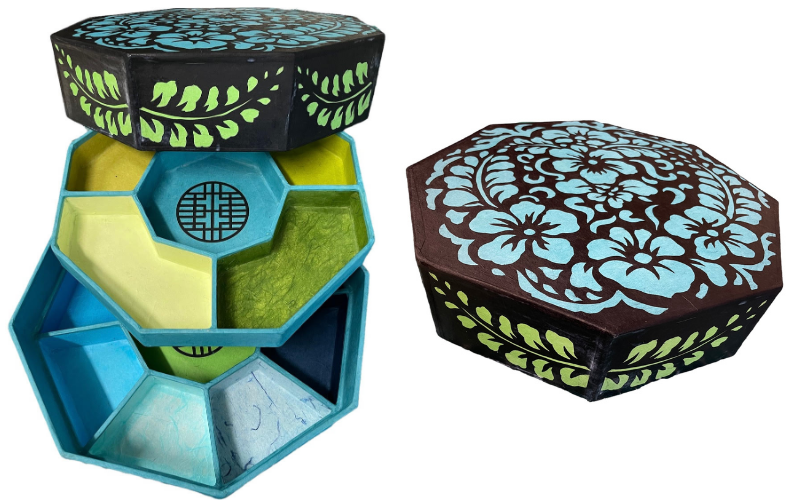
Divided hexagonal box with open lid (left) and closed (right) made from Hanji (July 2022) at Hanji Studio in Strathalbyn, Australia
How did you learn Hanji techniques and what was most challenging early on?
While in Korea, I immersed myself in Hanji, refining my skills through workshops, experimentation and learning from domestic artists. I was inspired by the wide variety of paper, each offering creative possibilities. After moving abroad, I continued practicing despite limited materials, sourcing what I could wherever I lived. I regularly return to Korea to select Hanji in person, attend classes and learn from practitioners, with each visit deepening my connection to this evolving tradition.
What inspires your Hanji art?
I draw much of my inspiration from everyday objects and the role they play in our daily lives. I am particularly inspired by the artisans of the Joseon Dynasty (1392-1910), who devoted countless hours to creating functional and decorative objects for their homes. My creative process begins with a cardboard structure as the base, which I then cover with selected Hanji chosen for its color, texture and suitability for the project. The final stage involves decorating the surface with intricate paper cutouts inspired by Korean cultural motifs, connecting each piece to the symbolism and tradition of Hanji craft.
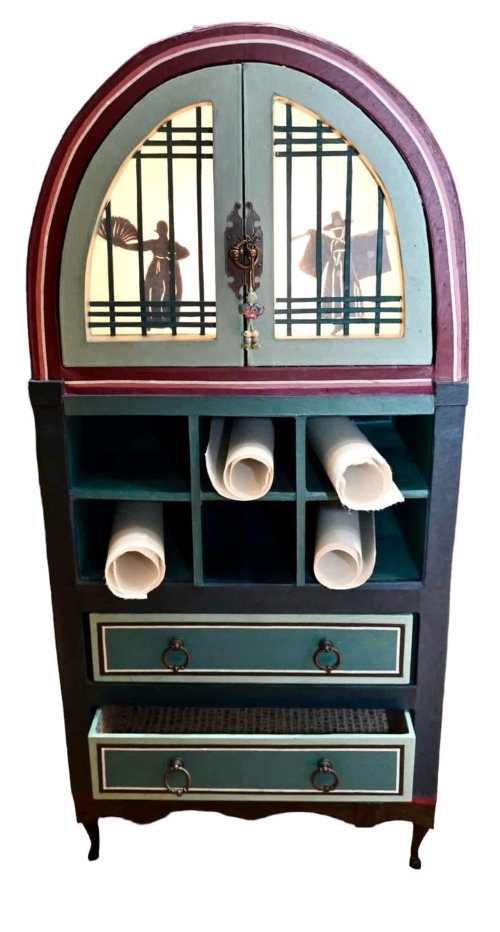
Hanji furniture inspired by K-drama "Rookie Historian" (January 2024) at Hanji Studio in Strathalbyn, Australia
What's your favorite Hanji work?
I enjoy creating Hanji furniture, especially seeing ideas develop into finished works. One piece was a cabinet inspired by the K-drama "The Rookie Historian" and a Joseon-era historians' room for royal scripts. It features drawers and openings for storage, a domed top and a backlight that reveals silhouettes of Korean dancers.
The work shows the creative potential of Hanji, and I plan to continue exploring furniture and contemporary design in my practice. Its range of colors, textures and fibers allows ongoing experimentation and creative possibilities beyond traditional craft forms.
What impact has teaching Hanji to people in Australia had on them?
Participants often find Hanji calming and therapeutic, offering a break from modern life. They also learn about Korean cultural heritage including the history of the Joseon Dynasty, symbolism and traditional uses of Hanji in everyday objects. The classes also bring people together in encouraging creativity and skill-sharing, while fostering a deeper connection to Korean culture.
Seeing students take pride in the pieces they create and develop a deeper connection with Korean culture is one of the most meaningful aspects of my work as a Hanji teacher in Australia.
ljyhwa@korea.kr
*This article was written by a Korea.net Honorary Reporter. Our group of Honorary Reporters are from all around the world, and they share with Korea.net their love and passion for all things Korean.