- 한국어
- English
- 日本語
- 中文
- العربية
- Español
- Français
- Deutsch
- Pусский
- Tiếng Việt
- Indonesian
By Honorary Reporter Jason Edwards from Luxembourg
Photos = Jason Edwards
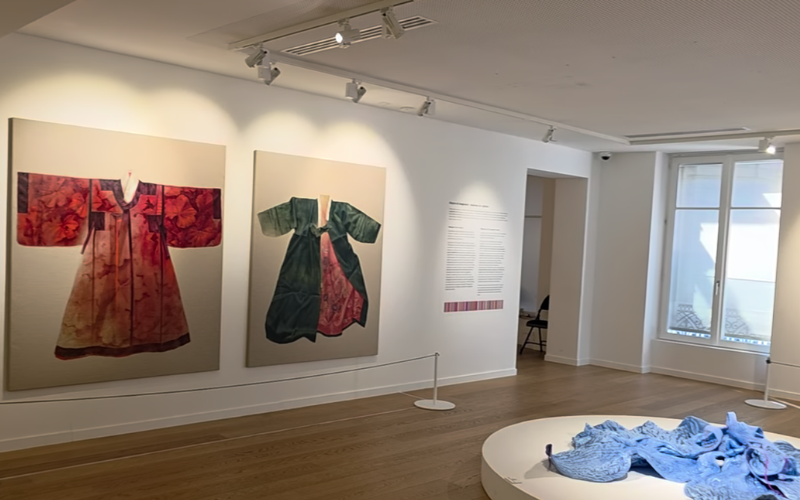
Artworks on June 19 are displayed at the exhibition "Colors of Korea: Light on Contemporary Korean Art" at the Korean Cultural Center in Paris.
The Korean Cultural Center (KCC) in Paris through Aug. 29 is hosting "Colors of Korea: Light on Contemporary Korean Art," an exhibition marking the 140th anniversary of bilateral relations.
Opened on Oct. 24 last year, the exhibition shows works by Korean artist across generations and media including painting, sculpture, photography, installation and digital art to show the evolution of Korean color aesthetics.
The works explore how contemporary artists engage with materials, forms and traditional references in diverse ways. Some work with traditional materials such as Hanji (traditional paper) or ottchil (traditional lacquer), using them in ways that differ from their original purposes.
Others focus on texture, fragments, light, space or the transformation of familiar forms and the contrast between these approaches is a strength of the exhibition.
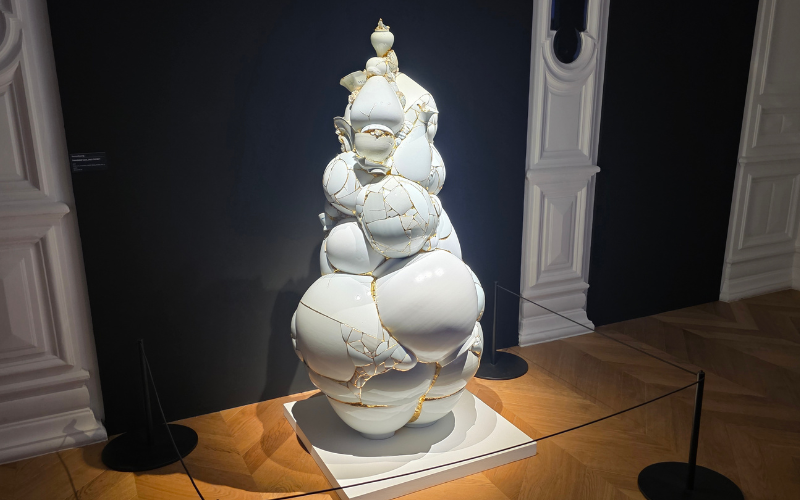
Translated Vase (2023) by Yee Sookyung is composed of ceramic fragments joined with epoxy resin.
A recurring theme is the relationship between tradition and contemporary practice. Many artists do not reject traditional techniques but adapt them.
A material that once had a specific function turns into a tool for experimentation, and a technique used for craft is a way to explore surface or structure. This continuity appears in several works and gives the exhibition a sense of coherence, though the styles are different.
The exhibition also featured how certain materials are prepared, changes in techniques over time and why choices matter. For example, traditional Hanji is made from mulberry bark, soaked, pulped and layered by hand.
Some contemporary artists reinforce the sheets or combine them with modern fibers to increase durability while preserving the paper's traditional texture.
Like the name "Colors of Korea," the exhibition also introduced the use of natural pigments and dyes. Some works use natural mineral pigments or plant-based dyes, and contemporary artists sometimes adjust the grinding process or mix traditional pigments with acrylic binders to stabilize the color for modern exhibition environments.
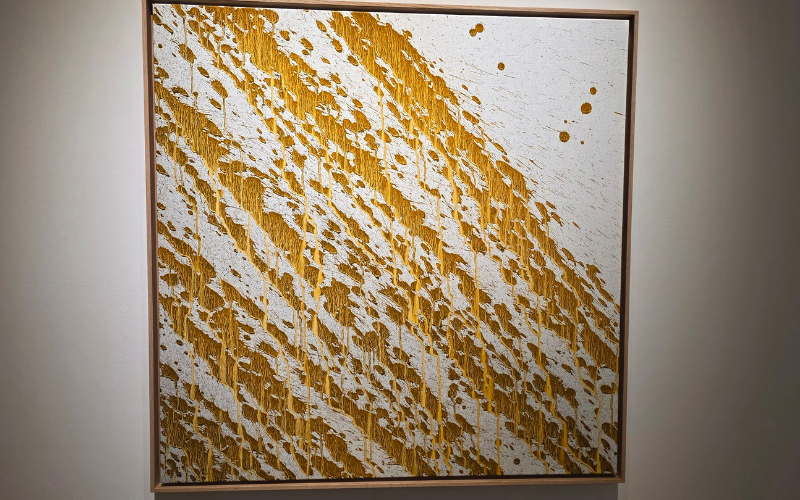
Reve de terre (2025) by Chae Sung‑Pil was created with earth pigments and Chinese ink on canvas, reflecting the artist's exploration of materiality and natural landscapes.
The choice to mix contemporary aspects and traditional features together is conceptual as well as technical, reflecting the artists' intent to maintain the continuity of Korean heritage as a source of experimentation.
ljyhwa@korea.kr
*This article was written by a Korea.net Honorary Reporter. Our group of Honorary Reporters are from all around the world, and they share with Korea.net their love and passion for all things Korean.