- 한국어
- English
- 日本語
- 中文
- العربية
- Español
- Français
- Deutsch
- Pусский
- Tiếng Việt
- Indonesian
By Honorary Reporter Audrey Boois from South Africa
Photos = Nathan Gallagher
Benu, the first restaurant in San Francisco to get three Michelin stars in 2014, is known for blending fine dining with Korean culinary heritage.
In 2019, the bistro debuted on the list of the World's 50 Best Restaurants and marked 10 straight years of three Michelin stars in 2024.
Benu chef Nathan Gallagher reflects on Korean cuisine and how Korean flavors, fermentation practices and the restaurant’s approach to hospitality have influenced his perspective on cooking and dining.
The following are excerpts from an email interview with him conducted from June 5-28.
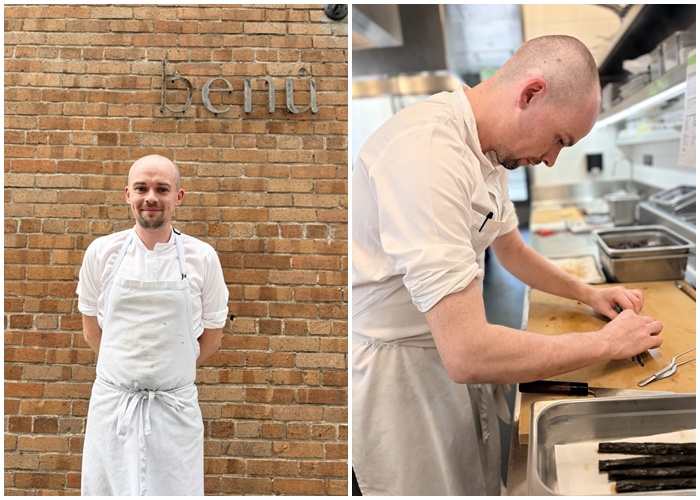
(Left) Nathan Gallagher on June 17 stands outside Benu in San Francisco and (right) on June 18 prepares ingredients at the kitchen.
As a chef from the U.K., what first drew you to Korean food and culinary culture?
Korean food wasn't something I grew up around in Liverpool. I first got into it eating ssam (fresh vegetable wraps) at a Korean place on my days off while working in London. Reading the Benu book is what really pulled me in, and working here is where I started to understand how Korean flavors are built.
In your mind, what makes Korean cuisine unique from others?
What sets Korean cooking apart is how every bite can have its own flavor profile. Take for example baek (white) kimchi next to baechu (cabbage) kimchi, the flavors can be so complex and still feel related. It also stays close to its roots. Things like meju (fermented soybean bricks), soy sauce and anchovy sauce are made and fermented in onggi (earthenware jars) to preserve the flavor and let it get better over the years. That's not something you really see in a lot of other cooking.
What are the challenges and opportunities in bringing Korean food to the world?
Honestly, I don't see many challenges right now. Korean food is at the highest point it's ever been globally, and its popularity has only grown over the years. If anything, the one place it still feels underrated is England, where it isn't as big as I think it should be.
The opportunity is in the range of it, everything from hot pot to Korean barbecue to fine dining. There are far more up-and-coming Korean restaurants and chefs now than when I first started cooking.
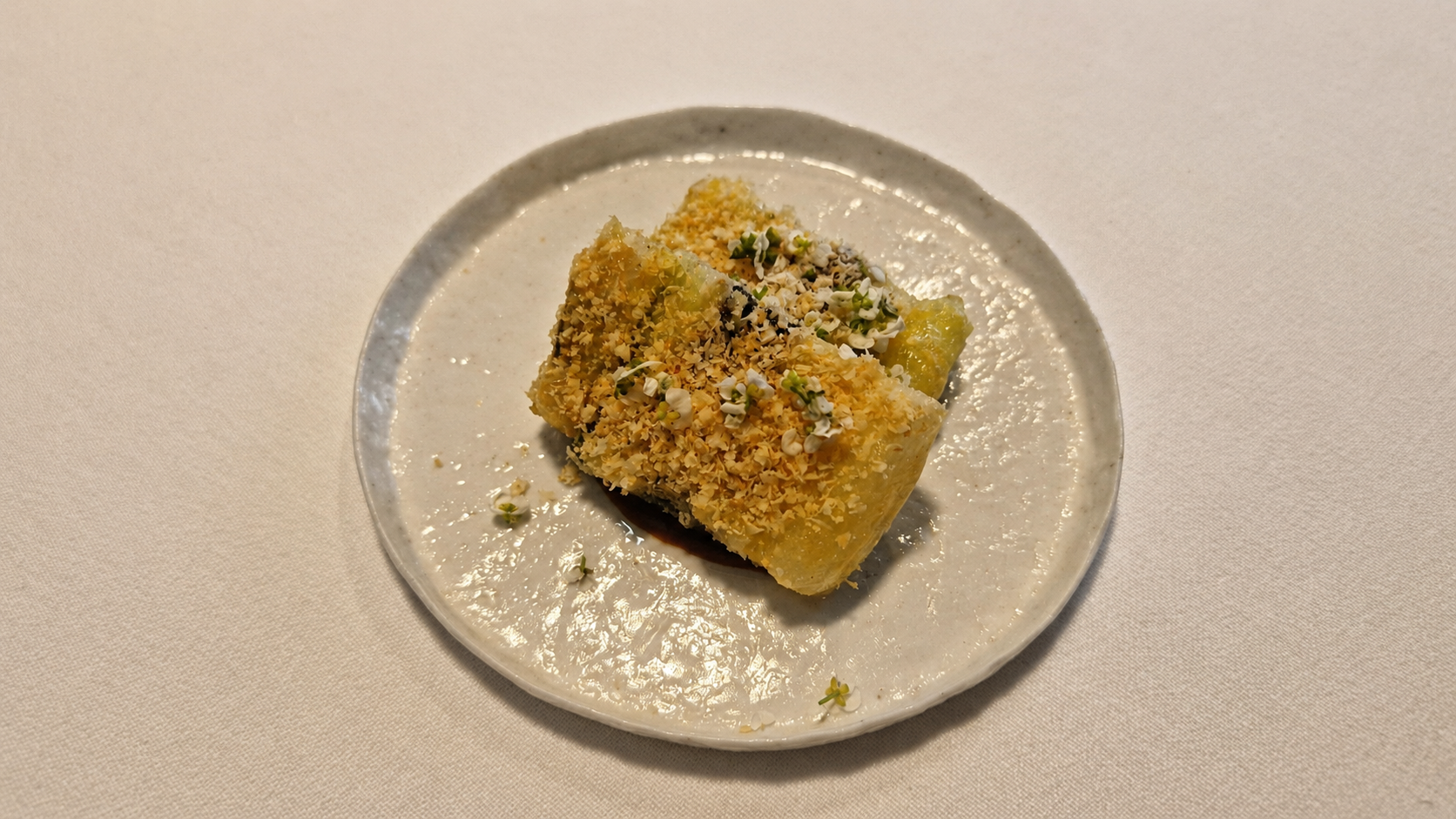
River eel sanjeok with pine nut and alyssum made by Nathan Gallagher on June 19
ljyhwa@korea.kr
*This article was written by a Korea.net Honorary Reporter. Our group of Honorary Reporters are from all around the world, and they share with Korea.net their love and passion for all things Korean.