- 한국어
- English
- 日本語
- 中文
- العربية
- Español
- Français
- Deutsch
- Pусский
- Tiếng Việt
- Indonesian
By Honorary Reporter Katarzyna Skret from Poland
Photos = Katarzyna Skret
"The Charm of Seoul: Pungryu," an exhibition hosted since July 9 at the Korean Cultural Center (KCC) in Warsaw, Poland, is part of the Touring K-Arts program of the Korean Ministry of Culture, Sport and Tourism and the Korean Foundation for International Cultural Exchange.
Notable guests who attended the opening day of the event included Choi Byung-goo, who introduced the exhibition and discussed the Seoul Museum of History's collections; Ambassador to Poland Tae Jun-youl; and Ewa Rynarzewska, associate professor and head of Korean studies at the University of Warsaw.
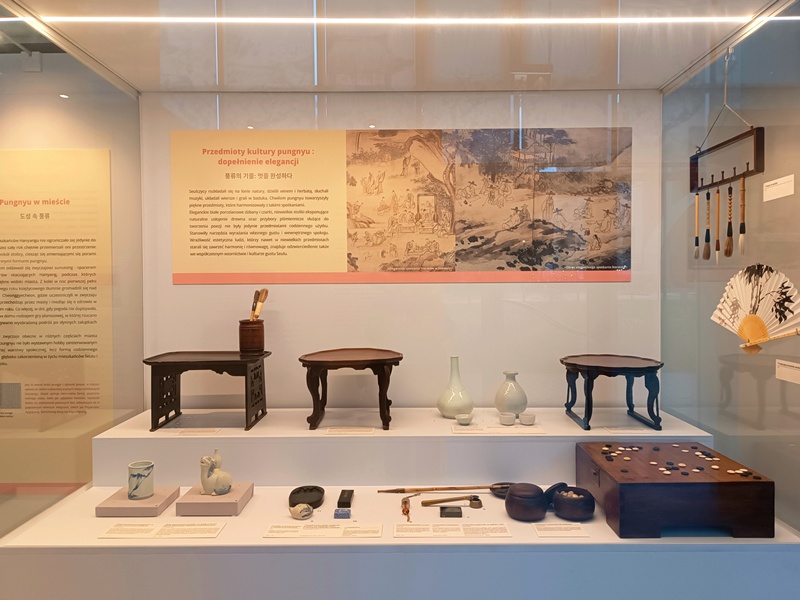
Aesthetic objects featuring traditional pungru culture
Divided into three sections, the exhibition shows Seoul's evolution from the Joseon Dynasty (1391-1910) to present day, highlighting its traditional heritage and modern urban culture. The interactive programs include a Hangang River picnic, photo booths and the popular experience of eating ramyeon (instant noodles) along the river.
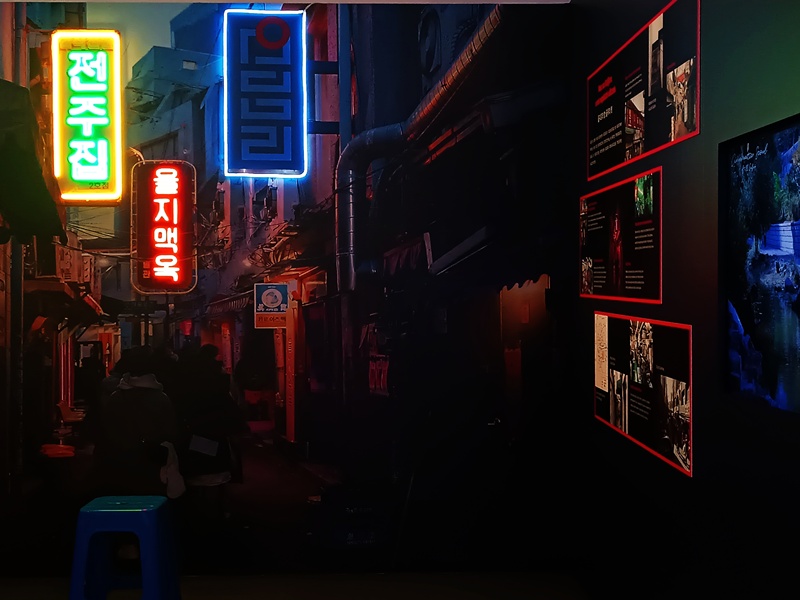
Display resembling Euljiro Street in Seoul's Jung-gu District
Pungryu, or classical entertainment in real life, embodies living in harmony with nature and finding peace and joy in daily life. Curator Boo Seung-a guided visitors through the exhibition and explained how this philosophy is reflected in modern Seoul. Highlights include scenes from the streets and bars on Euljiro Street in the capital's Jung-gu District, as well as a picnic by the Hangang.
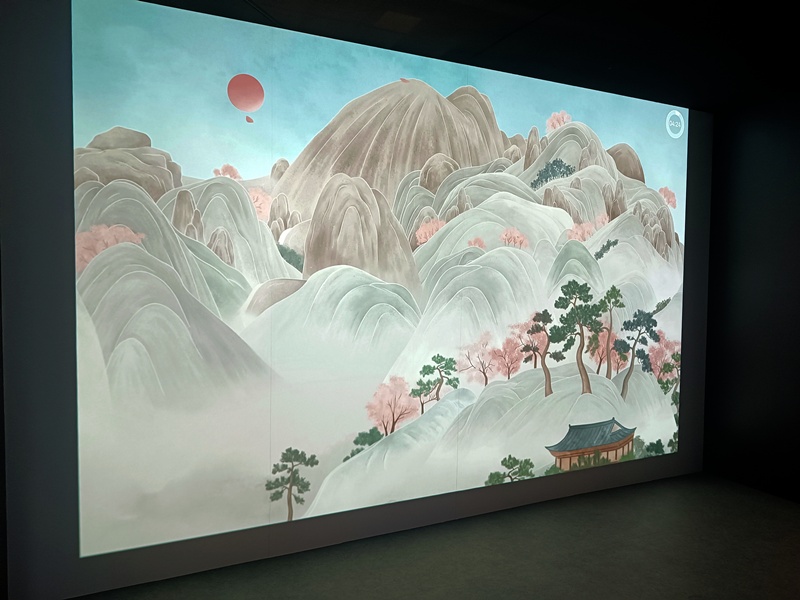
Video of pungryu across four seasons
A lounge area shows a video illustrating pungryu across the four seasons.
Rynarzewska said the protagonist of the exhibition is Seoul, the capital of Korea for over 600 years. While a powerful modern metropolis, the city for over two decades has created a space where residents and tourists can find peace and rest by the Hangang or Cheonggyecheon Stream, at the gardens of the royal palaces, or the cafes and bars of Euljiro Street.
"Pungryu is the spirit of traditional culture, a representative movement that presents a lifestyle in harmony with nature and art, that is, the ability to enjoy culture," Choi said. "I believe that Korean culture gaining global recognition has its roots in pungryu."
The exhibition runs through Sept. 4. Admission is free.
ljyhwa@korea.kr
*This article was written by a Korea.net Honorary Reporter. Our group of Honorary Reporters are from all around the world, and they share with Korea.net their love and passion for all things Korean.