- 한국어
- English
- 日本語
- 中文
- العربية
- Español
- Français
- Deutsch
- Pусский
- Tiếng Việt
- Indonesian
By Honorary Reporter Mariia Smoliana from Ukraine
Photos = Mariia Smoliana
Honorary Reporters from July 23-24 visited Busan on the occasion of the annual session of the UNESCO Heritage Committee, which ran from July 19-29 at the convention center BEXCO, on a familiarization tour. The group toured key sites tracing the city's journey from a place scarred by the 1950-53 Korean War to the host city of the session.
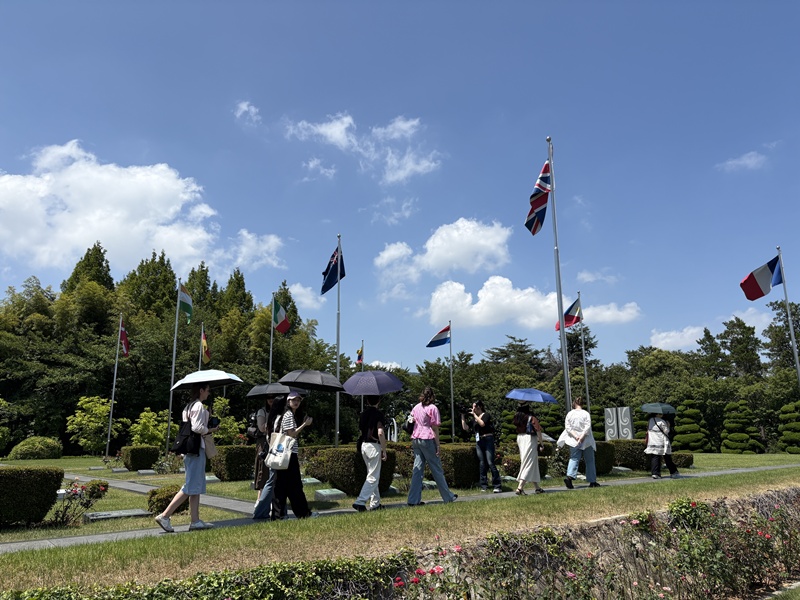
Korea.net Honorary Reporters on July 23 visit the United Nations (U.N.) Memorial Cemetery in Busan's Nam-gu District, the world's only U.N.-designated cemetery opened in 1951 to honor soldiers from 21 Allied countries who fell during the 1950-53 Korean War.
The first stop was the United Nations Memorial Cemetery in Korea, where soldiers from 21 nations are interred.
Had the allied forces not intervened, Korean heritage couldn't have survived. The cemetery is therefore not only a site of mourning, but enduring evidence that the preservation of culture is never solely one nation's responsibility.
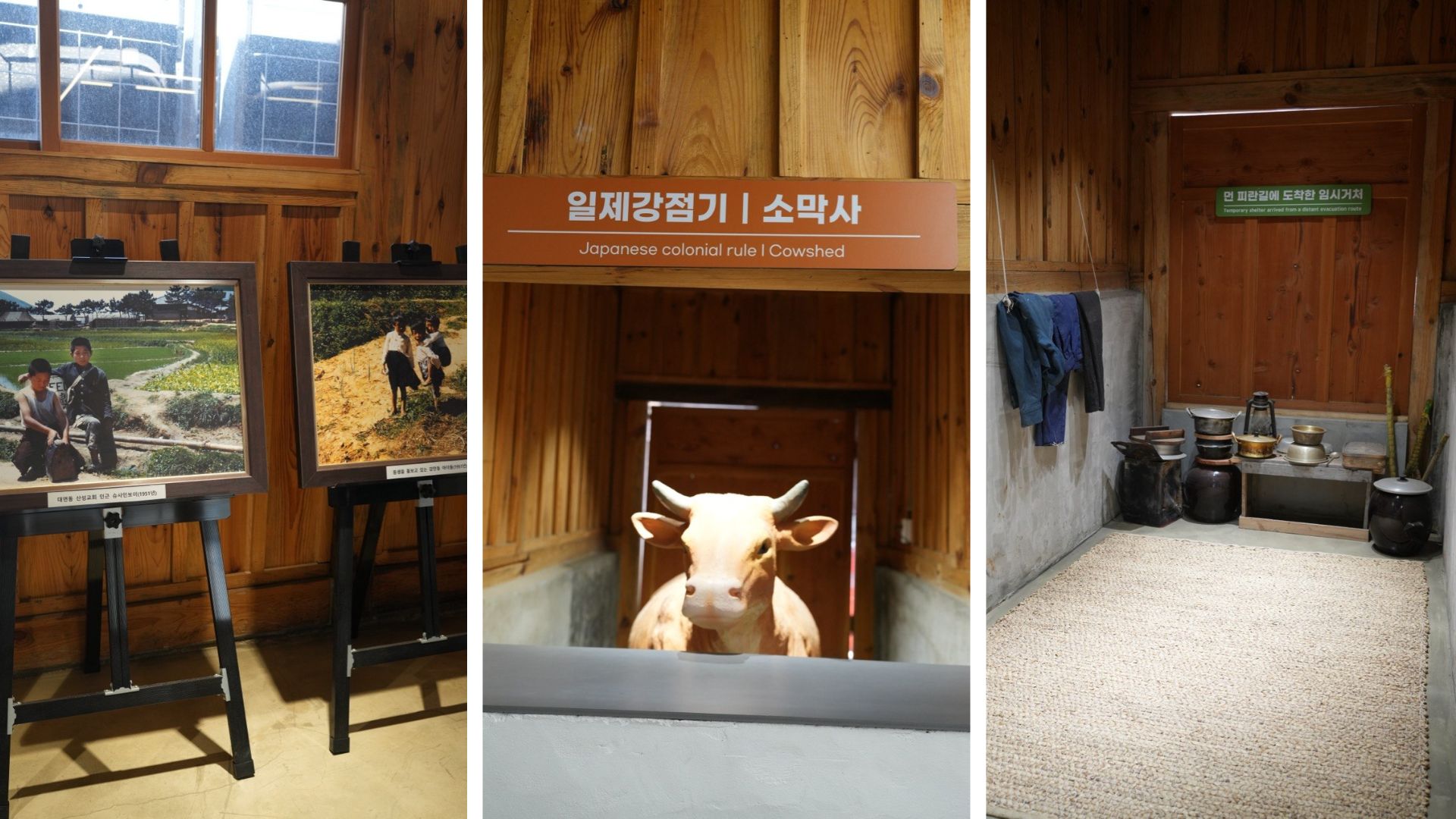
From left to right are photographs taken during Korea's colonial occupation by Japan; a replica of Somak Village, the cowshed that housed Korean War refugees during the conflict; and an exhibit of the bare living conditions inside the temporary refugee shelter in Busan's Nam-gu District.
Korea is also seeking to have 11 wartime heritage sites in Busan upgraded from tentative to full UNESCO recognition. These are not simply old buildings, they are physical testimonies to what the country endured and survived.
We then toured Ami-dong Tombstone Culture Village in Busan's Seo-gu District, where refugee families built homes among grave markers, using tombstones as foundations and walls.
Beyond the listed sites, places like Somak Village, a gathering of former cattle shelters in Nam-gu District converted into refugee housing during the war, added another human layer to this story. Families lived there stripped of almost everything but continued their traditions, language and sense of community.
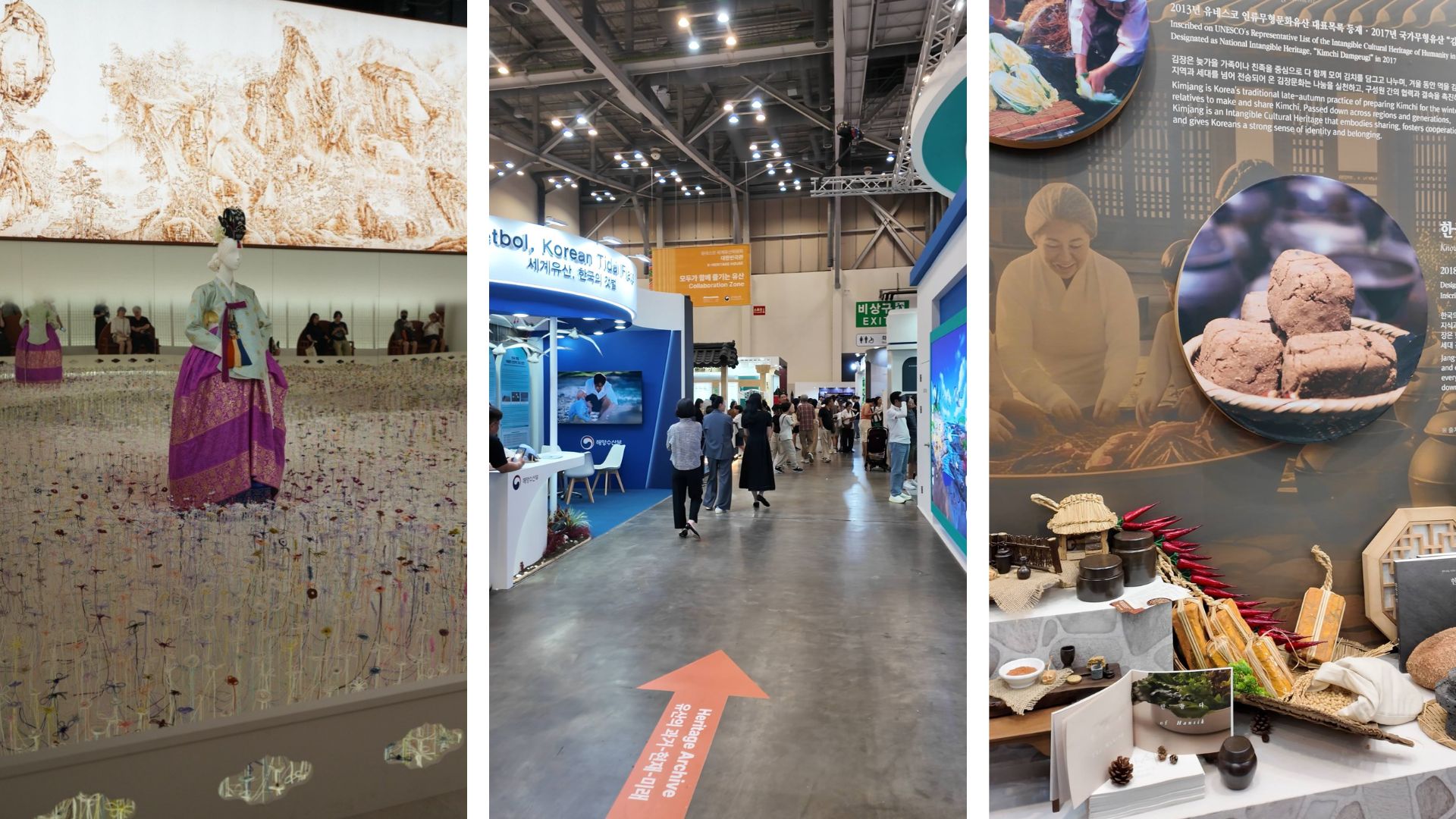
From left to right are a digital art installation showing Hanbok (traditional clothing) at the annual session of the UNESCO World Heritage Committee; booths presenting Korea's heritage sites; and an exhibit of kimjang, or the culture and process of making kimchi designated a UNESCO Intangible Cultural Heritage in 2013, at the convention center BEXCO in Busan's Haeundae-gu District.
At BEXCO, one of the most striking booths set up by government ministries was that of the Korean Heritage Service, which displayed a forthcoming digital platform through which historically significant buildings get 3D models accessible worldwide. I consider this a forward-thinking approach to ensure that history speaks to every generation.
The UNESCO recognition of kimchi-making traditions also illustrates how Korea seeks to preserve its living cultural practices alongside its physical heritage.
And a performance of pansori (traditional lyrical opera), a UNESCO-recognized traditional lyrical opera, and ritual dances reminded me that intangible heritage passed orally across generations is perhaps the most irreplaceable of all cultural forms.
Established after World War II, UNESCO worked on the belief that culture must be protected even in the darkest of times, because the destruction of a people's heritage is inseparable from the destruction of the people themselves.
Busan stands as proof that culture can be rebuilt from ashes and what is saved is not only one nation's heritage, but a piece of humanity's shared inheritance.
ljyhwa@korea.kr
*This article was written by a Korea.net Honorary Reporter. Our group of Honorary Reporters are from all around the world, and they share with Korea.net their love and passion for all things Korean.