- 한국어
- English
- 日本語
- 中文
- العربية
- Español
- Français
- Deutsch
- Pусский
- Tiếng Việt
- Indonesian
By Honorary Reporter Faranak Solat from Iran
Photos = Faranak Solat
Busan's wartime history is being reexamined not only as a record of displacement and survival, but also as the basis for cultural preservation, international dialogue and peace.
During the 1950-53 Korean War, the city was the temporary capital for 1,023 days in providing sanctuary to refugees from across the Korean Peninsula. Over seven decades later, the city hosted the annual session of the World Heritage Committee this year from July 19-29, bringing together experts, cultural practitioners, visitors and delegates from around the world.
On a familiarization tour from July 23-24, Honorary Reporters visited sites showing the city's development from a wartime capital.
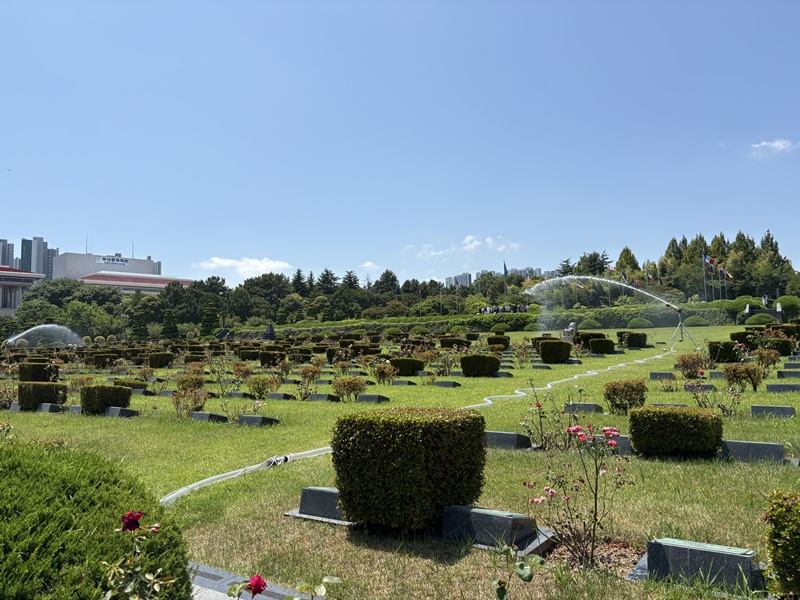
United Nations Memorial Cemetery in Busan's Nam-gu District
The United Nations (U.N.) Memorial Cemetery Korea in Busan's Nam-gu District honors U.N. personnel from multiple countries who served during the War.
Mechtild Rossler, former director of the UNESCO World Heritage Centre and a key figure in advancing the concept of cultural landscapes, said places associated with war and traumatic history have an important role in helping humanity understand the past. She called Busan a "meaningful" location for global discussions on heritage, memory and postwar development.
Preserving sites associated with suffering should also offer opportunities for education, dialogue and mutual understanding while helping future generations recognize the consequences of conflict, she added.
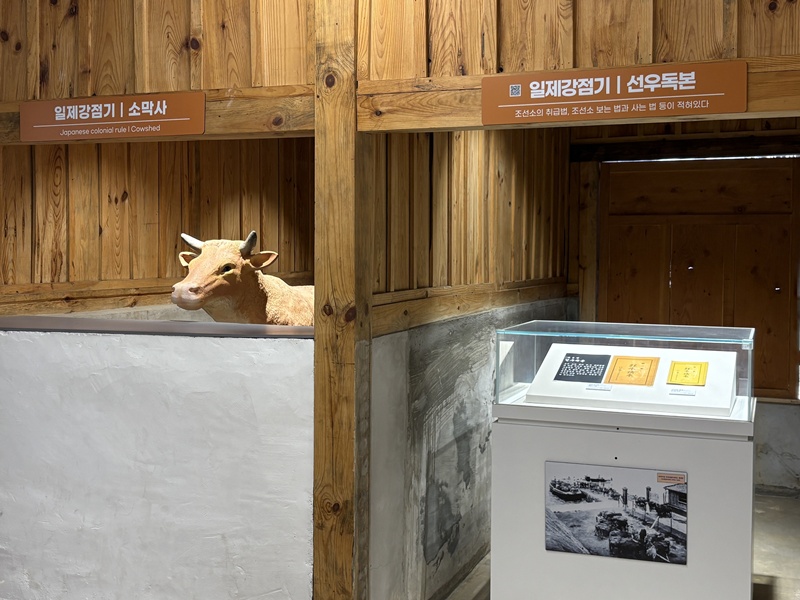
A replica of a cattle shed and the exhibit "Reader on Korean Cattle" from the Japanese colonial period are on display at the exhibition hall of Somak Village in Busan's Nam-gu District.
Traces of Busan's wartime and postwar history remain visible in old wooden houses, former refugee settlements, community buildings and other ordinary spaces. Among the sites introduced on the tour was a former cowshed during the Japanese colonial period that was later incorporated into a community space.
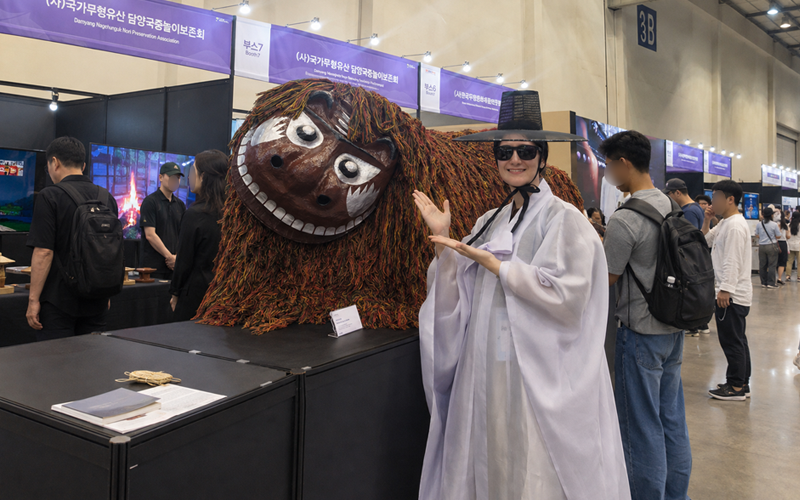
Faranak Solat on July 23 wears Hanbok (traditional clothing) and a gat, a traditional male hat the Joseon Dynasty (1392-1910), at a booth during the annual session of the UNESCO World Heritage Committee at the convention center BEXCO in Busan's Haeundae-gu District.
One of the cultural symbols featured was the gat, a traditional hat for male members of the elite class of the Joseon Dynasty (1392-1910). Rather than being just part of a historical costume, it was presented as something with social and cultural meaning.
Traditional clothing and accessories have grown increasingly familiar to audiences worldwide through films, TV programs, animation and other pop culture.
The connection between historical identity and contemporary creativity also recalls the vision of independence leader Kim Gu (Ku). This martyr championed the hope of Korea being respected not primarily for wealth or military power but for culture.
Busan's transformation is a testament to Kim's aspiration that culture will emerge as the nation's greatest strength.
ljyhwa@korea.kr
*This article was written by a Korea.net Honorary Reporter. Our group of Honorary Reporters are from all around the world, and they share with Korea.net their love and passion for all things Korean.