- 한국어
- English
- 日本語
- 中文
- العربية
- Español
- Français
- Deutsch
- Pусский
- Tiếng Việt
- Indonesian
By Honorary Reporter Hugo Adams from France
A corner of the United Nations Memorial Cemetery in Korea located in Busan's Nam-gu District has grass younger than the rest of the plot.
The main burial area has been settled for 70 years, its bronze plaques sunk flush into turf knit together over two generations. At the back of the grounds, the ground looked recently disturbed.
With a group of Honorary Reporters, I went on a familiarization tour from July 23-24 for the annual session of the UNESCO World Heritage Committee, which ran from July 19-29 at the convention center BEXCO in Busan's Haeundae-gu District. What I did not expect to find at the cemetery was that it was still accepting those who served in the 1950-53 Korean War.
In May, three veterans were buried in that newer grass despite none of them dying in the war.
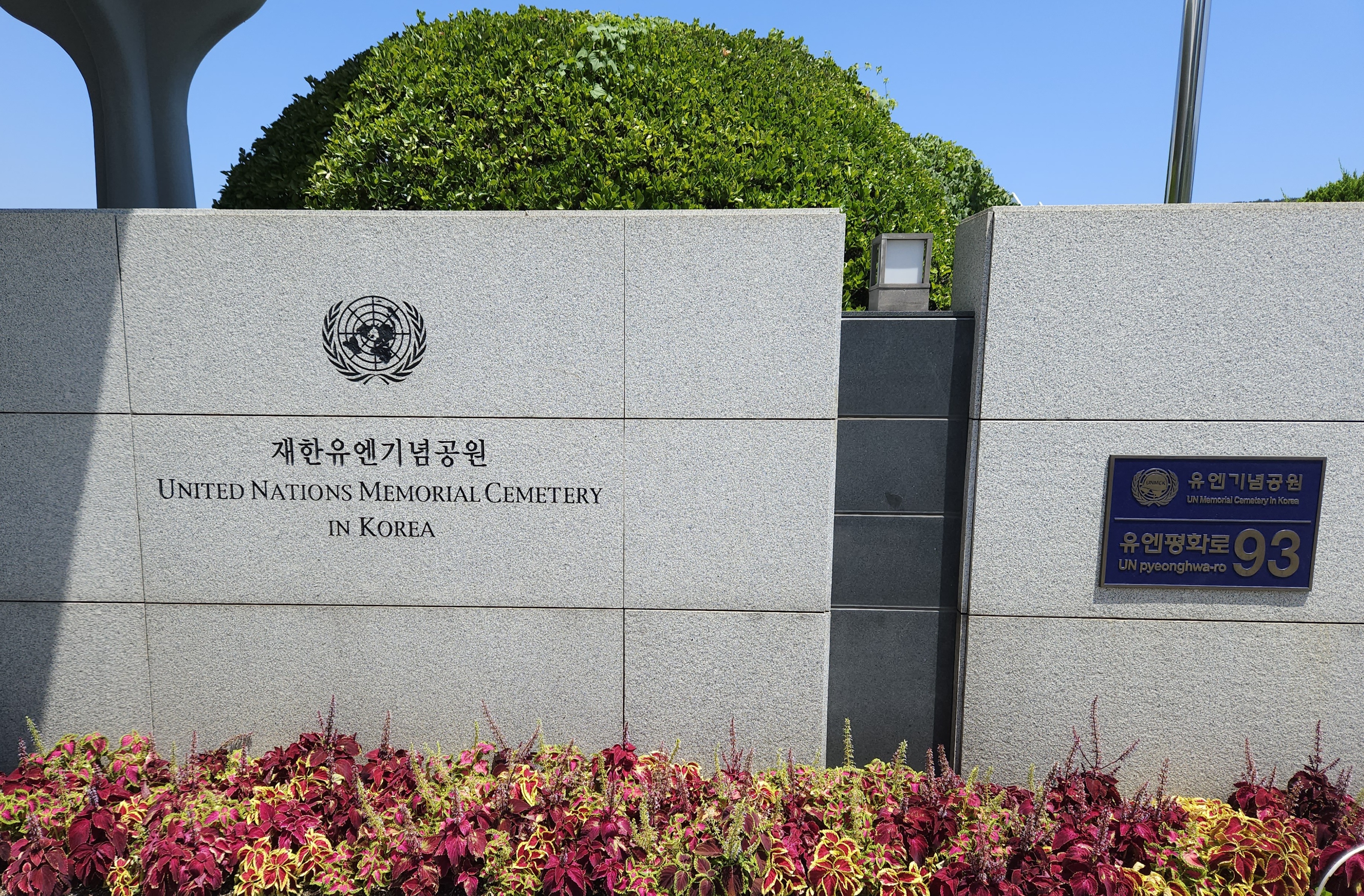
Entrance to United Nations Memorial Cemetery in Korea in Busan's Nam-gu District (Hugo Adams)
On May 14, Jacob Cornelis Constandse of the Netherlands was laid to rest there. Born in Dubbeldam in 1927, he volunteered to fight in the war in 1952 as a lieutenant and came home to live a long life, retiring as a colonel.
He died in Roosendaal in April this year at age 97. His wish was to be buried in Korea.
Thirteen days later on May 27, the remains of two French veterans followed: Andre Datcharry and Jacques Grisolet, both of the French battalion of the U.N. forces. Datcharry was wounded twice and stayed in Korea for a year after the 1953 armistice because he considered his job unfinished.
Grisolet was on two tours at the Soyanggang River and Heartbreak Ridge in Gangwon-do Province, getting wounded twice and honored eight times.
Constandse fought at T-Bone Ridge in December 1952 in Yeoncheon-gun County, Gyeonggi-do Province, where the Dutch battalion held an outpost against a Chinese assault. For the rest of his life, he spoke about a private, Johannes Marinus ter Ellen, who was killed there on Christmas Eve and buried in Busan.
Seventy-three years later, Constandse was buried a short walk from where ter Ellen was.
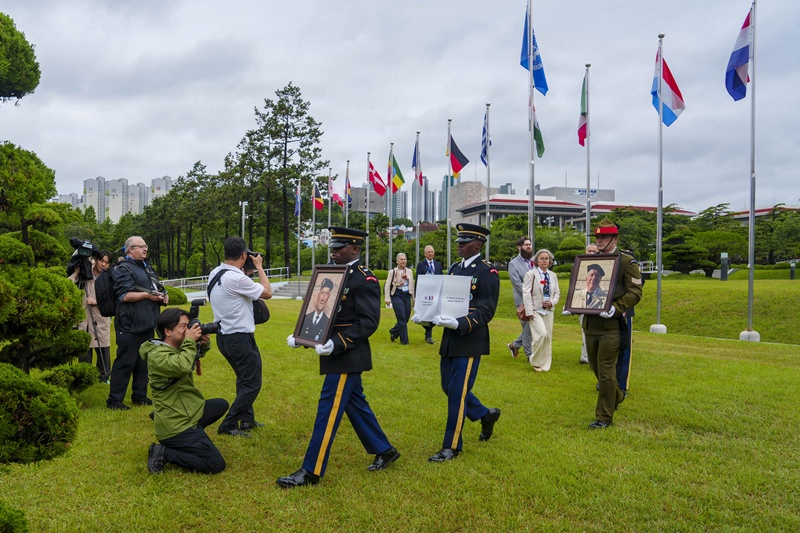
The United Nations Memorial Cemetery in Korea's honor guard on May 27 delivers photos of the late Andre Datcharry and Jacques Grisolet, French veterans of the 1950-53 Korean War, to their interment ceremony in Busan's Nam-gu District. (Desmond Parks)
The two Frenchmen were no different. Forty-four French soldiers never left Korea, one of them unidentified, and Datcharry and Grisolet spent their lives knowing where those men were.
These men, with decades to think it over, chose to be buried 9,000 km from their families to join their fallen comrades.
Korea allowed this 11 years ago. Until 2015, the cemetery only allowed the remains of war dead and no one else. Then a section was reserved for veterans who asked to be buried there.
Widows can also be buried alongside their husbands, so the venue has slowly acquired something no war cemetery is supposed to have: families.
The burial requests have come from countries like the Netherlands, France, Canada, the U.S. and Thailand. More than 2,300 people from 14 countries now lie here. This is the world's lone U.N. cemetery located on 14 hectares that Korea ceded to the world body in perpetuity in 1955 and that the National Assembly recommended to be declared sacred.
When the ashes of Datcharry and Grisolet arrived at Incheon International Airport, the Ministry of Patriots and Veterans Affairs held a formal reception with the French ambassador and the families of both veterans present.
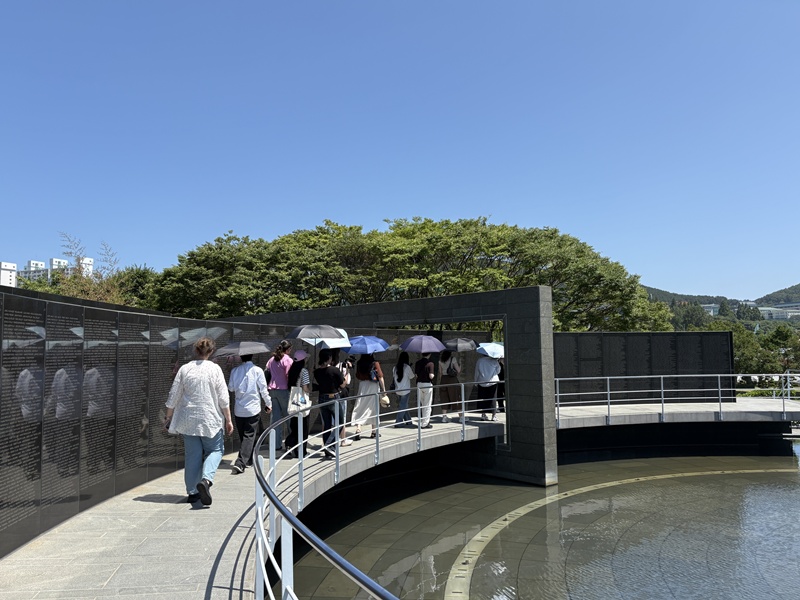
Honorary Reporters on July 23 walk along the walls inscribed with the names of veterans died during the Korean War. (Hugo Adams)
Standing there in the July heat, with Busan audible through the trees and apartment towers visible over the cedars, I could not stop thinking of how temporary this is.
Any surviving Korean War veteran would be past 90. Within 10-15 years, all of them will be gone and the requests will stop arriving. This section of grass will be completed, closed and left to settle like the rest of the cemetery.
For a few more years, however, the Busan venue is doing something no other war cemetery is doing: still receiving people. Dutch, French and Canadian men are doing the paperwork, telling their children where they want to be buried and choosing this plot over the cemeteries of their own towns.
The grass at the back of the cemetery is younger because the story is not yet over.
ljyhwa@korea.kr
*This article was written by a Korea.net Honorary Reporter. Our group of Honorary Reporters are from all around the world, and they share with Korea.net their love and passion for all things Korean.