- 한국어
- English
- 日本語
- 中文
- العربية
- Español
- Français
- Deutsch
- Pусский
- Tiếng Việt
- Indonesian
By Honorary Reporter Faranak Solat from Iran
Photos = Faranak Solat
As a part of a familiarization tour from July 23-24, Honorary Reporters visited the Modern & Contemporary History Museum and Gamcheon Culture Village in Busan to explore the city's history as the temporary capital during the 1950-53 Korean War.
Gamcheon Culture Village in Busan's Saha-gu District is known for its colorful hillside houses, winding alleys and public art. A short distance away, Ami-dong Tombstone Village preserves a less familiar but equally significant landscape: a residential community built at an abandoned cemetery.
The tour explored a shared history of displacement, survival and community building of the two neighborhoods during the war.
At the Busan Modern and Contemporary History Museum, the exhibition "Heritage of Busan as the Wartime Capital," which runs through Sept. 27, presents refugee settlements, wartime records and scale models documenting survival and international cooperation during the war.
Ami-dong was established in 1906 as a public cemetery for Japanese residents of Busan. After Korea's liberation in 1945, many Japanese families collected the ashes of their relatives before returning home, leaving behind tombstones, retaining walls and other cemetery structures.
The abandoned cemetery offered small plots on the slope of Cheonmasan Mountain, along with stone structures that could be incorporated into foundations, walls and steps.
Refugees built temporary wooden shelters around the remaining cemetery structures, using stone retaining walls to support construction on the steep hillside.
This layout continues to shape Ami-dong's houses, alleys and property lines today.
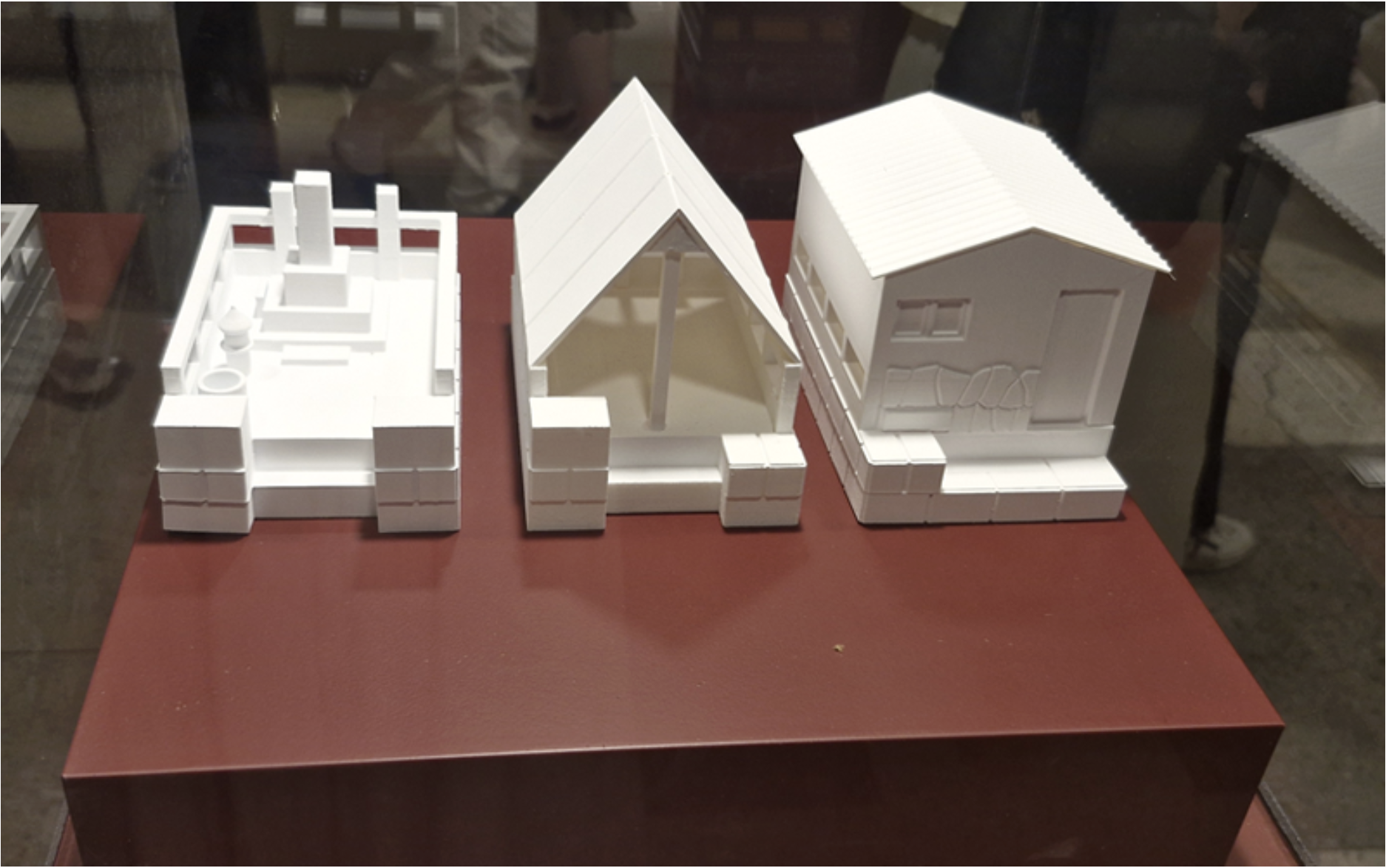
Scale models on July 24 at the Busan Modern History Museum in Busan's Jung-gu District show how refugees made an abandoned cemetery into an emergency shelter area and gradually into permanent homes in Ami-dong.
Gamcheon developed through a different path as a settlement for war refugees from the 1950s. Around 4,000 followers of the indigenous religion Taegeukdo also settled near Bandalgogae Hill, forming an organized hillside community.
Modest homes were built in rows along the mountain slope, creating the terraced pattern and maze-like alleys that still define the village. Far from an artistic or tourist destination, this place is where displaced people rebuilt their lives.
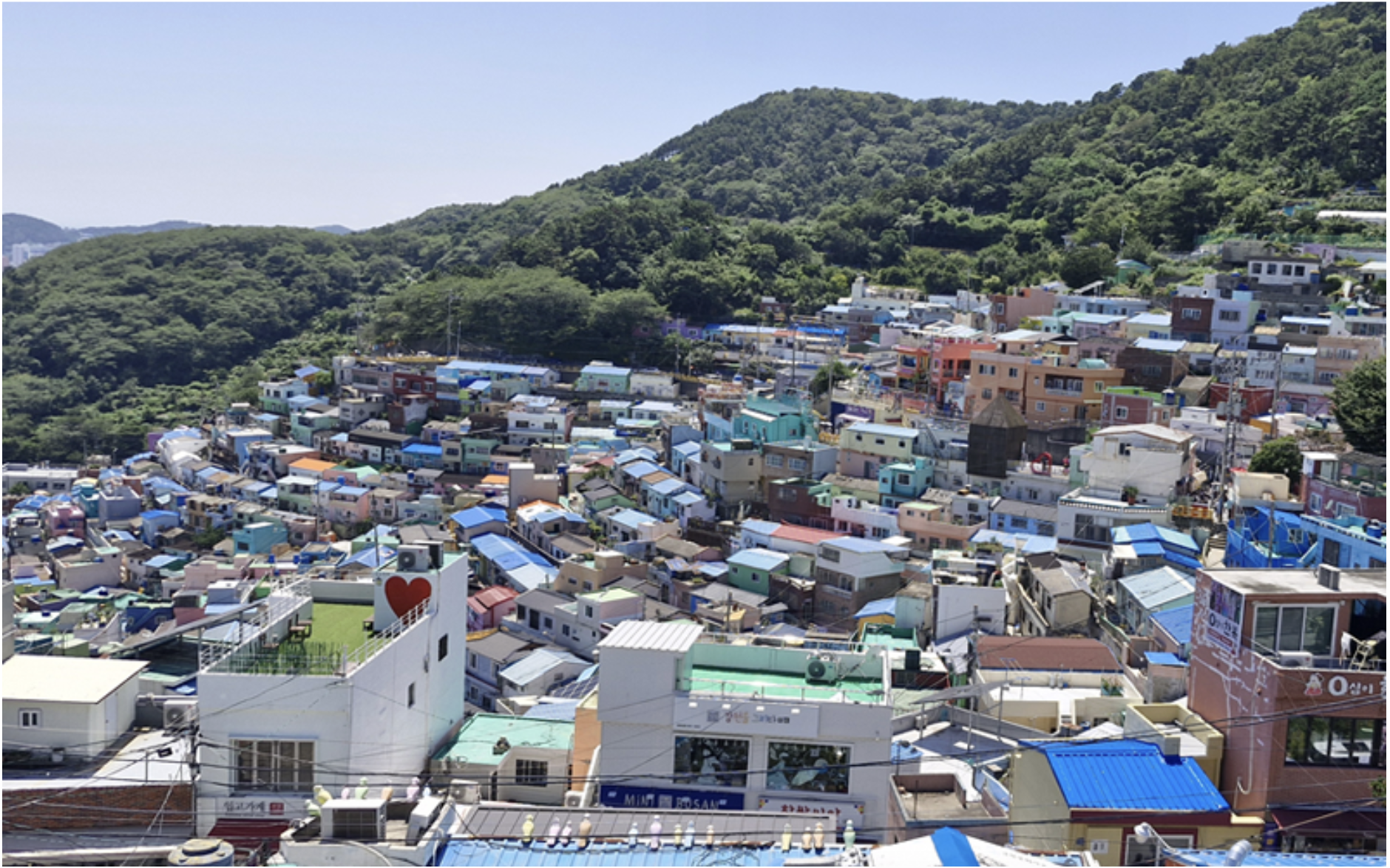
Terraced houses of Gamcheon Culture Village taken on July 24
Beginning with the Village Art Project in 2009, residents, artists and public institutions transformed empty buildings and walls through murals, exhibitions, sculptures and cultural spaces. Later, the construction of galleries, workshops and community facilities gave Gamcheon a new cultural identity while preserving its distinctive terraces and alleyways.
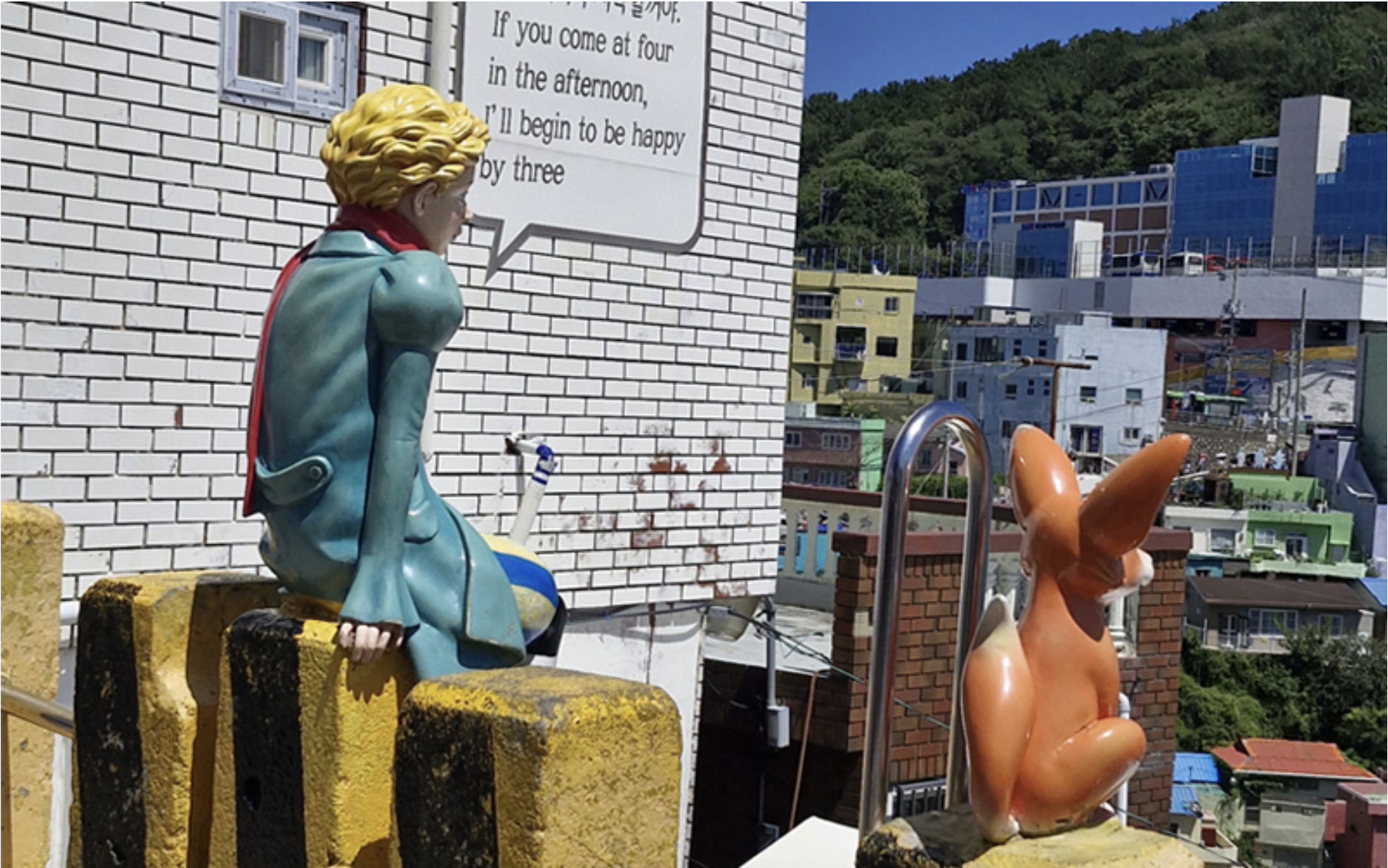
The statues of the Little Prince and the fox on July 24 look over hillside homes in Gamcheon Culture Village.
Ami-dong and Gamcheon developed through different responses to the same housing emergency that occurred as refugees sought for shelter.
The resulting neighborhoods were not designed as monuments but to meet immediate human needs. Over time, both evolved into physical records of survival, adaptation and collective effort.
ljyhwa@korea.kr
*This article was written by a Korea.net Honorary Reporter. Our group of Honorary Reporters are from all around the world, and they share with Korea.net their love and passion for all things Korean.