- 한국어
- English
- 日本語
- 中文
- العربية
- Español
- Français
- Deutsch
- Pусский
- Tiếng Việt
- Indonesian
Honorary Reporter Solat Faranak from Iran
Photos = Ministry of Employment and Labor
The Ministry of Employment and Labor on Aug. 13 held a media tour on how Korea is confronting the era of artificial intelligence, specifically how to prepare its workforce for rapidly changing industries.
Participants visited Hyundai Motor's plant in Ulsan and its parent group's vocational training program before going to Busan to see Eco Aquafarm, where advanced technology is applied to land-based salmon farming.
Though cars and aquaculture seem unrelated, both sites reflect a shift toward more technology-intensive and data-driven sectors.
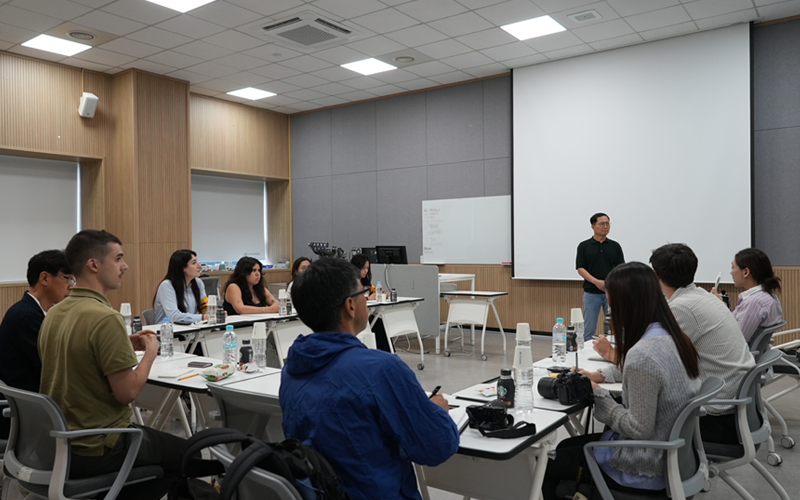
Kim Young Gil, senior manager of the Domestic Production Technician Development Team at Hyundai Motor Group, on Aug. 13 speaks about future mobility training to media tour participants at the group's education center in Ulsan's Buk-gu District.
In a briefing, Hyundai presented its long-term direction as a "smart mobility solution provider." The Ulsan facility has an annual output capacity of 1.52 million vehicles with around 31,000 people.
The broader question raised, however, was what skills do workers need as the automotive industry increasingly depends on software, artificial intelligence (AI) and intelligent manufacturing? One answer given was HINT, which stands for Hyundai Motor Group's Incubation of New Talent, the group's company-specific program.
Ma Ju-hee from the group's HRD Strategy Team said around 500 participants were taking part in the first round in seven cities, with another 500 expected in the following round.
The program combines workplace skills, technical education and career development.
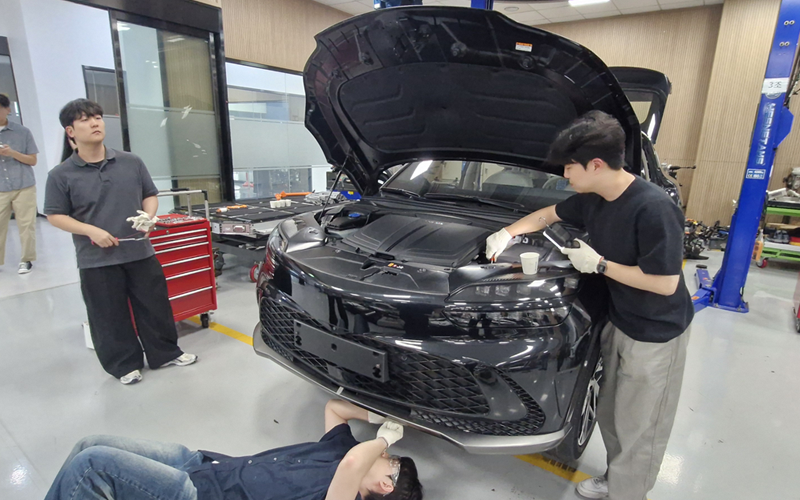
HINT participants on Aug. 13 receive hands-on automotive training at Hyundai Motor Group's training center in Ulsan's Buk-gu District.
Participant Lee Su-hyeong said his training began with soft and digital skills, with specialized automotive training to follow. "We learned how to write prompts, create AI agents and even have multiple agents communicate with one another and carry out tasks," he said.
The second part of the tour showed how this transformation extends beyond cars. The group visited Eco Aquafarm, a land-based Atlantic salmon facility using the Recirculating Aquaculture System (RAS), which treats and recirculates water through filtration, sterilization, carbon dioxide removal and oxygen supply. Sensors and automated monitoring systems help maintain suitable conditions during fish growth.
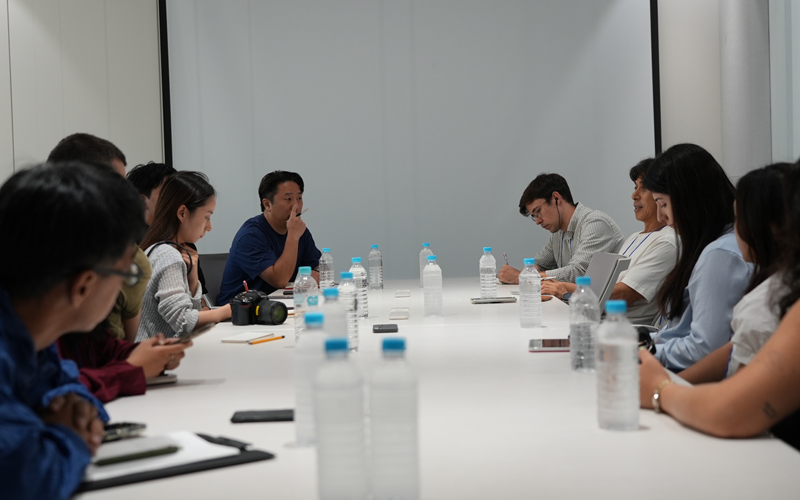
Media tour participants on Aug. 13 talk to an Eco Aquafarm representative during their visit to the site's land-based Atlantic salmon facility in Busan's Gijang-gun County.
As AI, automation and digital know-how permeate more industries, Korea's industrial future will not just depend on smarter machines but also training to get people to effectively work with advanced technology.
ljyhwa@korea.kr
*This article was written by a Korea.net Honorary Reporter. Our group of Honorary Reporters are from all around the world, and they share with Korea.net their love and passion for all things Korean.