- 한국어
- English
- 日本語
- 中文
- العربية
- Español
- Français
- Deutsch
- Pусский
- Tiếng Việt
- Indonesian
By Benedikta Renaningtyas from Indonesia
A media tour sponsored by the Ministry of Employment and Labor on Aug. 13 provided an in-depth look at the industrial hubs of Ulsan and Busan.
The event offered a firsthand perspective on the collaboration between government and industry to ensure sustainability across key sectors, ranging from youth labor empowerment to high-tech food security innovation.
Participants observed the inaugural group of the HINT (Hyundai Integrated New Technology) program undergoing training at the Ulsan plant of Hyundai Motor, the world's largest automotive plant. On the factory floor, trainees got hands-on technical expertise from industry practitioners.
Representatives from Hyundai Motor Group said this synergy between technical knowledge and field-based instruction aimed to develop job-ready talent.
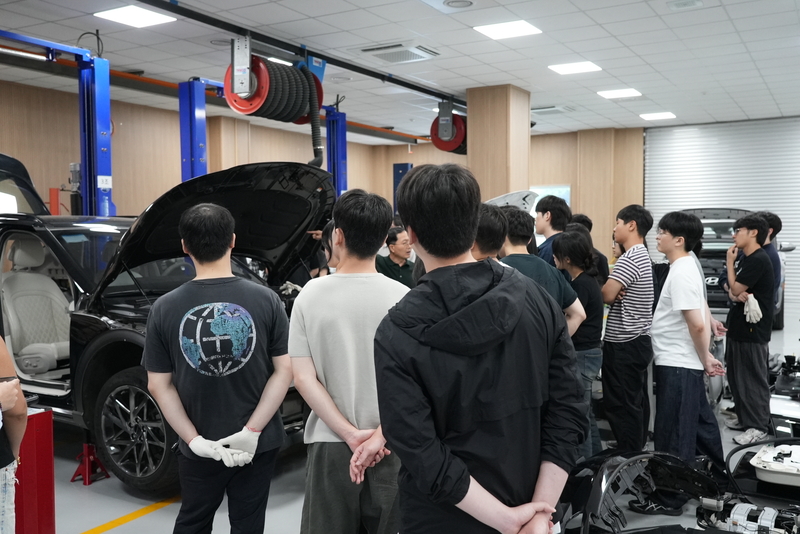
Participants in the first group of the K-New Deal Academy's HINT program on Aug. 13 listen to an instructor at the Hyundai Motor Group Education Center in Ulsan's Buk-gu District. (Ministry of Employment and Labor)
This pivot is taking shape in Busan at Eco Aquafarm, which is pioneering food self-sufficiency through Korea's first large-scale land-based recirculating aquaculture system for Atlantic salmon. This technology continuously purifies and reuses farming water.
This closed system on land creates a controlled environment shielded from extreme weather conditions and marine pollution.
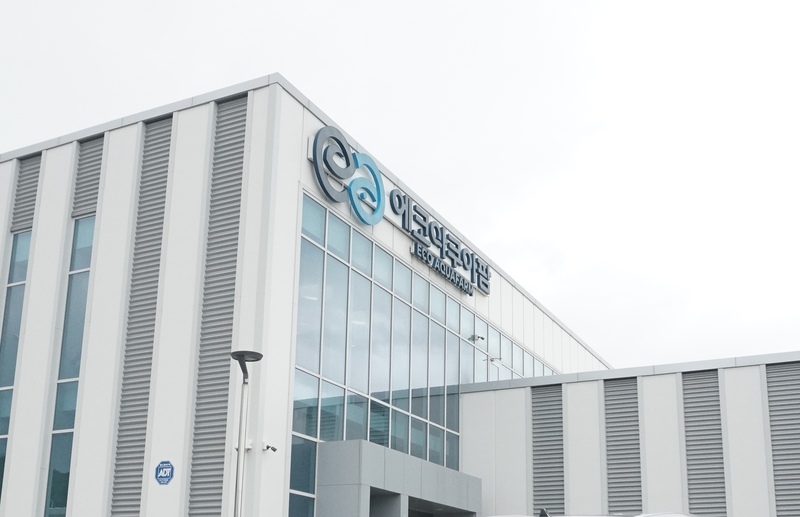
Exterior view of Eco Aquafarm in Busan's Gijang-gun County (Benedikta Renaningtyas)
This facility forms a core component of the Smart Aquaculture Cluster project led since 2019 by the Ministry of Oceans and Fisheries. Targeting an annual output of 500 tons of salmon by 2027, Eco Aquafarm aims to reduce reliance on imports as well as set a benchmark for domestic blue food through end-to-end digitalization of production and distribution.
The tour's visits to Ulsan and Busan showed how digital transformation is a key part of a comprehensive strategy for a sustainable future.
ljyhwa@korea.kr
*This article was written by a Korea.net Honorary Reporter. Our group of Honorary Reporters are from all around the world, and they share with Korea.net their love and passion for all things Korean.