View this article in another language
- 한국어
- English
- 日本語
- 中文
- العربية
- Español
- Français
- Deutsch
- Pусский
- Tiếng Việt
- Indonesian
By Honorary Reporter Jasmin Mikolay from Germany
This year's Gwangju Biennale from Sept. 5 to Nov. 15 features 43 artists and collectives at the Gwangju Biennale Exhibition Hall in Gwangju's Buk-gu District. Under the theme "You Must Change Your Life," the event explores how artistic practice can lead to change inspired by the words of Austrian poet Rainer Maria Rilke.
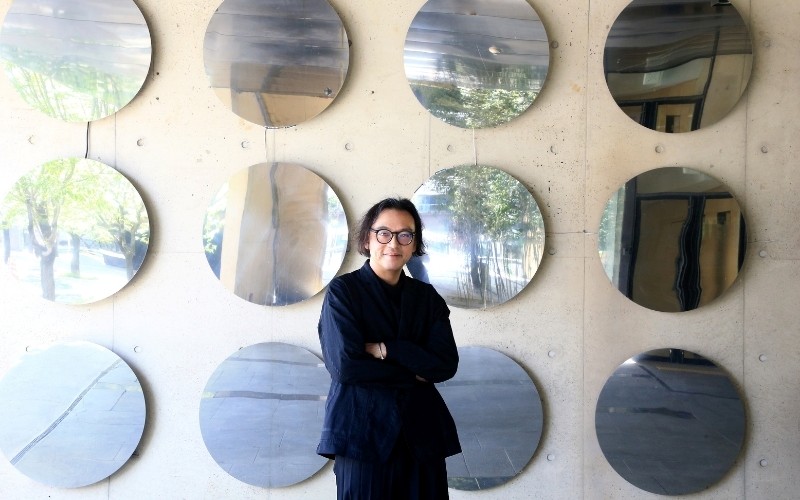
Gwangju Biennale Artistic Director Ho Tzu Nyen on Aug. 21 poses for a photo at the event in Gwangju. (Gwangju Biennale)
The follow are excerpts from an email interview with Ho from Aug. 20-24 on his vision for the exhibition and Gwangju.
Why did you take on the role of artistic director?
I felt a personal connection with Gwangju. The projects, friendships, conversations and the city continued to resonate long after I left in 2018. I thus approached this role as an artist, treating the exhibition like making an artwork: questioning assumptions, listening and allowing structures to evolve.
What did you discover about Gwangju through your visits?
When I first came here, I knew Gwangju as many people outside Korea do: as the city of the May 1980 uprising. Over time, I discovered stories less familiar outside Korea: minjung (grassroots) woodcuts; Heo Baek-ryeon, who painted ink landscapes and founded an agricultural school; and Ullimsanbang's painting tradition on Jindo Island spanning six generations. These stories expand the image of the city and showed me that Gwangju is also a "city of practices," concerned with how life can be cultivated, defended, remembered and transformed.
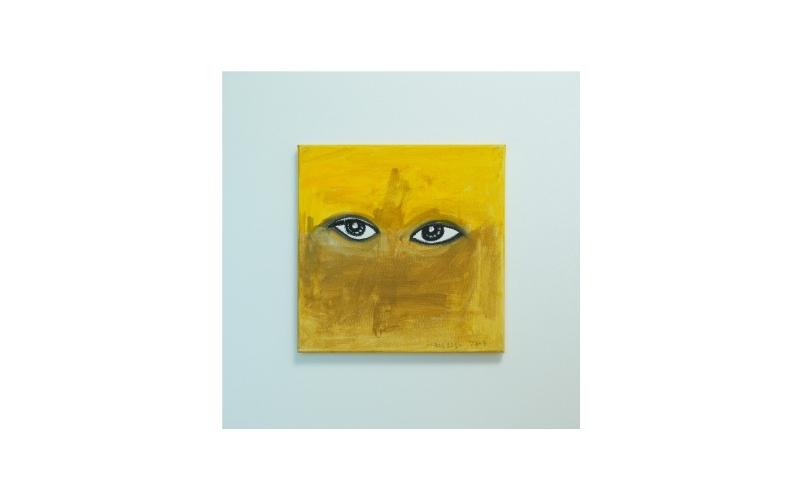
"My Eyes" by Kang Hae-jung at Gwangju Biennale Exhibition Hall in Gwangju's Buk-gu District (May Mothers House)
One cannot work with this city without engaging its history. An important example is our collaboration with the May Mothers House, an association of women whose lives were deeply shaped by the 1980 uprising. We are presenting 322 paintings created by its members showing that the incident was not just about an uprising, but also people who lived with pain and loss and found ways to continue. Gwangju is thus not merely the backdrop to the Biennale, but one of its protagonists.
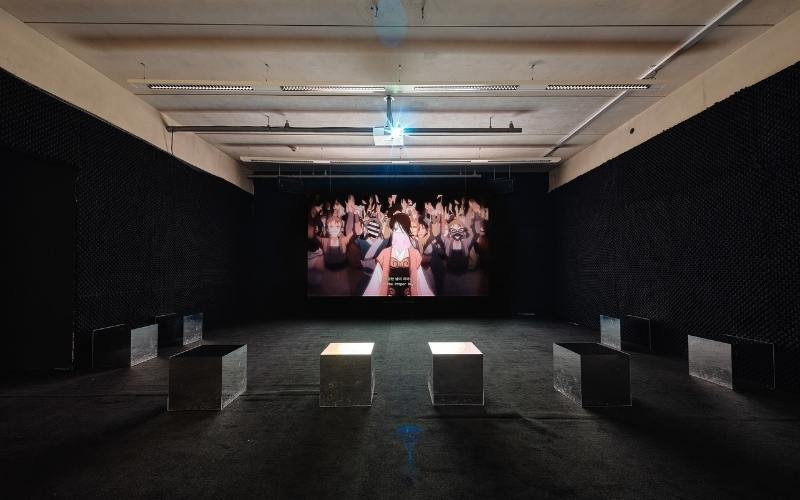
"The 49th Hexagram" by Ho Tzu Nyen at Asian Culture Center in Gwangju's Dong-gu District (Ho Tzu Nyen and Edouard Malingue Gallery)
I hope they understand that Gwangju is not only a city of wounds but also one of dignity, human warmth and endurance. I've been touched by conversations, shared meals, the surrounding mountains and traces of history in everyday places. Gwangju has also taught me to be patient with change. For me, a Biennale matters if it enables even one life-changing encounter. Sometimes its effects are only visible years later. That was the case for me.
ljyhwa@korea.kr
*This article was written by a Korea.net Honorary Reporter. Our group of Honorary Reporters are from all around the world, and they share with Korea.net their love and passion for all things Korean.