- 한국어
- English
- 日本語
- 中文
- العربية
- Español
- Français
- Deutsch
- Pусский
- Tiếng Việt
- Indonesian
By Honorary Reporter Jasmin Mikolay from Germany
2026 marks two milestones in Hangeul, the Korean alphabet: the 580th anniversary of the promulgation of the first Hangeul text Hunminjeongeum (The Proper Sounds for the Instruction of the People) in 1446 and the centennial Hangeul Day.
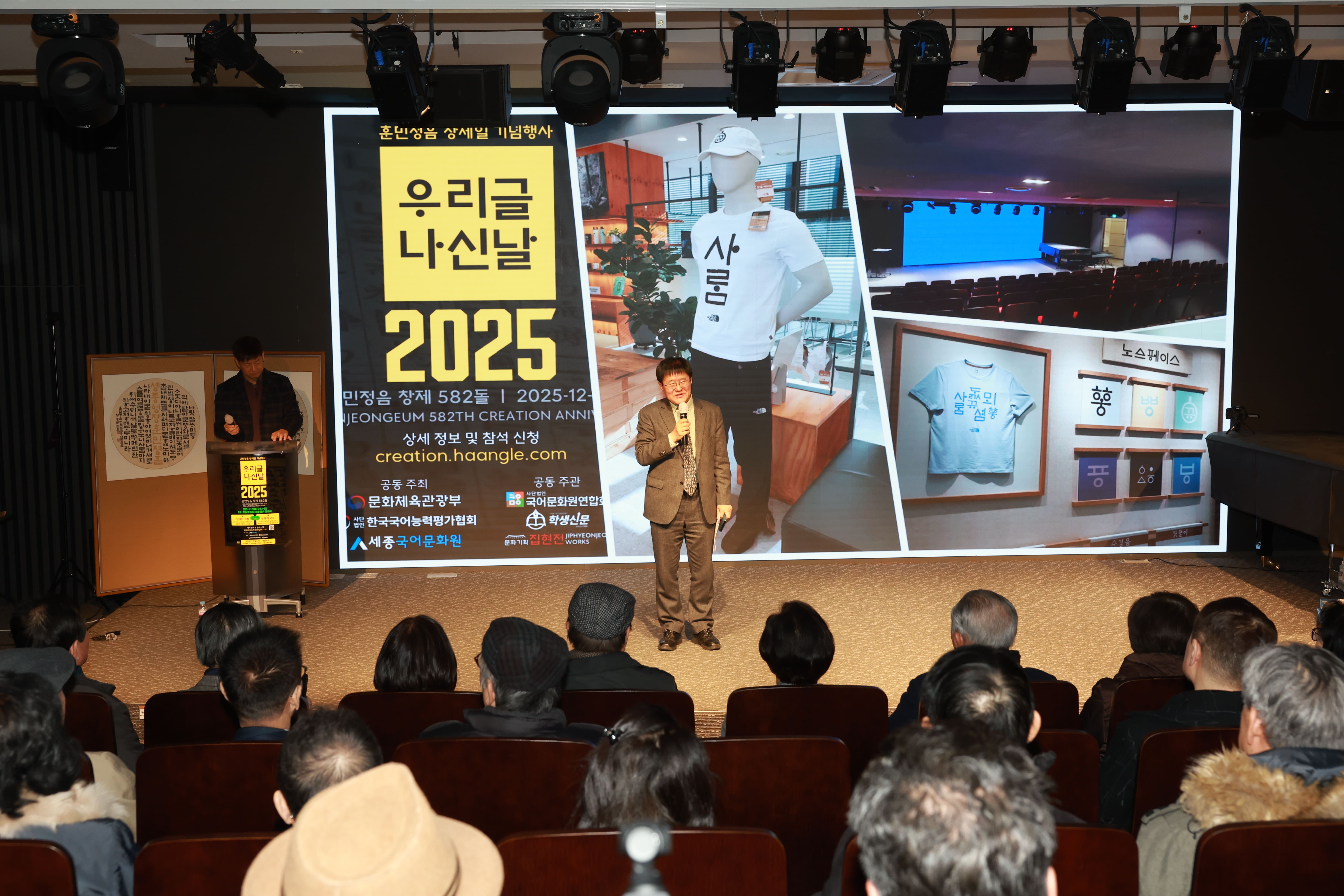
Kim Seul-ong on Dec. 28, 2025, discusses the legacy of Hangeul at the event Urigeul Nasinnal (Hunminjeongeum Creation Day) in Seoul's Jung-gu District. (Kim Seul-ong)
To mark the 100th Hangeul Day this year on Oct. 9, the following are excerpts from a written interview with Kim from Sept. 6-9 on growing global interest in Hangeul and its future in the age of artificial intelligence (AI).
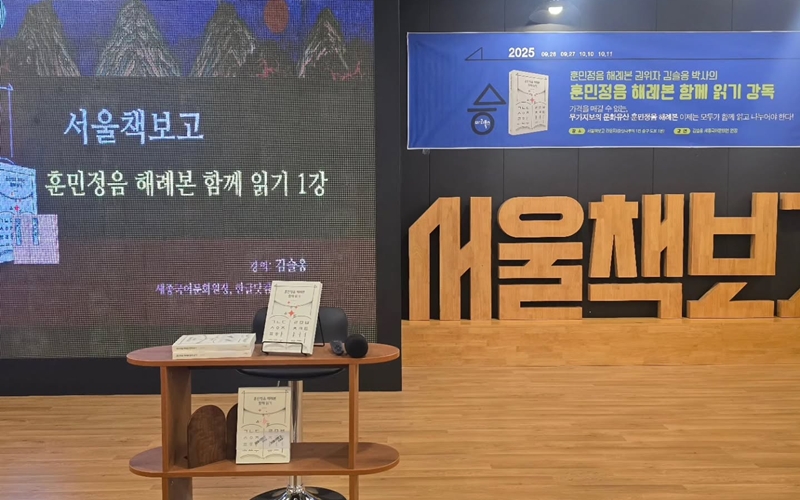
This stage on Sept. 27, 2025, is for Kim Seul-ong's lecture on the Hunminjeongeum Haeryebon, a commentary on the classic Hangeul textbook, at Seoul Book Bogo in Seoul's Songpa-gu District. (Kim's Instagram page)
Those descriptions are correct but only tell half the story. Hangeul's scientific nature is a result, what matters is the motivation behind it. Its fundamental value lies in concern for people, the idea that everyone can express their thoughts easily. I hope people abroad remember Hangeul as a writing system designed for humans with care.
How has global exposure to Hangeul changed?
Hangeul abroad was once mainly known among specialists in Korean studies. Today, people first see it in K-pop lyrics, K-drama subtitles or social media comments and later want to learn it. Hangeul is also increasingly seen not only as a tool of Korean but as visual culture and design. Our responsibility is to connect that interest with a deeper understanding of the history and spirit of the Hunminjeongeum.
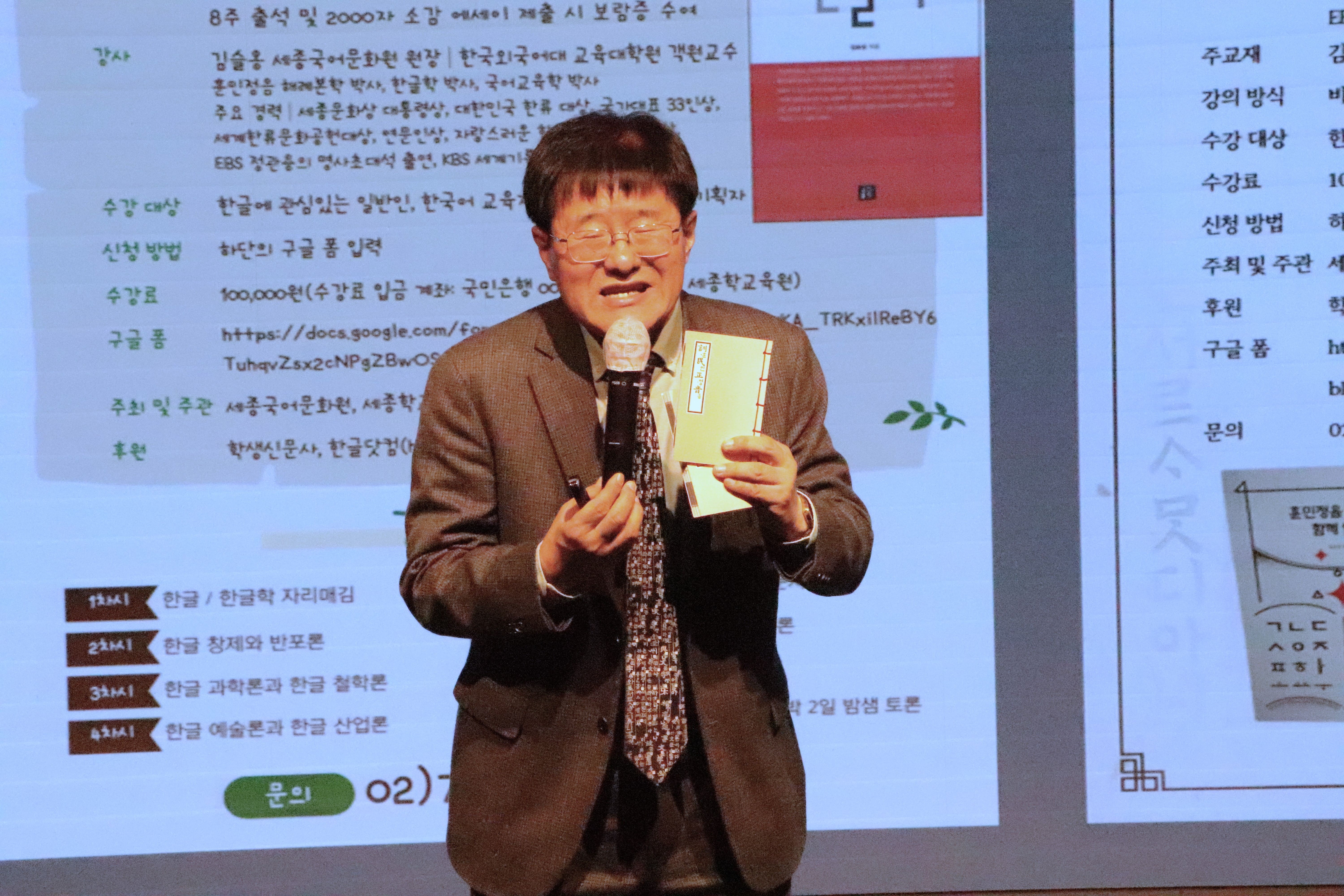
Kim Seul-ong on Dec. 28, 2025, delivers a lecture on Hangeul at the event Urigeul Nasinnal (Hunminjeongeum Creation Day) in Seoul's Jung-gu District. (Kim Seul-ong)
AI offers two major possibilities. The first is accessibility, as translation and speech recognition can make Hangeul easier to learn and use. The second is research. AI can help read and analyze enormous collections of historical documents.
But caution is needed. Korean-language training data can contain errors and English-influenced expressions. Another risk is that technology imitates the form of Hangeul while stripping away its history and spirit. Technology is a tool whose direction must be determined by humans.
How would you like to see Hangeul evolve?
I enjoy seeing younger generations play freely with Hangeul through new words, emoticons and typography. What concerns me is not simply shorter words but the possibility of shorter thinking and declining abilities to read and write longer texts.
In the future, I hope for a Hangeul that is easy, deep and broad, as in easy for anyone to use, deep enough for profound thought and broad enough for its user community to expand worldwide. I believe this is what King Sejong the Great (Hangeul's inventor) dreamed of 580 years ago.
ljyhwa@korea.kr
*This article was written by a Korea.net Honorary Reporter. Our group of Honorary Reporters are from all around the world, and they share with Korea.net their love and passion for all things Korean.