- 한국어
- English
- 日本語
- 中文
- العربية
- Español
- Français
- Deutsch
- Pусский
- Tiếng Việt
- Indonesian
By Honorary Reporter Ana Paula Camacho Perez from Mexico
Photos = Ana Paula Camacho Perez
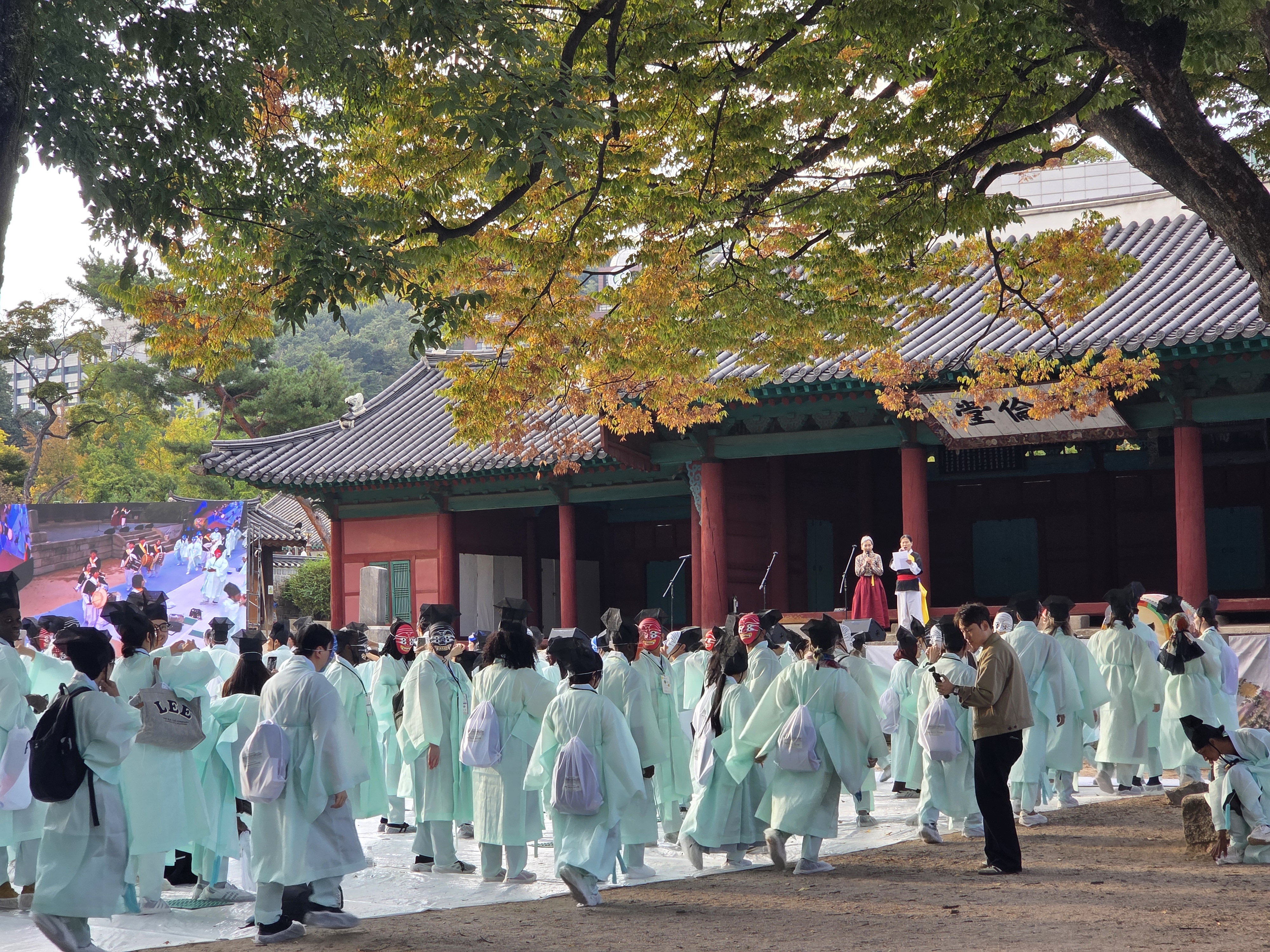
Participants on Oct. 5 perform talchum (mask dance) after taking the gwageo, the national civil service exam of the Goryeo (918–1392) and Joseon (1392-1910) dynasties, at Sungkyunkwan University in Seoul's Jongno-gu District.
The gwageo was the national civil service exam of the Goryeo (918–1392) and Joseon (1392-1910) dynasties required for entering government service.
Expats on Oct. 5 took the gwageo in an inaugural event at Sungkyunkwan University in Seoul's Jongno-gu District. This reenactment of the test commemorated the 80th anniversary of the university's Association of Confucian Studies.
The event was co-organized by the Sungkyunkwan Confucian Association Headquarters, Foreigners in Korea Support Center and World Royal Academy and sponsored by Sungkyunkwan and the Korea Council on Foreign Relations. Officials from the embassies of Sierra Leone, Nigeria, Italy and Turkiye (Turkey) attended.
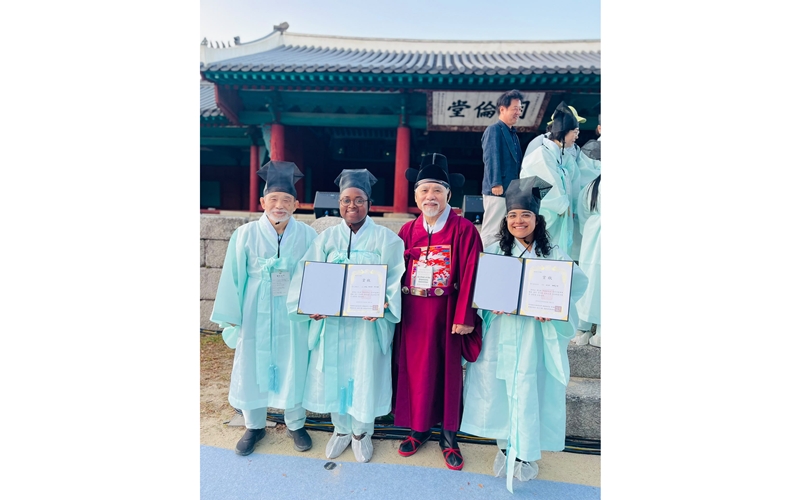
A judge of the gwageo (from left), Ghanian entrepreneur Anita Hato, World Royal Academy President Shin Kwang-chul and Honorary Reporter Ana Paula Camacho Perez on Oct. 5 hold awards for passing the exam at Sungkyunkwan University in Seoul's Jongno-gu District.
The participants wore dopo (traditional overcoat) like Confucian scholars and test takers did in the past. During the event, they learned the teachings of the White Deer Grotto Academy in China, one of the most important Confucian institutes in history, including duties towards family members and one's life.
The meaning of the national flag Taegeukgi was also presented and the participants learned to bow respectfully to professors.
When taking the exam, the participants chose one of two tasks: writing a phrase in Hangeul (Korean alphabet) by calligraphy or writing an essay on the three elements of Korea they would share in their countries of origin.
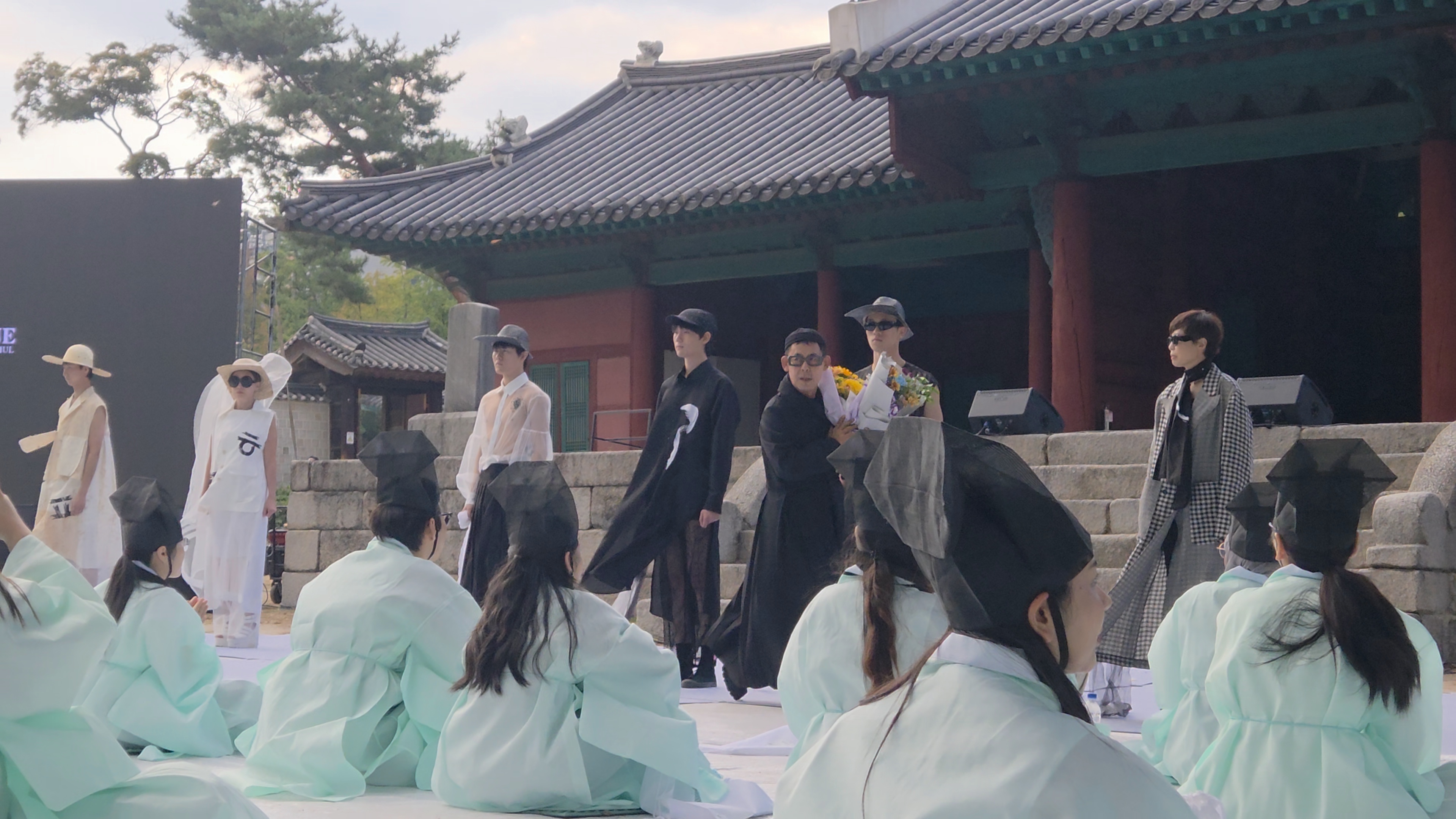
Designer Park Jong-chul, founder of the domestic menswear brand Sling Stone, on Oct. 5 presents his collection "K-Human" at Sungkyunkwan University in Seoul's Jongno-gu District.
While waiting for the results, cultural shows included a musical performance by a traditional East African group and a fashion show by designer Park Jong-chul, founder of the domestic menswear brand Sling Stone.
Participants received a tal (mask) used in talchum (mask dance). After the exam, Korean and East African performers played together with their instruments and performed traditional dances.
The winner of the event was Eloy Eseko from Tanzania, who received the prize while clad in the ceremonial robe aengsam and ceremonial paper flowers eosahwa as those in the past did after passing the gwageo.
ljyhwa@korea.kr
*This article was written by a Korea.net Honorary Reporter. Our group of Honorary Reporters are from all around the world, and they share with Korea.net their love and passion for all things Korean.