- 한국어
- English
- 日本語
- 中文
- العربية
- Español
- Français
- Deutsch
- Pусский
- Tiếng Việt
- Indonesian
By Honorary Reporter Nafiisah Peerbaye from Mauritius
Photos = Asian Culture Center
The National Asia Culture Center in Gwangju on Oct. 16 launched Asian Garden Culture, a program for rediscovering nearby nature and exploring garden culture in Asia, and plans to continue it next year.
Leading this initiative is arborist and garden researcher Kim Jang-hoon, author of "Winter Garden" and "The Garden of Grass."
In an email interview on Nov. 8, he discussed the relationship between people and nature and the aesthetic values of traditional gardens in Korea.
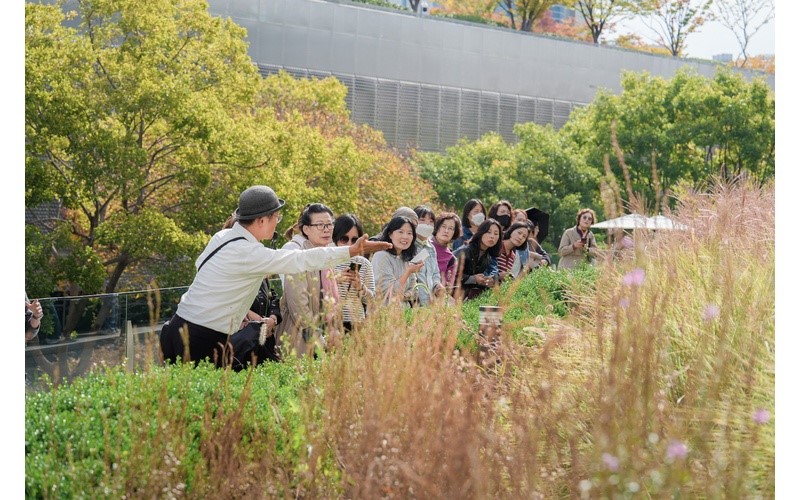
Arborist Kim Jang-hoon on Oct. 16 guides visitors at an outdoor session of the program Asian Garden Culture at the National Asia Culture Center in Gwangju.
When I first heard the expression "Asian Garden Culture," French garden philosopher Gilles Clement's ecological concept of the "planetary gardener" came to mind. Viewing the world as a single garden reminds us that tending even a small flowerpot helps make the planet's skin healthier and more beautiful.
Through this program, we hope to help people discover Asia's diverse and beautiful natural environments from the broader perspective of being "gardeners of Asia." Starting with small gardens in everyday life, we hope that this leads to a broader appreciation of Asia's natural environments and Earth as a whole.
Why did you start with observing moss and what does this show about nature?
Moss is an ideal subject for awakening awareness of the value of "nearby nature" -- it's one of the first forms of life to bring greenery into grey cities and lives even in places with hardly any soil, retaining moisture. Observing moss helps us see nature not merely as something to be used or managed for human needs, but as countless forms of life that continue to exist in their own ways.
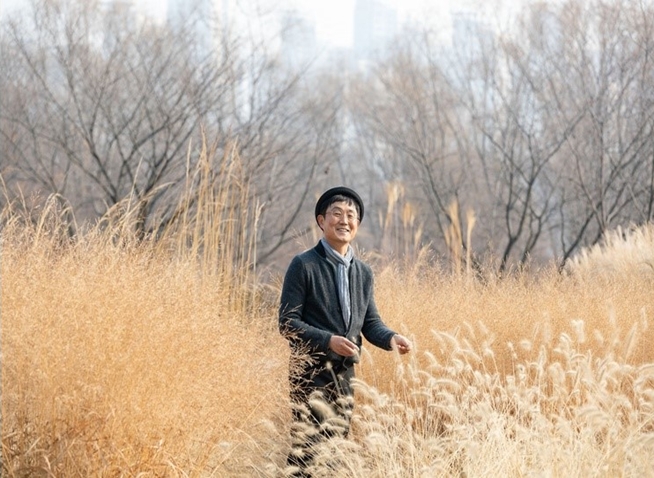
Kim Jang-hoon on Dec. 21, 2021, poses for a photo among tall ornamental grasses at Ilwol Lake Park in Suwon, Gyeonggi-do Province.
What does traditional garden culture show about Koreans' view of nature?
Our ancestors observed how mountains, rocks, trees and water came together, placing pavilions and courtyards where these landscapes could be viewed most beautifully. Instead of artificially reshaping nature, they sought to live in harmony with it and show its beauty.
In this tradition, a garden wasn't just a space for growing plants but for contemplation and appreciation of the changing seasons. This attitude remains relevant today; before thinking about what to plant or decorate, a good garden begins with discovering the beauty a place has.
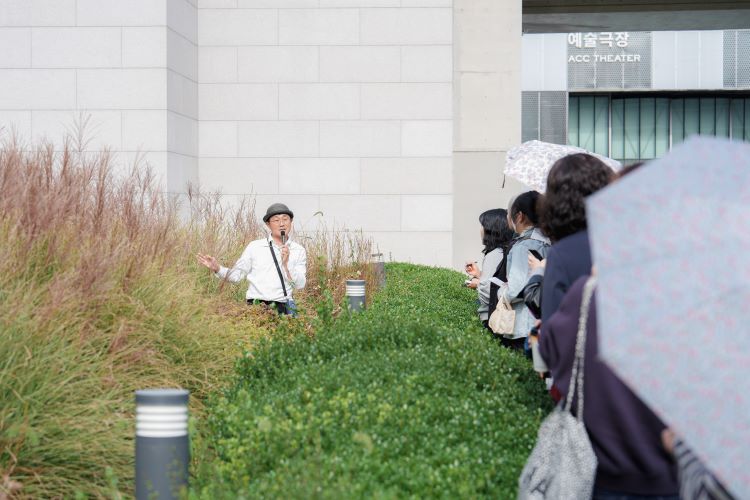
Participants on Oct.16 join Kim Jang-hoon near the ACC Theater in Gwangju at an outdoor workshop for urban flora.
I believe the stories shared through this program hold meaning anywhere beyond Gwangju. For example, one session was held with migrant wives from across Asia who live in the city. I saw how they related to the idea of planetary gardeners who observe and care for nature.
ljyhwa@korea.kr
*This article was written by a Korea.net Honorary Reporter. Our group of Honorary Reporters are from all around the world, and they share with Korea.net their love and passion for all things Korean.