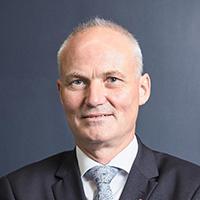
By Einar Jensen
Ambassador of Denmark to Korea
As Danish ambassador to Korea, it is with great pride that I have supported the preparatory endeavors for the second summit of the Partnering for Green Growth and the Global Goals 2030 (P4G). This is not only because Denmark is passing on the torch to Korea after launching the P4G in 2017, but because I have personally found it fascinating to follow Korea's green transition and commitment to the P4G summit since arriving in Seoul in 2019. Based on my work with the Korean government and the strong tail winds it has provided to the green agenda over the past decade, I can think of no better country to take over the leadership of the summit.
The COVID-19 pandemic hit the world hard, leaving the devastation of normalcy in its wake. Meanwhile, climate change continues to wreak havoc on ecosystems all over the world as it has for decades. As we as individuals and societies continue to strive to overcome these challenges, one thing has become increasingly clear: We need to build back better and greener. A more resilient, inclusive and greener economy that can sustain us, our world and the generations to come is the only way we can bounce back from this predicament we are in.
Korea has shown great promise in this regard with its recent landmark achievements. First is its 2050 net-zero goal – no doubt a difficult decision to make since Korea's economy is dependent on industrial sectors that are traditionally more difficult to de-carbonize. Second, looking at its New Deal, Korea has one of the highest shares allocated to the green agenda. KRW 4 out of every KRW 10 spent on economic recovery is dedicated to the Green New Deal, which is even higher than the green funds of the European Union's recovery package. Last but certainly not least is Korea's announcement of a moratorium on financing foreign coal power plants. To me, Korea can be extraordinarily proud of these decisions, and it undoubtedly lives up to global expectations as the host of the P4G summit.
The P4G is about raising ambitions; building sustainable business models; investing in scalable solutions; and inspiring others to do the same. Its launch marked the dawn of a new era of global green partnerships focusing on the need and potential of private-public cooperation. The inaugural summit of the P4G hosted by Denmark presented solutions and suggestions – many involving local businesses and youth for grassroots engagement – to show the world that this is not only possible but also what we need to do. The summit ended with a declaration of the Copenhagen Commitment to Action, which recognized that market-based partnerships are required to power the green transition. By endorsing the commitment, member states committed to sharing knowledge and best practices to accelerate and elevate public-private partnerships to address global challenges. I have similar hopes for the Seoul summit, which comes at a critical juncture for the international society to step up its collective efforts to meet our climate goals.
2021 marks the beginning of the implementation of the Paris Agreement. Today, countries are more ambitious than ever for green transition, and green market opportunities are more promising than they have ever been. Just consider this: In 2018, when the inaugural summit of the P4G was held in Copenhagen, not a single country signed up for the 2050 net-zero goals. The landscape vastly differs today, with both countries and companies alike looking at green transition as the key to the future. What we need right now are bankable opportunities to invest in solutions -- clear business models that can act as future growth engines. And this is precisely what P4G is about.
2021 also marks a decade of Danish-Korean partnership on the green agenda. It is certainly no coincidence that our two countries are both members of the P4G and the first two to host summits. Ten years ago, we established a Green Growth Alliance and it continues to be the bedrock of our cooperation today. And we also established the Global Green Growth Forum (3GF) in collaboration with other nations. 3GF was a forum for countries and organizations to link projects and investors through public-private partnerships. There was only one requirement: The partnerships had to promote the green agenda, economic growth and job creation. Reflecting the tides of change, the forum expanded worldwide and saw regional and global summits. Through this development, it became apparent that there was a need to upgrade and reorganize to cater to the continuously increasing interest and need for concrete partnerships. Thus, the P4G was born under Denmark's leadership with cooperation from Korea and other member states.
The P4G is living proof that Denmark and Korea are mutually complementary countries whose partnership has only strengthened over the years. We continue to explore new areas for exchanging information, expertise and solutions. In this process, we should constantly remind ourselves as well as others that environmental issues are rarely contained within national borders. The former prime minister of Denmark Lars Løkke Rasmussen emphasized this at the Copenhagen summit: "No government can solve these challenges alone. The only way to deal with the biggest challenge of our time it to partner up across continents and cultures, countries and cities."
At its core, the P4G is about raising ambitions. Bold leadership is a must if we want to reach our goals. Korea has made difficult, courageous decisions for its future in recent years, and the upcoming summit will be an opportunity for more countries to be inspired by Korea to do the same. Expectations run high, with more high-level participation from public and private sectors worldwide than in the first summit. It is also the steppingstone between the U.S.-led Leaders' Summit on Climate and the 26th U.N. Climate Change Conference of the Parties (COP26).
Some sceptics say P4G's lack of big countries in its membership will prevent it from it having a tangible impact. First, the door to the P4G is open to all countries. I hope to see more countries signing up as members and for the P4G to expand to one of the main international bodies driving sustainable growth in the near future. But more importantly, transformative change does not always come from the big players. After all, I take pride in coming from the country that commercialized harnessing the power of wind. And I am sure that Korea, the country that created the "Miracle of the Han River" to become the 10th-largest economy in the world, will agree.
I look forward to a successful Seoul summit and hope that it will deliver state-of-the-art, scalable solutions and an ambitious Seoul Declaration that can help propel the green agenda even further. If we combine the political determination with the solutions of the private sector, the Paris Agreement's goals are entirely within reach.